
On paper, New Zealand manufacturing is having a better year.
Manufacturing was the largest contributor to economic growth in the March 2026 quarter, expanding 1.9 percent. By June, the BNZ-BusinessNZ Performance of Manufacturing Index had climbed to 59.7, its strongest reading in almost five years.
More than 220,000 New Zealanders work in manufacturing. The sector contributes around 8 percent of GDP and is responsible for roughly 60 percent of the country’s goods exports.
Those are encouraging numbers.
But inside one small New Zealand factory, the view of the recovery looks very different.
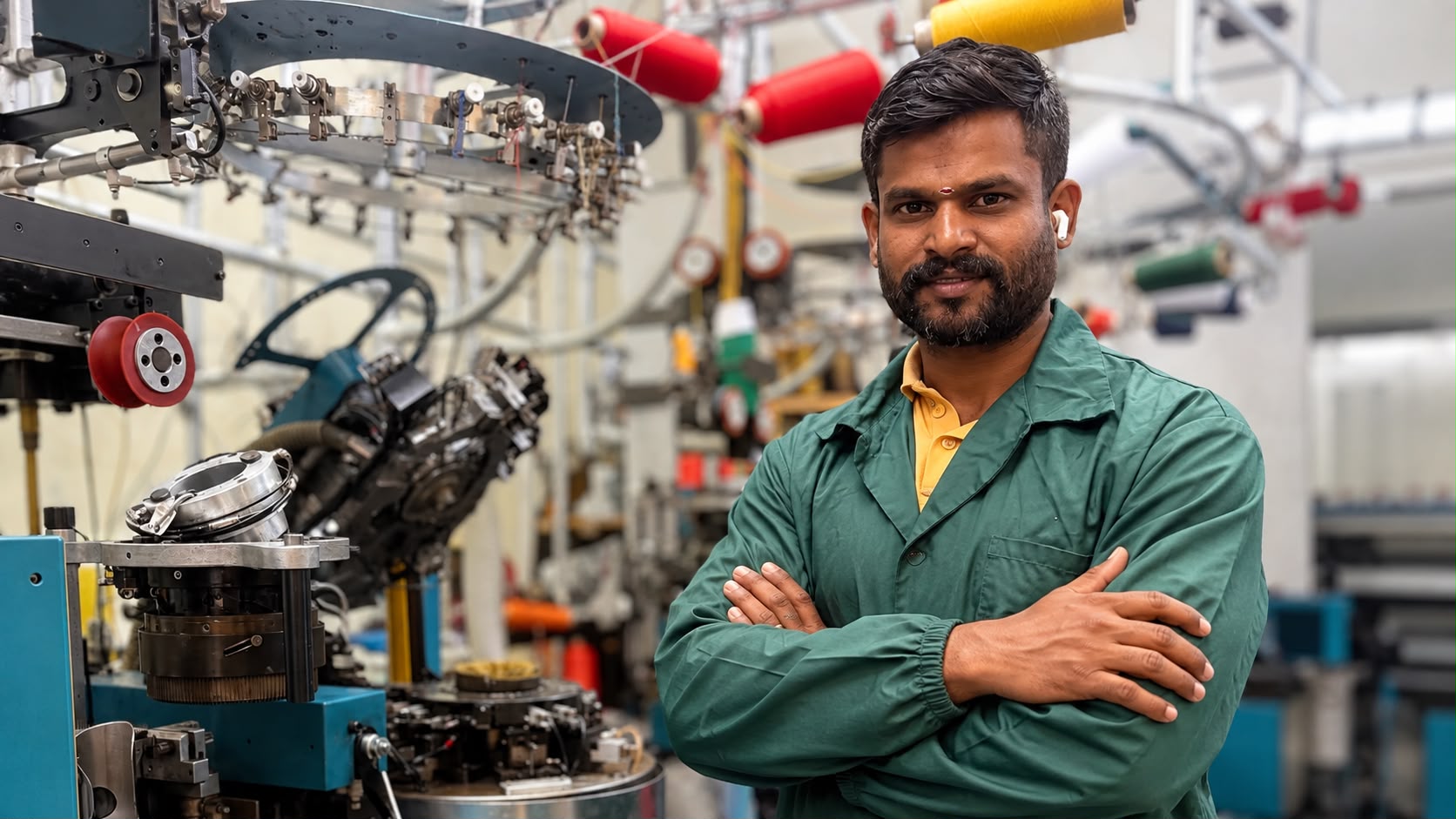
Sowndra Rajan, who manufactures merino wool socks using New Zealand wool, has written an open letter to the Government warning that smaller manufacturers can be working seven days a week, producing locally, employing people and still wondering whether their factory will survive another year.
His message is not simply that business is difficult.
It is that New Zealand risks celebrating manufacturing at a national level while overlooking the smaller factories trying to manufacture ordinary products here every day.
"I don't ask for sympathy. I ask for answers," Rajan writes.
That deserves a serious examination.
Because the central issue is not whether every proposal in his letter should become Government policy.
It is whether New Zealand actually wants a meaningful domestic manufacturing base, and if it does, what it is prepared to do to keep one.
The contradiction at the centre of New Zealand manufacturing
The national numbers and Rajan's experience can both be true.
Manufacturing activity can be expanding overall while individual factories remain under severe pressure.
New Zealand's manufacturing sector includes everything from food processing and medical technology to aerospace, machinery, chemicals, metal fabrication, textiles and small family-owned businesses.
A strong result from large exporters or high-growth engineering firms does not automatically mean a small textile manufacturer is experiencing the same conditions.
That distinction matters.
Government figures describe manufacturing as one of the country's economic powerhouses.
But MBIE also says around 91 percent of manufacturers are small businesses.
So the health of manufacturing cannot be assessed only by looking at the largest companies.
It also depends on whether smaller firms can survive long enough to become larger ones.
Rajan's question is simple: what happens when making something here stops making financial sense?
Rajan describes working more than 12 hours a day, seven days a week, to cover wages, suppliers, rent, electricity, taxes, insurance, freight and loan repayments.
That list will sound familiar to many small business owners.
But manufacturers face an additional challenge.
They are often capital intensive.
A retailer can change suppliers.
A consultant may need little more than an office and equipment.
A manufacturer can have machinery, factory space, maintenance, raw materials, specialised labour, power requirements and inventory tied up before a product is sold.
That makes fixed costs difficult to escape.
And unlike a service business, a manufacturer cannot simply move production to a kitchen table when rent becomes unaffordable.
His factory illustrates a bigger economic question
Rajan's business makes merino wool socks from New Zealand wool.
His frustration is that New Zealand can produce a highly regarded natural fibre, export raw material, and then compete against finished goods manufactured overseas and sold back into this market.
That raises a question New Zealand has wrestled with well beyond wool:
How much value should we try to add to our own raw materials before they leave the country?
New Zealand exported about $459 million of wool in the year to June 2025, according to Ministry for Primary Industries estimates at the time.
MPI distinguishes fine wool, including merino commonly used for garments, from the strong-wool sector, so the economics are not identical across all wool types.
But the broader value-chain argument remains relevant.
Turning fibre into yarn, fabric, socks, clothing or specialist products potentially creates more domestic activity than exporting the raw fibre alone.
The difficult question is whether that processing can be done competitively in New Zealand.
New Zealand has seen what value-added merino can achieve
The idea is not theoretical.
Government-backed work in the fine-wool industry has previously focused specifically on shifting away from reliance on commodity markets and creating differentiated products linked directly to consumers.
New Zealand merino has been used in internationally recognised categories ranging from outdoor apparel to woollen footwear.
That history demonstrates that the value of wool does not have to end at the farm gate.
But building globally competitive manufacturing around that fibre requires more than having excellent raw material.
It requires capital, machinery, design, branding, market access, skills, productivity and customers willing to pay for the final product.
The uncomfortable reality: imported textiles have a huge structural advantage
Small textile manufacturers face one of the toughest forms of international competition.
New Zealand wages, building costs, compliance standards and energy costs sit alongside imported products manufactured in economies with completely different cost structures and enormous production volumes.
An MBIE study mapping New Zealand's textile economy using 2019 data estimated domestic textile production at about $2.9 billion, while imports were worth approximately $4.6 billion.
The figures are historical and should not be treated as today's exact market size, but they demonstrate how deeply import-dependent the sector already was.
That is the market in which a locally made pair of socks has to compete.
Why can't a New Zealand manufacturer simply charge more?
This is where "buy local" meets household economics.
A manufacturer can explain that its product supports New Zealand jobs.
It can emphasise local wool, quality, traceability and local production.
But there is a limit to how much many consumers can afford to pay for those values.
If a locally manufactured product costs $30 and a seemingly comparable imported product costs $10 or $15, a household under financial pressure may choose the cheaper one.
That does not necessarily mean the consumer does not care about New Zealand manufacturing.
It may simply mean price wins.
This is why Rajan argues that manufacturers cannot solve every cost increase by passing it on to customers.
Should the Government make imports harder?
Rajan asks the Government to review import policies and create a more level playing field.
That is understandable from the factory floor.
But it is one of the more complicated parts of his proposal.
New Zealand is a small trading economy that depends heavily on access to overseas markets.
Broad tariffs or barriers designed simply to make imported products more expensive could also increase prices for consumers and businesses, and potentially create problems with international trade commitments.
Manufacturers themselves often import machinery, components, chemicals, packaging and other inputs.
So a policy that makes imports more expensive could sometimes hurt the same manufacturers it is designed to protect.
The stronger policy question may therefore be:
How can New Zealand improve the competitiveness of local manufacturing without simply making everything imported more expensive?
That leads to a different set of options.
What Rajan is asking the Government to consider
His open letter proposes a broad package rather than a single intervention.
| Proposal | What it is trying to solve |
|---|---|
| Low or interest-free working capital | Cashflow and financing costs |
| Flexible tax arrangements | Pressure during weak trading periods |
| Affordable industrial hubs | Factory rent and infrastructure costs |
| Solar support | Electricity costs |
| Export assistance | Access to overseas customers |
| Skilled migrant pathways | Shortages of specialist technicians |
| Machinery grants | Productivity and automation |
| Apprenticeship incentives | Training and workforce development |
| NZ-focused government procurement | Domestic demand |
| Import policy review | Competition with lower-cost products |
Not all these ideas would be cheap or straightforward.
Some would require careful eligibility rules.
Others could create unintended distortions.
But they are at least focused on specific costs that manufacturers encounter rather than treating "support manufacturing" as a slogan.
Government procurement may be one of the most interesting ideas
Governments and public agencies buy enormous quantities of goods.
Uniforms.
Textiles.
Furniture.
Equipment.
Construction materials.
Medical products.
Promotional goods.
The question is whether procurement should consider the wider domestic value created by New Zealand manufacturing rather than simply the lowest upfront price.
A locally made product may cost more initially but support domestic wages, tax revenue, apprenticeships and supply-chain resilience.
On the other hand, taxpayers also deserve value for money.
So a blanket "buy New Zealand regardless of cost" policy would create its own problems.
A more sophisticated procurement framework could consider local economic value where appropriate without abandoning competition.
That debate is worth having.
What did the previous Labour Government try?
The previous Labour Government launched an Advanced Manufacturing Industry Transformation Plan in 2023.
Its approach was based on Government, industry, workers and other stakeholders developing a long-term plan together.
The strategy identified six broad priorities, including:
increasing investment in advanced technology,
developing skilled workers,
improving sustainability,
strengthening R&D and science,
improving perceptions of manufacturing,
and increasing international connections.
At the time, the sector was described as representing about 10 percent of the economy under the plan's broader "advanced manufacturing" definition and employing close to 250,000 people.
The strategy's central argument was that New Zealand manufacturers needed higher productivity and greater technology adoption to compete internationally.
The National-led Government chose a different approach
The National-ACT coalition discontinued work on the Industry Transformation Plans as part of its 100-day programme.
That did not mean Government involvement in manufacturing stopped.
The current approach is more focused on investment incentives, productivity, skills and business support rather than maintaining the previous industry-planning framework.
The Government has introduced Investment Boost, which allows businesses to immediately deduct 20 percent of the cost of qualifying new capital investment before normal depreciation applies.
For a manufacturer considering new machinery, that can improve the economics of investment.
It has also expanded the Digital Manufacturing Light programme to help manufacturers adopt technology, and recently expanded an "Earn as You Learn" programme designed to bring younger workers into manufacturing careers.
There is already substantial business support, but accessibility matters
The Government says around $400 million a year is available across business grants, funds and equity schemes, and this month launched an upgraded Funding Explorer intended to make those programmes easier to find.
That sounds substantial.
But the existence of a programme and the ability of a small factory to actually use it are not necessarily the same thing.
Small manufacturers often do not have teams of grant writers, finance specialists or government-relations staff.
A programme requiring extensive applications, matched funding or specialist knowledge may technically be available while remaining practically out of reach for a very small operator.
That is why Rajan's letter is useful.
It shifts the discussion from how much money Government announces to whether support reaches the factory that needs it.
The economy is recovering, but that does not erase the last few years
There is another important part of the story.
Manufacturing has entered 2026 with much stronger momentum.
Stats NZ says manufacturing output increased 1.9 percent in the March quarter, making it the largest contributor to the country's 0.8 percent quarterly GDP growth.
The June manufacturing index then rose to 59.7, indicating a strong expansion in production and new orders.
Those figures matter.
They suggest New Zealand manufacturing as a whole is not collapsing.
But recovery at the sector level does not immediately repair the balance sheets of businesses that have spent several years absorbing higher costs, weak demand or expensive debt.
A company can survive a recession and still enter the recovery financially exhausted.
That is the gap between macroeconomic recovery and what a business owner sees in the bank account.
Productivity is ultimately the difficult part of the answer
Government assistance can help.
Lower financing costs can help.
Cheaper energy can help.
Export support can help.
Government procurement can help.
But New Zealand cannot permanently subsidise every domestic manufacturer against every cheaper overseas producer.
For manufacturing to survive over the long term, firms also need to become more productive.
That could mean automation.
Better machinery.
More efficient factories.
Higher-value products.
Better design.
Stronger branding.
Export markets.
Specialisation.
Digital systems.
Or products for which customers will pay a premium because New Zealand origin genuinely matters.
The most durable manufacturing policy would therefore combine short-term survival with long-term productivity.
Protecting an inefficient factory forever is not a strategy.
Allowing potentially competitive factories to disappear because they cannot finance modern equipment is not a strategy either.
The difficult job is knowing the difference.
Rajan is really asking a question about national capability
His strongest point may not be about socks.
It is about what disappears when a factory shuts.
Machines can be sold.
Buildings can be repurposed.
But skills are harder to recover.
A machinist retires.
A technician changes industry.
An apprentice is never trained.
Supplier relationships disappear.
Production knowledge is lost.
Once an entire manufacturing capability disappears from a country, rebuilding it can be much more expensive than keeping a viable base alive.
The pandemic reminded countries that supply chains can break.
Geopolitical disruption continues to remind them.
Domestic manufacturing therefore has a value beyond the immediate profit made on each item.
It provides capability.
The challenge is deciding which capabilities New Zealand strategically wants to retain.
Small factories also provide a pathway that large success stories often begin with
New Zealand likes celebrating manufacturers once they become globally recognised.
But most companies do not begin with hundreds of employees.
They begin with an owner taking a risk.
A few machines.
A handful of staff.
A product.
And a belief that somebody will buy it.
If the environment becomes so difficult that businesses cannot survive that early stage, New Zealand may eventually discover it has fewer large manufacturers because it stopped producing enough small ones.
That is why the statistic that most manufacturers are small businesses should receive more attention.
What would a serious manufacturing policy look like?
Rajan's letter should not be treated as a ready-made policy document.
It should be treated as evidence from the ground.
Some of his proposals deserve investigation.
Some may already overlap with existing programmes.
Some may prove too expensive or poorly targeted.
And some, particularly around import protection, would require much wider economic analysis.
But there is a coherent principle running through the letter:
Make it worthwhile to produce more things in New Zealand.
That does not require shutting the border to imports.
It means asking whether policies around tax, capital, energy, skills, procurement, exports and regulation collectively encourage a business to put its next machine in New Zealand rather than somewhere else.
The numbers behind the debate
| Indicator | Position |
|---|---|
| Manufacturing contribution to NZ GDP | Around 8% |
| People employed in manufacturing | More than 220,000 |
| Share of goods exports | Around 60% |
| Manufacturers that are small businesses | About 91% |
| March 2026 manufacturing growth | 1.9% |
| June 2026 manufacturing PMI | 59.7 |
| June PMI long-run average | 52.5 |
| Government business grants, funds and equity schemes | About $400m annually |
| Investment Boost upfront deduction | 20% of qualifying new capital investment |
The Government and manufacturers may actually agree on more than it appears
The current Government repeatedly says manufacturing is central to New Zealand's economic future.
Small Business and Manufacturing Minister Cameron Brewer has described the sector as a major driver of the economic recovery.
Rajan is saying manufacturing matters too.
The disagreement is not really over the destination.
It is about whether the policies currently in place are enough for smaller businesses facing the realities of rent, finance, energy, imported competition and limited scale.
That is a question the Government should be willing to test with evidence.
"Grow together, help each other, support local"
Rajan ends his letter with a simple philosophy:
"My policy is simple: grow together, help each other, support local."
That should not be confused with an argument that consumers must buy local regardless of price or quality.
Local manufacturers still need to compete.
But competition also needs to lead somewhere productive.
If New Zealand's economic model gradually results in fewer locally made products, fewer manufacturing skills and more dependence on overseas production, the country should at least make that choice consciously rather than discover it after the factories have disappeared.
The bigger question is not whether one sock factory survives
The easiest response to an open letter from one manufacturer would be to see it as one business owner's problem.
That would miss the point.
New Zealand's manufacturing industry is currently showing real signs of recovery.
That is good news.
But the strength of a sector is not measured only during an upswing.
It is also measured by whether businesses have enough resilience to survive the next downturn, invest in better machinery, train workers and continue producing here when an imported alternative arrives at a fraction of the price.
Rajan's open letter therefore puts a useful question in front of the Government.
If New Zealand genuinely considers manufacturing strategically important, what does it want the country's manufacturing base to look like in 10 or 20 years?
A few world-class exporters surrounded by imported consumer goods?
Or an economy where large exporters, advanced manufacturers and smaller locally owned factories can all find viable niches?
That question requires more than a grant programme or a ministerial speech.
It requires a long-term view of capital, energy, skills, trade, productivity and domestic demand.
The bottom line
Sowndra Rajan is not asking the Government to guarantee that his business succeeds.
He is asking whether New Zealand is creating conditions in which businesses that manufacture here have a realistic chance to compete.
That is a fair question.
The data shows manufacturing remains a major part of the economy and has entered 2026 with renewed momentum.
The Government can point to Investment Boost, technology support, training initiatives and hundreds of millions of dollars across business funding schemes.
Those measures should be acknowledged.
But Rajan's letter highlights the other side of the equation.
A growing sector can still contain struggling factories.
A strong GDP result does not pay an individual manufacturer's power bill.
And a national commitment to manufacturing means little if the smallest producers cannot see how that commitment reaches them.
The answer is unlikely to be blanket protection from imports.
Nor is it doing nothing and assuming every closure is simply the market working.
The better question is whether New Zealand can make local manufacturing more productive, investable and competitive enough that choosing to manufacture here remains a rational business decision.
Because Rajan is right about one thing.
Once skills, machinery and manufacturing capability disappear, rebuilding them is rarely easy.
And by the time the country notices what it has lost, the factory doors may already be closed.
Source: Open letter provided by Sowndra Rajan. Additional economic context drawn from Stats NZ, MBIE, Ministry for Primary Industries and New Zealand Government manufacturing data and policy material.