By Webfit News | Political Analysis
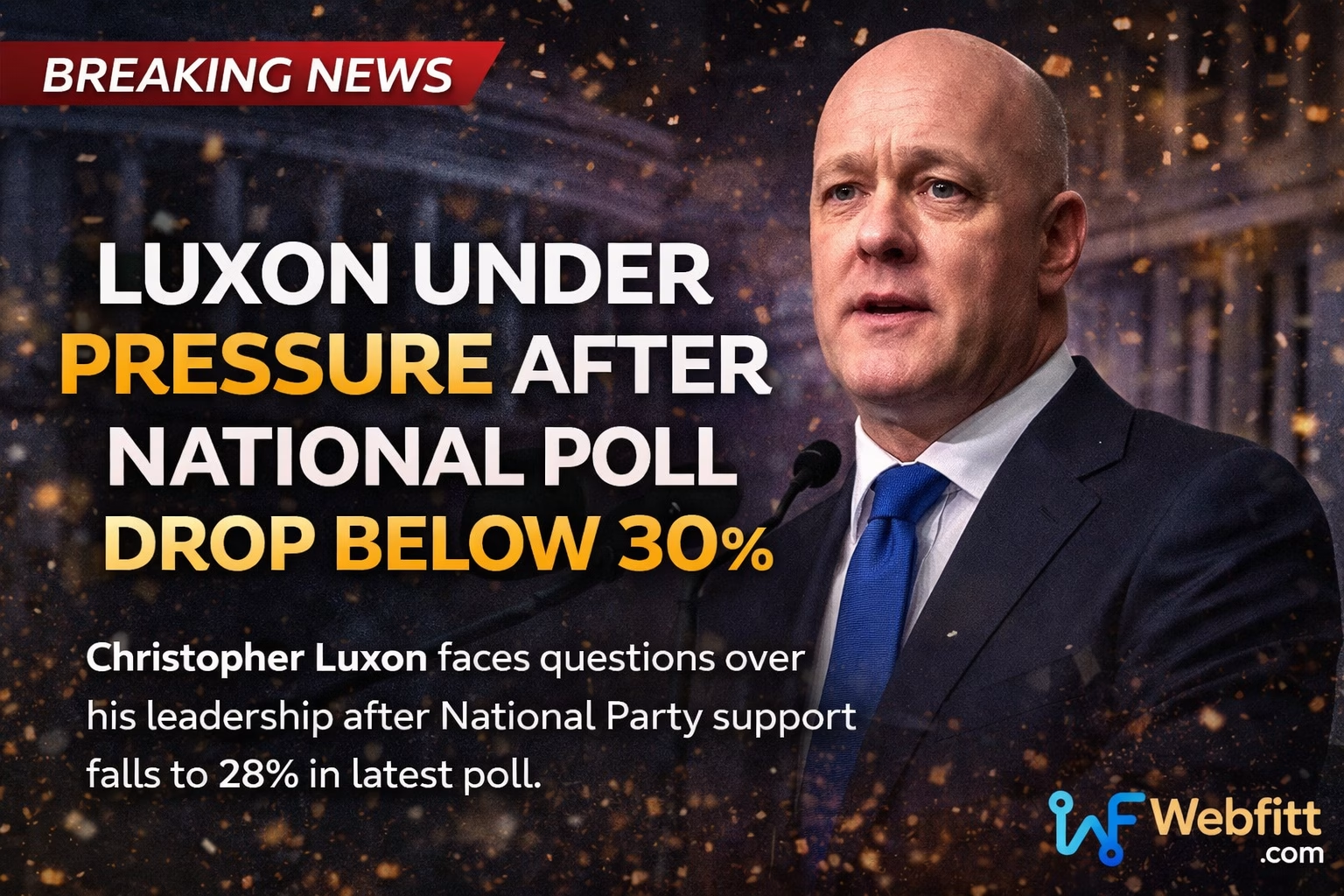
New Zealand’s Prime Minister Christopher Luxon is facing renewed political pressure after a recent opinion poll showed support for the National Party dropping below the 30 percent mark. The result has triggered debate across political circles about the strength of Luxon’s leadership and whether his caucus continues to stand firmly behind him.
Despite the challenging numbers, Luxon has made it clear that he has no intention of stepping aside. Speaking publicly after the poll results emerged, the prime minister said he is “absolutely not” considering leaving the leadership position.
The coming days in Parliament are expected to reveal just how strong his support remains within his party.
Poll Results Spark Political Debate
The Taxpayers’ Union Curia poll released late last week showed the National Party sitting at 28 percent, a result that has raised concerns among political observers and party insiders.
Key findings from the poll include:
| Party | Poll Result |
|---|---|
| Labour | 34 percent |
| National | 28 percent |
| Greens | 10.5 percent |
| ACT | 7.5 percent |
| Te Pāti Māori | 3 percent |
If translated into seats, the poll suggests the centre-left bloc could govern with 61 seats, compared with 59 seats for the current coalition bloc.
While one poll does not determine an election outcome, it has intensified discussion about the government’s direction and messaging.
Luxon Says Leadership Is Not in Question
In response to speculation following the poll, Luxon spoke on Newstalk ZB and dismissed suggestions that he might step aside.
He said that if there were serious issues with his leadership, he would act accordingly. However, he argued that the situation was not nearly as dramatic as some commentators suggested.
On Monday morning, Luxon repeated that stance during an interview with RNZ’s Morning Report. When asked whether he had checked with MPs about their support, he replied that he did not feel the need to do so.
According to Luxon, members of his caucus regularly express their confidence in his leadership.
Caucus Meeting Expected to Be Key Moment
Political attention is now focused on the National Party caucus meeting scheduled for Tuesday at Parliament.
Caucus meetings are often where party members speak openly about internal concerns and political strategy. While MPs publicly support their leader, these meetings sometimes reveal deeper frustrations or disagreements behind closed doors.
Some political analysts believe Luxon could face difficult questions from colleagues about the party’s direction and messaging following what many described as one of his toughest weeks in office.
Concerns Emerging Within Government Circles
Beyond the poll numbers, reports suggest there may be growing frustration among some government staff.
According to political insiders, there have been concerns that advice from senior staff has sometimes been ignored and that recent government messaging has not always been convincing to voters.
While these reports remain unofficial, they highlight the pressure that can build inside political leadership teams during challenging polling periods.
What the Poll Means for National’s Future
A single poll rarely changes political leadership on its own. However, repeated poor results can begin to shape perceptions within political parties.
For many National MPs, the bigger concern may be the potential impact on future election results. If polling continues to decline, some MPs could lose their seats in Parliament.
Senior ministers such as Nicola Willis, Paul Goldsmith, and Gerry Brownlee rely partly on the party list system, meaning the party’s overall vote share plays a critical role in determining their political future.
Swing electorates could also be affected. Seats like Hutt South, currently held by Chris Bishop, may become more competitive if the party’s national support weakens.
Leadership Ratings Also Raise Questions
Another concerning result for Luxon comes from the leader’s favourability ratings within the same poll.
| Political Leader | Net Favourability |
|---|---|
| Chris Hipkins | -5 |
| Winston Peters | -8 |
| Christopher Luxon | -19 |
| Chris Bishop | -14 |
| Erica Stanford | -16 |
The numbers show Luxon trailing behind several political rivals and even some figures within his own party.
While favourability scores fluctuate over time, they are often used as indicators of public confidence in leadership.
Public Support Still Holds the Balance
Despite the difficult poll results, the broader political picture remains competitive.
Current polling still suggests the major political blocs are relatively close, meaning the government remains firmly in the political contest ahead of the next election.
Several National MPs arriving at Parliament on Monday publicly supported Luxon, acknowledging that the poll was not ideal but stating that he remains the best person to lead the party.
That public backing is likely to calm speculation in the short term, although political observers will continue watching closely for further polling trends.
Webfit News Perspective
Politics in New Zealand has often shown that leadership pressure can rise and fall quickly depending on public sentiment. Polls provide a snapshot rather than a final verdict. For Prime Minister Christopher Luxon, the real test may not be one difficult poll but whether a consistent pattern develops over time.
Ultimately, the strength of his leadership will be determined by two key factors: the confidence of his party caucus and the trust of voters across the country. The coming weeks in Parliament may offer clearer signs of where that balance currently stands.
References
Scoop Media
Radio New Zealand (RNZ)