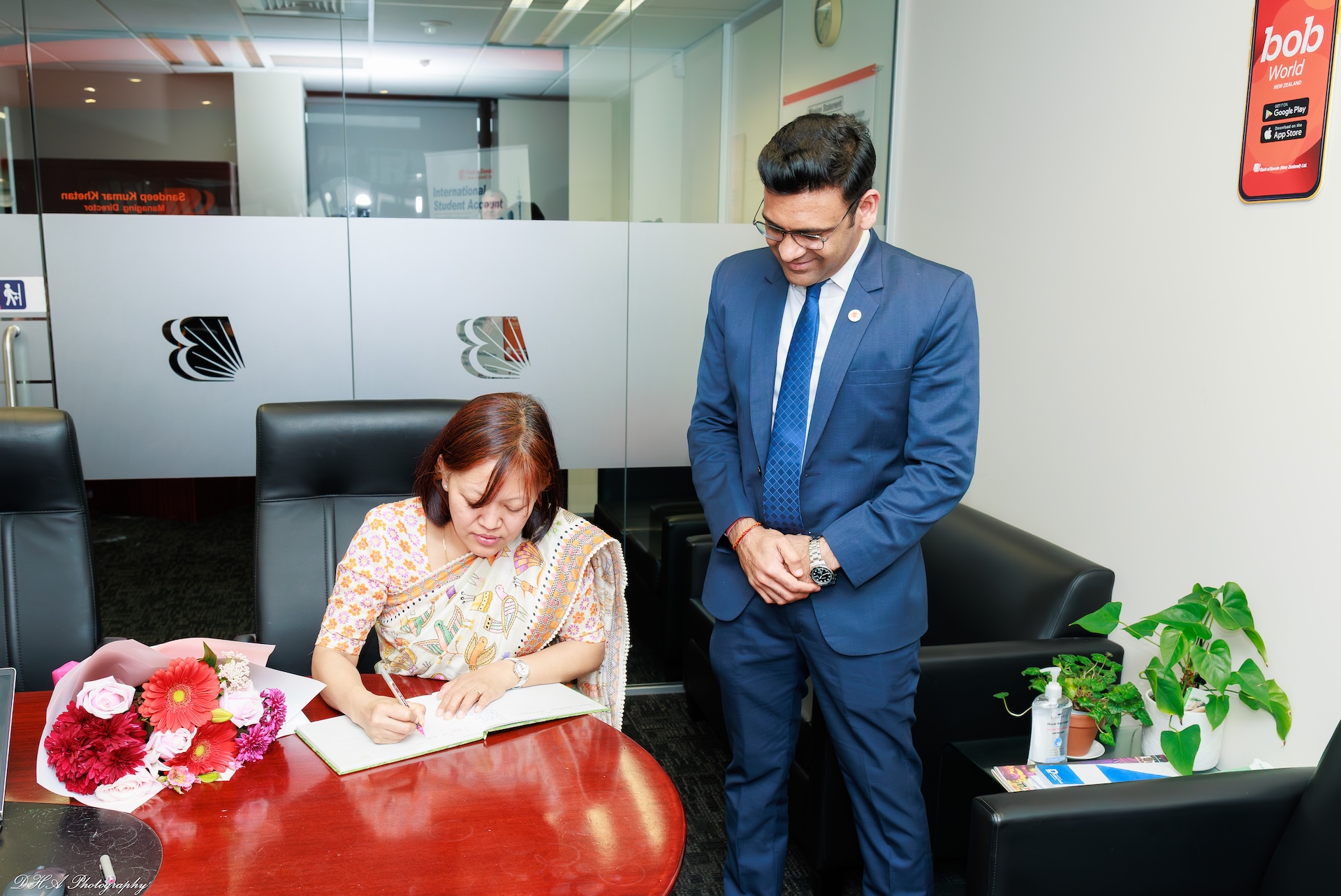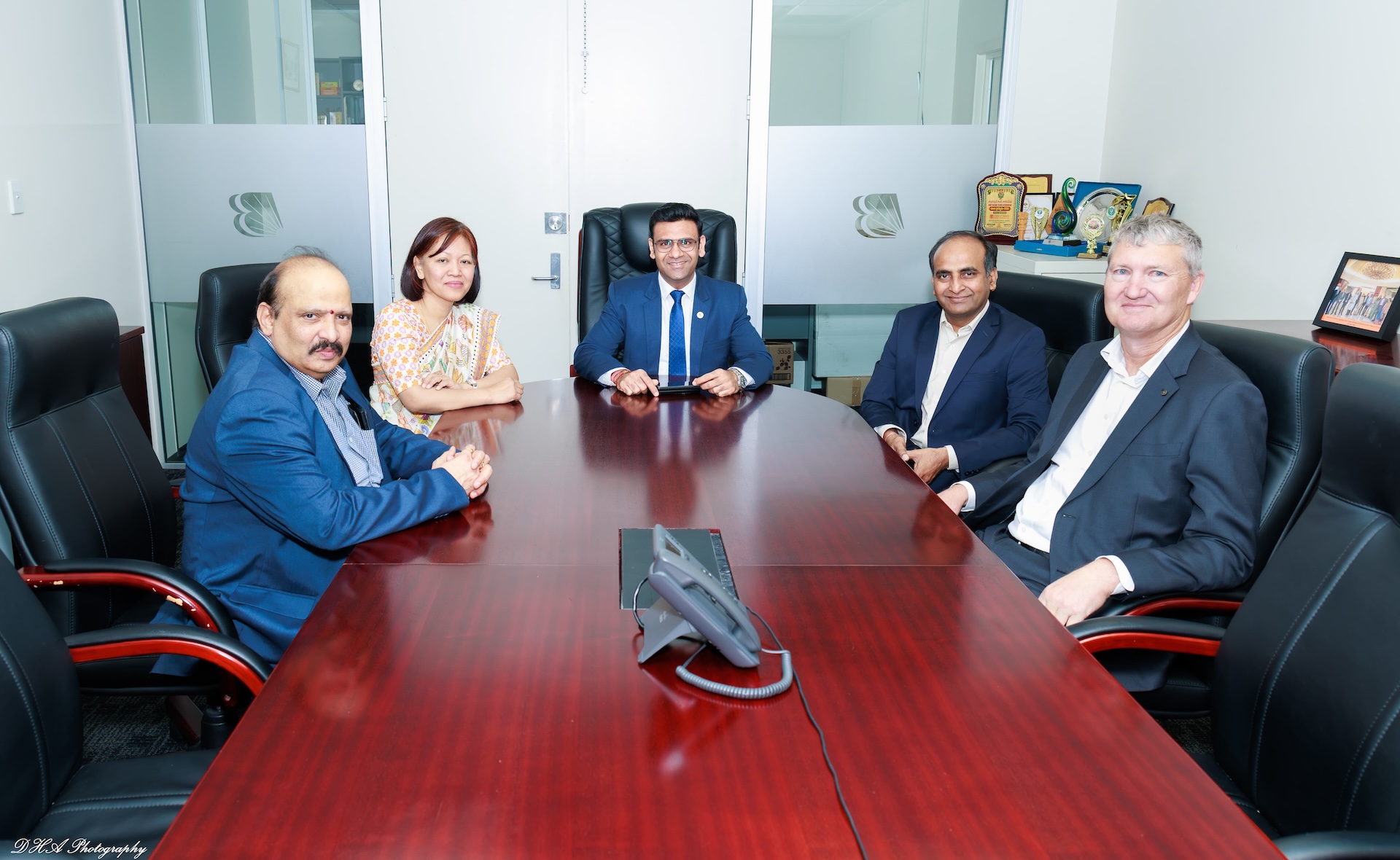
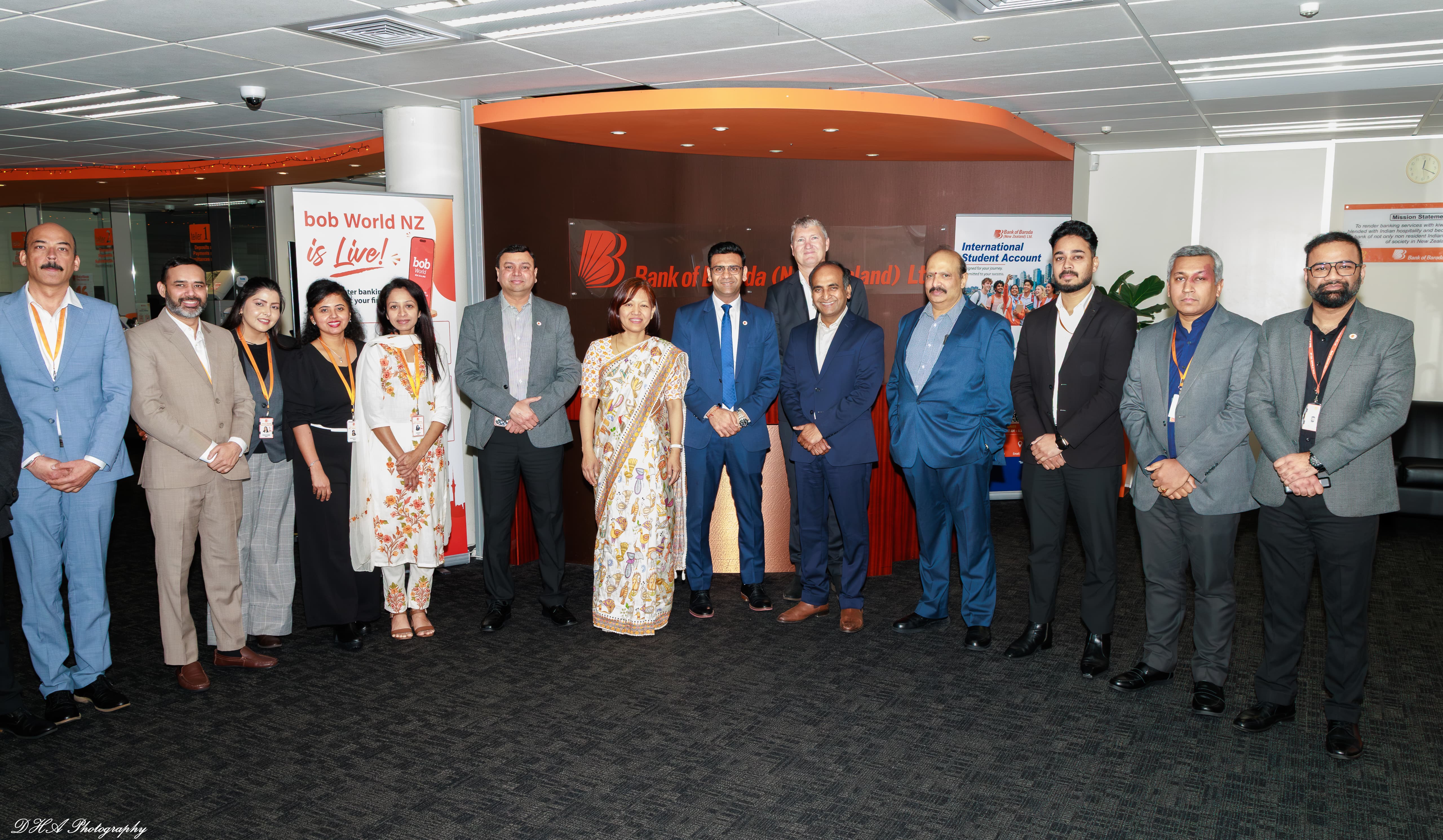
India’s High Commissioner to New Zealand, Her Excellency Muanpuii Saiawi, has visited Bank of Baroda New Zealand’s Auckland branch, with discussions focused on how banks can support the next phase of trade, investment and financial connectivity between India and New Zealand.
The visit took place on 22 August and brought together the High Commissioner, Bank of Baroda New Zealand chairman N. S. Venkatachelam, managing director Sandeep Khetan, board members and the Auckland team.
The meeting came at a time when the India-New Zealand economic relationship is gaining more attention, particularly around the opportunities expected to emerge from the India-New Zealand Free Trade Agreement.
For Bank of Baroda New Zealand, the discussion was not simply about the diplomatic significance of the visit.
It was also about how a financial institution with roots in India and an established presence in New Zealand can position itself to support businesses, investors, professionals and members of the Indian diaspora operating between the two countries.
Banking could become an important part of the trade story
Trade agreements often focus public attention on tariffs, market access and exports.
But the ability of businesses to actually use those opportunities depends heavily on financial infrastructure.
Cross-border payments, business banking, investment flows, foreign exchange, working capital, trade finance and access to reliable banking support can all influence how easily companies operate between two markets.
That is where banks with experience in both countries can potentially play a larger role.
During the High Commissioner’s visit, discussions included how financial institutions could contribute to stronger economic links between India and New Zealand.
Bank of Baroda New Zealand believes its long-standing connection with both markets gives it a natural role in that process.
The bank has operated in New Zealand for 16 years through branches in Auckland and Wellington.
Over that time, it has built a customer base among the Indian diaspora while also serving the wider New Zealand market.
A changing role for Indian-origin banks in New Zealand
The visit also comes as expectations around banking have changed significantly.
Customers increasingly expect digital access, faster service, simpler processes and the ability to manage financial relationships across countries without relying heavily on physical branches.
Bank of Baroda New Zealand says it has been working over the past year to align its products and customer experience more closely with New Zealand market expectations.
Under managing director Sandeep Khetan, the bank has been strengthening digital banking capability, customer service and initiatives aimed at improving convenience.
That is an important part of the wider story.
Indian-origin banks operating in New Zealand are no longer competing only on familiarity with India or community relationships.
They are operating in a highly developed banking market where customers compare digital services, response times, product flexibility and ease of use across institutions.
For Bank of Baroda, maintaining relevance will increasingly depend on how successfully it combines its India connection with the service expectations of New Zealand customers.
NRI Helpdesk targets a common diaspora problem
One of the more practical initiatives highlighted during the visit was the bank’s dedicated NRI Helpdesk.
The service is intended to assist New Zealand customers with non-resident Indian banking requirements in India, including NRE banking support.
For many migrants, managing financial arrangements across two countries can become complicated.
Customers may need to maintain accounts in India, understand non-resident banking rules, move funds between jurisdictions or deal with banking matters involving family, property or investments.
A dedicated service focused on those needs can therefore be more useful than a general banking product.
It also illustrates where Bank of Baroda may have a competitive advantage.
Rather than trying to replicate every aspect of larger New Zealand banks, it can use its direct India connection to solve problems that are specific to customers with financial interests in both countries.
Bank of Baroda New Zealand at a glance
| Area | Detail |
|---|---|
| New Zealand presence | 16 years |
| Branch locations | Auckland and Wellington |
| Chairman | N. S. Venkatachelam |
| Managing Director | Sandeep Khetan |
| Recent focus | Digital banking, customer service and market alignment |
| Diaspora service | Dedicated NRI Helpdesk |
| Strategic opportunity | India-New Zealand trade, investment and financial connectivity |
High Commissioner’s visit carries wider significance
Diplomatic visits to individual businesses can sometimes be largely ceremonial.
This one carries a more practical context.
If trade and investment between India and New Zealand expand, financial institutions will need to support that growth.
That may involve helping New Zealand businesses entering India, Indian companies considering New Zealand opportunities, investors moving capital between the two markets and families managing cross-border financial relationships.
A bank that can understand the regulatory, commercial and cultural expectations of both sides could become increasingly valuable.
The High Commissioner’s engagement with the bank’s board and management therefore points to a broader question: how prepared are existing financial institutions to support the commercial opportunities being discussed at government level?
That is likely to matter more as businesses begin moving from interest in the India-New Zealand relationship towards actual transactions and investment.
Khetan says visit provides encouragement
Khetan thanked the High Commissioner for her time, guidance and interaction with the bank’s team.
He said the engagement would encourage Bank of Baroda New Zealand to continue contributing to the economic and community relationship between India and New Zealand.
Venkatachelam also welcomed the opportunity for the board and staff to discuss the changing bilateral relationship and the opportunities it could create.
The bank says it intends to continue building on its 16-year presence in New Zealand while strengthening its role as a financial connection between the two countries.
The real test will be delivery
The opportunities around the India-New Zealand relationship are substantial, but the test for banks will be practical.
Businesses will want efficient services.
Customers will want strong digital banking.
Investors will need reliable cross-border support.
The diaspora will expect banking arrangements between India and New Zealand to become easier rather than more complicated.
That is where the value of this visit will ultimately be measured.
Bank of Baroda has the advantage of an established presence in New Zealand and a direct institutional connection to India.
Its challenge is to turn that position into services that customers and businesses can actually use as economic ties between the two countries expand.
The High Commissioner’s visit has given the bank an opportunity to present that ambition.
The next stage will be demonstrating how effectively it can deliver on it.
Source: Bank of Baroda New Zealand media briefing, 22 August 2026.