India and New Zealand may now have stronger political and trade frameworks in place, but the next stage of the relationship will depend on whether businesses, universities, institutions and young professionals can turn those agreements into practical results.
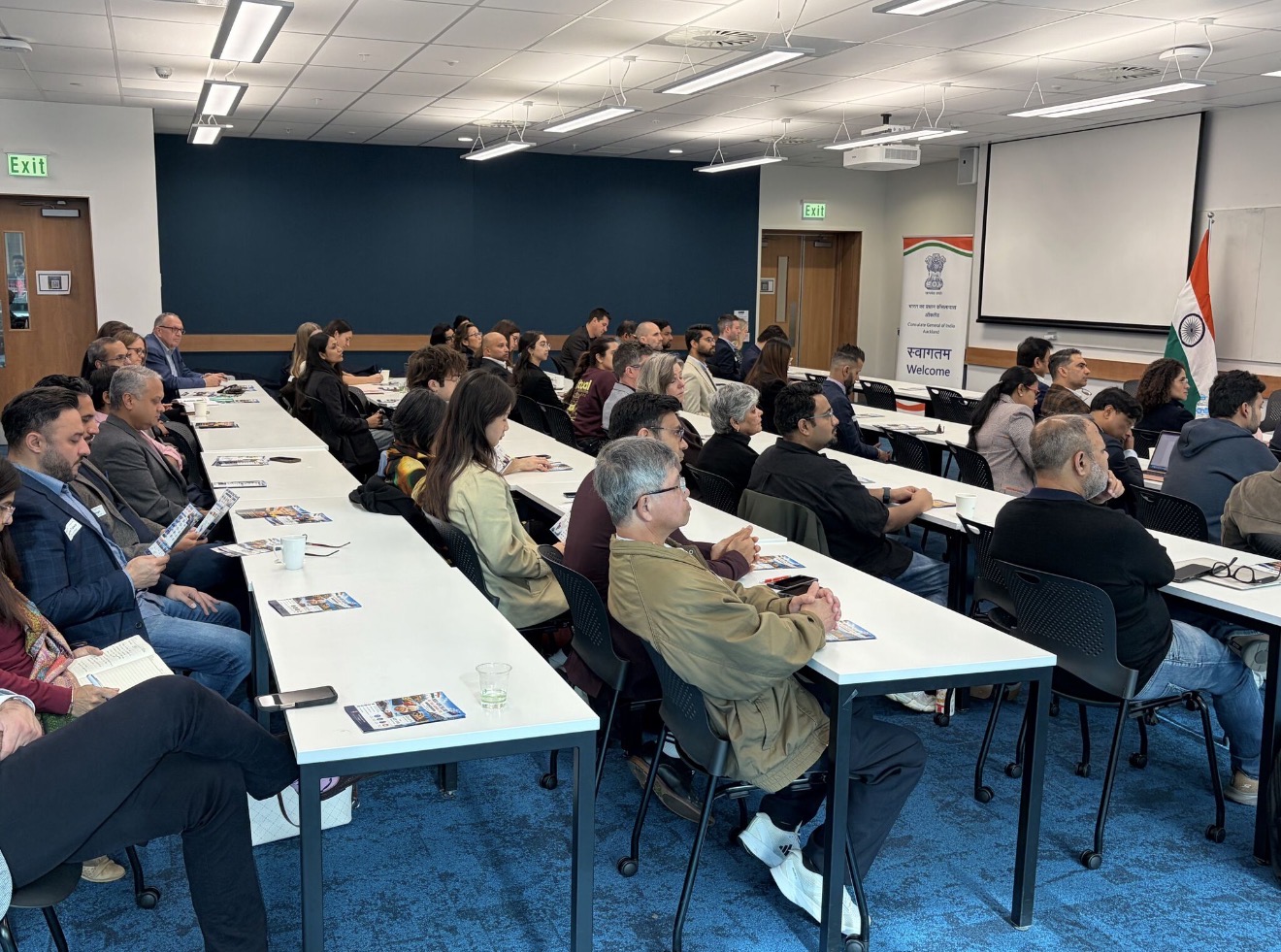
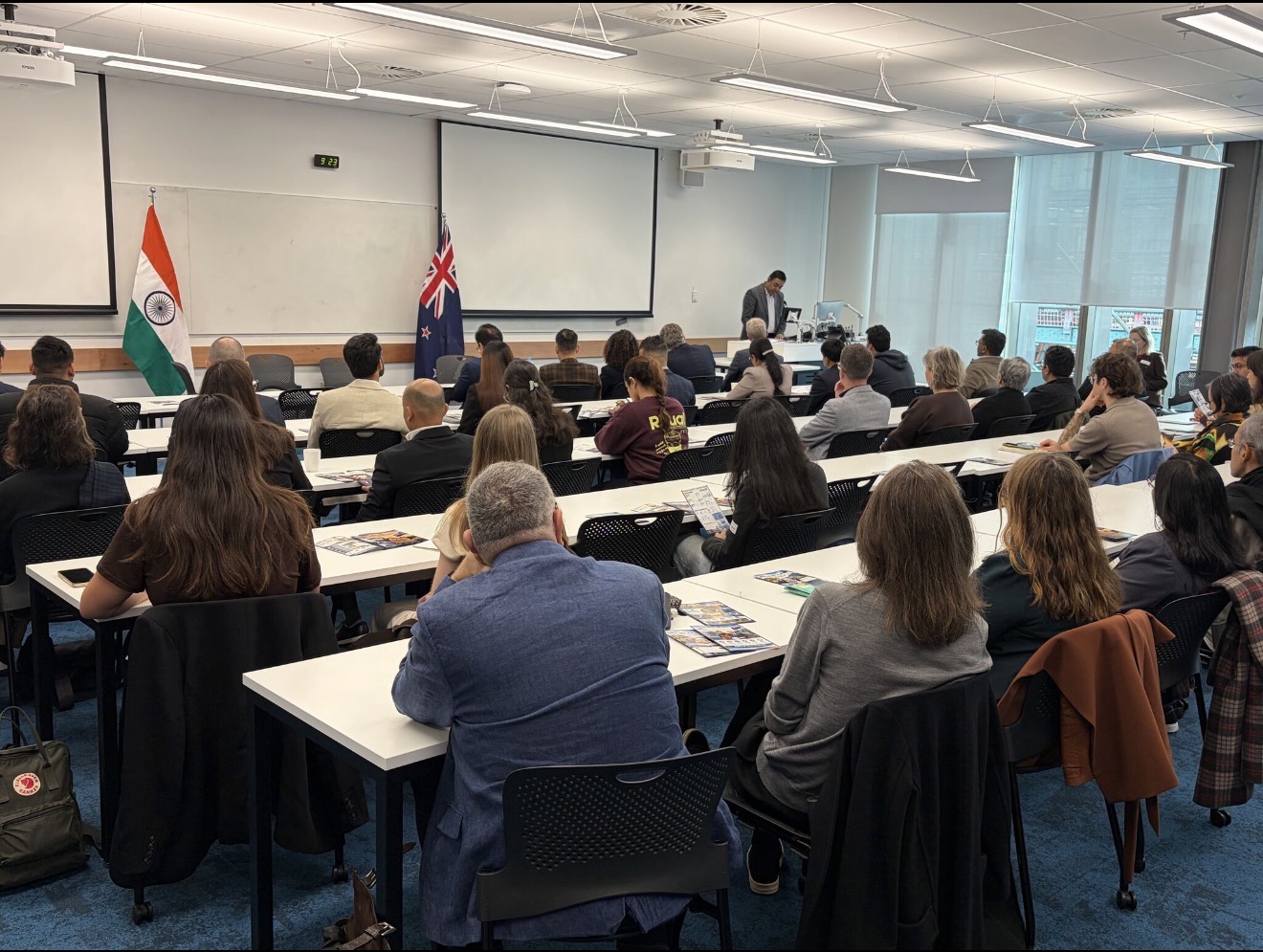
That was one of the central messages from a recent discussion hosted by the Consulate General of India in Auckland in collaboration with the University of Auckland, bringing together business, policy and academic voices to examine the evolving India-New Zealand relationship.
The event focused not only on the Free Trade Agreement and the broader Strategic Partnership, but also on the harder question that comes afterwards: how do both countries convert diplomatic momentum into real commercial, educational and professional opportunities?
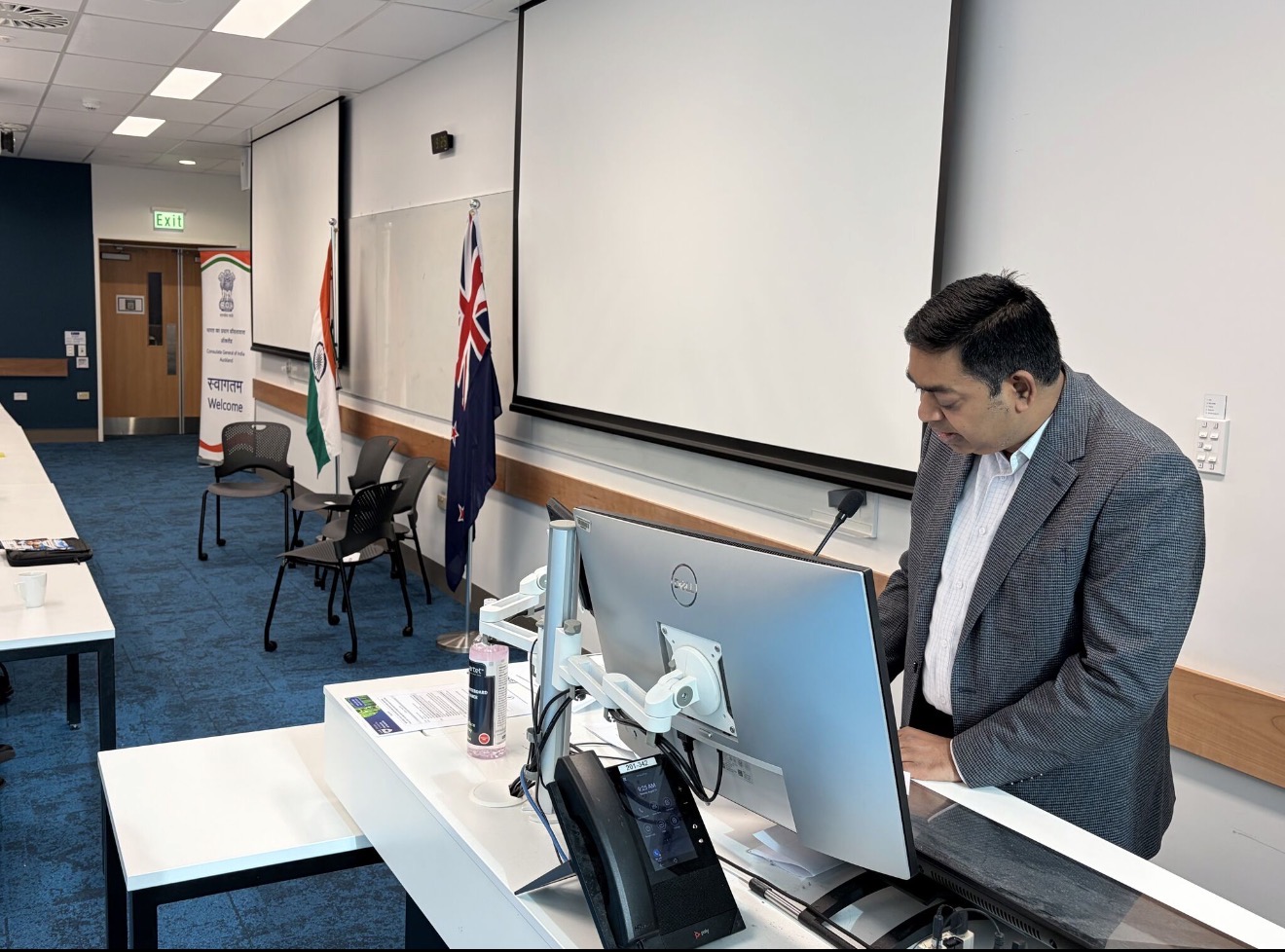
Consul-General of India in Auckland Dr Madan Mohan Sethi said the FTA and the elevation of bilateral ties had created a strong platform for deeper engagement.
But agreements alone, he stressed, would not deliver outcomes.
The real drivers would be people, institutions, businesses and young professionals willing to build relationships and act on the opportunities now opening up.
Moving beyond the tariff conversation
One of the strongest themes from the discussion was that New Zealand businesses should not look at India only through the narrow lens of tariffs.
India remains a significantly underdeveloped market for many New Zealand companies despite its size, growth and expanding middle class.
The first panel, “Enabling the Opportunities of Free Trade: The Power of People-to-People Connections,” brought together Felicity Roxburgh, Simon Bridges and Tim McCready, with the discussion moderated by Dr Deepika Jindal.
The panel emphasised that while the FTA can make trade easier, business success in India will still depend heavily on trusted relationships, cultural understanding, repeated engagement and direct market experience.
That is particularly important for New Zealand companies that may be familiar with doing business in Australia, Europe, North America or parts of Asia, but have limited first-hand exposure to India.
The message was clear: businesses cannot expect a trade agreement alone to remove the need to understand local markets.
India is not one single market.
Its states, industries, cities and consumer segments can differ substantially from one another, and companies looking to establish a serious presence will need more than a pricing strategy.
They will need relationships.
Indian diaspora seen as an important bridge
The Indian diaspora in New Zealand was repeatedly identified as one of the strongest assets available to both countries.
People with experience of both markets can help businesses understand cultural expectations, customer behaviour, professional networks and commercial practices.
That role goes beyond simple introductions.
Diaspora communities can become a practical bridge between companies, universities, entrepreneurs and institutions.
For New Zealand, that could be particularly valuable as businesses look for ways to enter an enormous market without having to build every connection from scratch.
For India, New Zealand’s Indian community can also help identify where New Zealand expertise, products and technologies may fit into Indian demand.
Simon Bridges among speakers examining untapped opportunity
Former National Party leader and current Auckland Business Chamber chief executive Simon Bridges was among those participating in the first panel.
The discussion highlighted what speakers described as significant untapped potential in India for New Zealand businesses.
The point was not that every company should immediately enter India.
Rather, New Zealand firms need to develop a more realistic understanding of where their strengths match Indian demand.
That could mean sectors where New Zealand has genuine capability rather than attempting to compete simply on scale.
The wider discussion also reinforced the importance of business delegations.
Visiting a market, meeting companies directly and understanding how business is conducted can often reveal opportunities that are difficult to identify from New Zealand.
Second panel asks how policy becomes commercial opportunity
The second panel moved the discussion from the diplomatic framework to implementation.
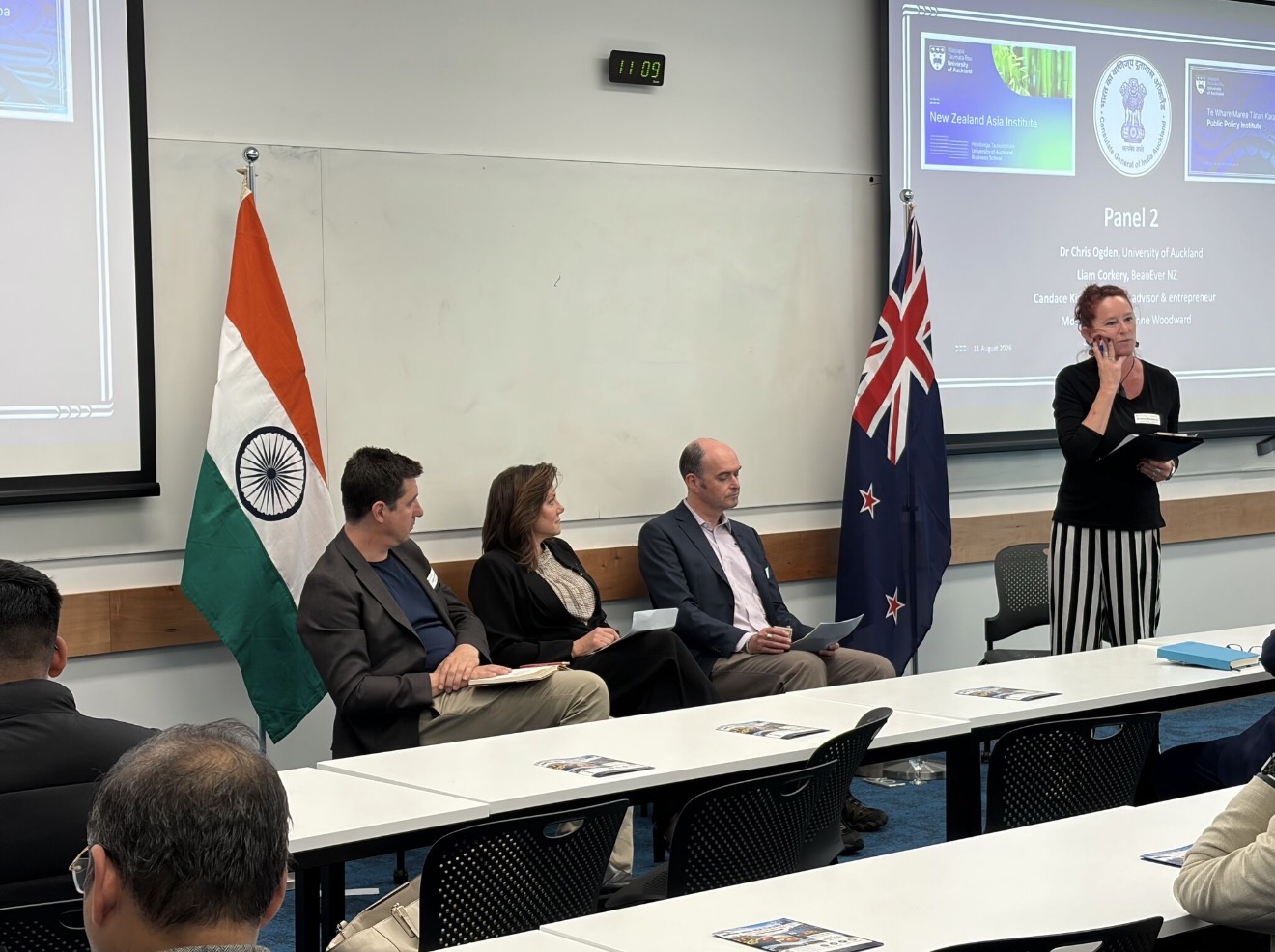
“From Policy to Practice: How the Evolving Framework Can Enable Business” featured Dr Chris Ogden, Liam Corkery and Candace Kinser, moderated by Dr Suzanne Woodward.
The discussion focused on how the changing bilateral framework could translate into practical opportunities across:
- trade
- technology
- investment
- innovation
- entrepreneurship
- research and institutional collaboration
Speakers highlighted India’s scale and growth trajectory, while also arguing that New Zealand needs to diversify its international economic relationships.
That is a particularly important consideration for a relatively small trading country.
Diversification does not simply mean finding another export destination.
It means reducing reliance on a limited number of markets and creating relationships that can continue to grow over decades.
New Zealand needs to identify its niches
One of the more practical points to emerge from the discussion was that New Zealand should focus on areas where its capabilities genuinely complement India’s scale.
New Zealand cannot compete with India on population, manufacturing scale or labour force size.
But it does have strengths in selected sectors, including specialised technology, food production, education, research, professional services and innovation.
The commercial opportunity may therefore lie in identifying specific problems where New Zealand capability can add value inside a much larger market.
That requires businesses to be selective.
Entering India simply because the country is large is not a strategy.
Understanding where a New Zealand product, service or expertise solves a genuine problem is.
Cultural understanding remains essential
Despite the excitement surrounding the FTA and deeper political ties, speakers repeatedly returned to the importance of cultural understanding.
Business relationships with India often take time.
Trust can matter as much as formal agreements.
Companies need market preparation and a willingness to maintain relationships over the long term.
That means the most successful New Zealand companies may not necessarily be those that move fastest.
They may be those that are willing to learn first, invest in relationships and stay engaged.
This is also where universities, professional networks and community organisations can become increasingly important.
Universities have a larger role to play
The event highlighted universities as more than education providers.
They can act as platforms for:
- research collaboration
- student mobility
- entrepreneurship
- innovation
- professional connections
- business partnerships
The University of Auckland’s involvement reflected the growing importance of institutional relationships in the wider India-New Zealand partnership.
University-to-university connections can often develop independently of political cycles and create relationships that last for years.
Researchers collaborate.
Students move between countries.
Graduates enter business and government.
Ideas developed through academic partnerships can eventually become commercial opportunities.
For a bilateral relationship seeking greater depth, those connections matter.
Young professionals could become one of the biggest drivers
Dr Sethi’s emphasis on young professionals also deserves attention.
The India-New Zealand relationship is often discussed through ministers, trade agreements and senior business delegations.
But the people who ultimately build the next phase of the relationship may be younger professionals working across technology, finance, research, education, entrepreneurship and professional services.
Those individuals are increasingly comfortable operating internationally.
They may have professional networks across several countries and can move between commercial and cultural environments more easily than previous generations.
Creating opportunities for those people to meet, collaborate and build businesses could ultimately be more valuable than any single official visit.
The FTA is a framework, not the finish line
Perhaps the most important takeaway from the discussion is that an FTA should not be mistaken for an economic outcome.
It creates conditions.
It can reduce barriers.
It can provide certainty.
It can encourage businesses to look more seriously at each other’s markets.
But it cannot force companies to trade.
It cannot create trust automatically.
And it cannot substitute for understanding the market.
That work still has to happen between people.
The event therefore placed unusual emphasis on business-to-business, university-to-university and people-to-people connections.
Those relationships were identified as critical to turning political momentum into tangible results.
What happens next?
The Consulate General of India in Auckland said it intends to continue working with the University of Auckland and other New Zealand stakeholders to facilitate structured engagement, delegations and institutional partnerships.
That could become particularly important as businesses begin assessing what the evolving India-New Zealand framework means for them in practical terms.
The next stage will be less about announcing agreements and more about measuring outcomes.
Are more New Zealand businesses actually entering India?
Are Indian companies investing or partnering in New Zealand?
Are universities building meaningful research programmes together?
Are students and young professionals finding pathways between the two countries?
Are small and medium-sized businesses benefiting, or will the gains remain concentrated among large organisations?
Those are the questions that will determine whether the current momentum becomes something durable.
A relationship entering a more practical phase
India and New Zealand have spent considerable political energy strengthening their relationship.
The discussion in Auckland suggested that attention is now beginning to shift from the diplomatic architecture to implementation.
That is an important transition.
Trade agreements and strategic partnerships create headlines.
Businesses, researchers, universities and professionals create outcomes.
If the relationship is to reach its potential, the next phase will require both countries to move beyond declarations and into sustained collaboration.
For New Zealand businesses in particular, India may offer enormous opportunity.
But the message from Auckland was equally clear: opportunity will not come simply because an agreement exists.
It will come to those prepared to understand the market, build trusted relationships and stay engaged for the long term.
Picture and information courtesy: Consulate General of India, Auckland