
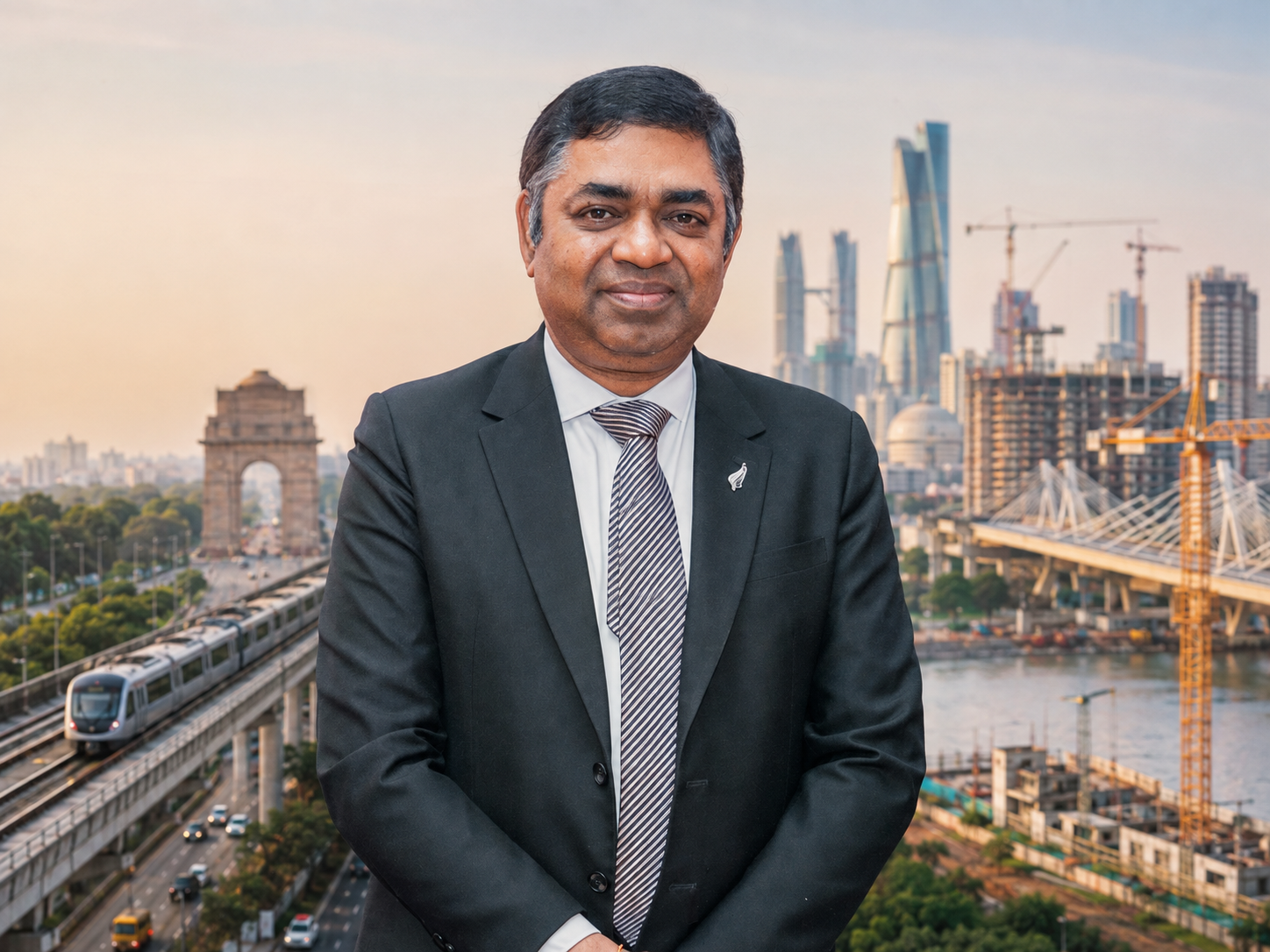
India’s massive infrastructure expansion is opening a new area of opportunity for New Zealand companies, with India’s Consul General in Auckland, Dr Madan Mohan Sethi, urging Kiwi businesses to look beyond traditional trade and identify where their expertise can participate in India’s next phase of growth.
In an article published by the New Zealand Herald, Sethi set out the scale of India’s infrastructure programme and the opportunities it could create for New Zealand businesses.
His argument comes at an important point in the India-New Zealand relationship, following the signing of the countries’ Free Trade Agreement in April and the establishment of a Strategic Partnership during Indian Prime Minister Narendra Modi’s visit to New Zealand in July.
Readers who would like to read Dr Sethi’s original New Zealand Herald article can do so here:
The infrastructure discussion also widens the commercial relationship beyond sectors that have traditionally dominated conversations about India and New Zealand, including agriculture, dairy, education and tourism.
For New Zealand companies, the opportunity may increasingly include engineering, transport technology, water management, specialist manufacturing, renewable energy, construction technology, logistics and digital infrastructure.
India’s scale means those opportunities can be substantial.
India is building at enormous scale
India is investing heavily in roads, railways, metro systems, airports, urban development, logistics, renewable energy and digital infrastructure as it responds to rapid economic and population growth.
Its Government is also seeking to increase domestic production of specialised equipment needed to deliver those projects.
Reuters reported this month that India was preparing a US$1.2 billion incentive programme aimed at expanding local manufacturing of advanced construction and infrastructure equipment.
The proposed seven-year programme is expected to seek around US$1.8 billion in private investment and could support production of equipment including tunnel-boring machines, elevators and other specialised systems.
For New Zealand businesses, participation does not necessarily mean competing for the largest construction contracts.
The opportunity may instead sit within the supply chain.
Companies with specialist technology, intellectual property, engineering expertise, environmental capability or niche manufacturing could potentially work alongside Indian companies delivering much larger projects.
That partnership model is increasingly relevant to the way Sethi has been presenting India to New Zealand businesses.
From selling to India to working with India
Sethi has repeatedly encouraged New Zealand businesses to think about India as more than an export destination.
The Consulate General of India in Auckland has been involved in a series of commercial engagements aimed at connecting New Zealand companies with Indian businesses, investors and market opportunities.
At a business event organised with the Waikato Chamber of Commerce in May, Sethi highlighted opportunities created by the recently signed FTA across trade, investment, mobility and wider economic cooperation.
The message was that entering India requires more than identifying a large consumer market.
Businesses need local knowledge, suitable partners and an understanding of different states, regulations and commercial conditions.
That distinction is important for infrastructure.
A New Zealand company may not build an entire Indian metro line, highway or airport.
But it may be able to provide technology, components, design expertise, environmental systems or specialised services to the companies that do.
Kiwi businesses are already looking harder at India
New Zealand business interest in India has been increasing.
The NZ-India Business Momentum 2026 report, commissioned by the Auckland Business Chamber in partnership with the Consulate General of India in Auckland and Deloitte, surveyed 74 New Zealand businesses.
It found 51 percent strongly regarded India as one of their top three growth priorities.
Another 69 percent expected revenue from India-related activities to increase over the following 12 months, while 68 percent said they felt better prepared to engage with India than they had a year earlier.
More than 55 percent had exported goods or services to India during the previous three years.
The research also showed businesses increasingly moving from asking whether India is worth entering to working out how to enter successfully.
Sethi contributed to the report, highlighting opportunities in areas where New Zealand companies have established capabilities, including food and agriculture, technology, education and advanced manufacturing.
Infrastructure could now become another significant part of that list.
Where New Zealand expertise could fit
New Zealand will never compete with India on industrial scale.
It does not need to.
Its opportunity is more likely to come from specialist capability.
|
New Zealand capability |
Potential application in India |
|
Engineering and project design |
Transport, industrial and urban projects |
|
Water technology |
Water supply, wastewater and urban infrastructure |
|
Geotechnical expertise |
Tunnels, roads, bridges and major construction |
|
Construction technology |
Productivity, modelling and project delivery |
|
Environmental systems |
Sustainability and resource management |
|
Specialist manufacturing |
Components and specialised equipment |
|
Digital tools |
Infrastructure monitoring and project management |
|
Safety systems |
Transport and large construction projects |
The strongest opportunities are likely to emerge where New Zealand expertise complements Indian scale, rather than trying to compete directly with it.
FTA provides a stronger commercial platform
The India-New Zealand Free Trade Agreement was signed in New Delhi on 27 April 2026.
The agreement has completed the relevant Parliamentary Examination in New Zealand, while implementing legislation is progressing through Parliament.
It is expected to enter into force later in 2026.
The agreement is intended to improve market access and create stronger conditions for trade, services and investment between the two countries.
When Modi visited New Zealand in July, he specifically invited New Zealand businesses to participate in areas including infrastructure development, civil aviation, logistics, clean energy, urban mobility, water management, waste management and the digital economy.
He also encouraged businesses in both countries to expand investment and commercial partnerships.
That puts Sethi’s infrastructure message within a much wider government-to-government strategy.
Infrastructure is not being discussed as an isolated sector. It is becoming part of a broader push to deepen the economic relationship.
New Zealand also has a major infrastructure pipeline
The opportunity could eventually operate in both directions.
New Zealand’s National Infrastructure Pipeline contained almost 12,500 initiatives in June 2026 with a combined estimated value of around NZ$290 billion.
Te Waihanga reported NZ$95.8 billion of initiatives as fully funded, while NZ$192.8 billion had either committed funding or a confirmed funding source.
More than 3,000 initiatives worth around NZ$71.2 billion were already under construction.
That creates scope not only for New Zealand companies to look towards India, but for Indian engineering, construction, technology and investment businesses to look more closely at New Zealand.
A mature bilateral relationship should ultimately allow capital, technology and expertise to move in both directions.
Diaspora can become an economic bridge
There is also a role for New Zealand’s growing Indian community.
People who understand both markets, business cultures and professional networks can help companies navigate relationships that might otherwise take years to establish.
That makes the diaspora important not only culturally, but commercially.
Sethi’s emphasis on practical business connections reflects that opportunity.
Government agreements can create the framework and political visits can create momentum, but commercial relationships ultimately depend on businesses finding the right partners and projects.
India’s infrastructure transformation is already taking place at extraordinary scale.
The opportunity now facing New Zealand is to decide where its businesses can add value to it.
Sethi’s New Zealand Herald article provides a timely argument for New Zealand companies to start looking at that question more seriously.
Source credit: Dr Madan Mohan Sethi’s original article was published by the New Zealand Herald. Webfit News has independently expanded the story with additional context from the Consulate General of India in Auckland, Auckland Business Chamber, New Zealand Government, Te Waihanga, Government of India and Reuters.
Original New Zealand Herald article: