
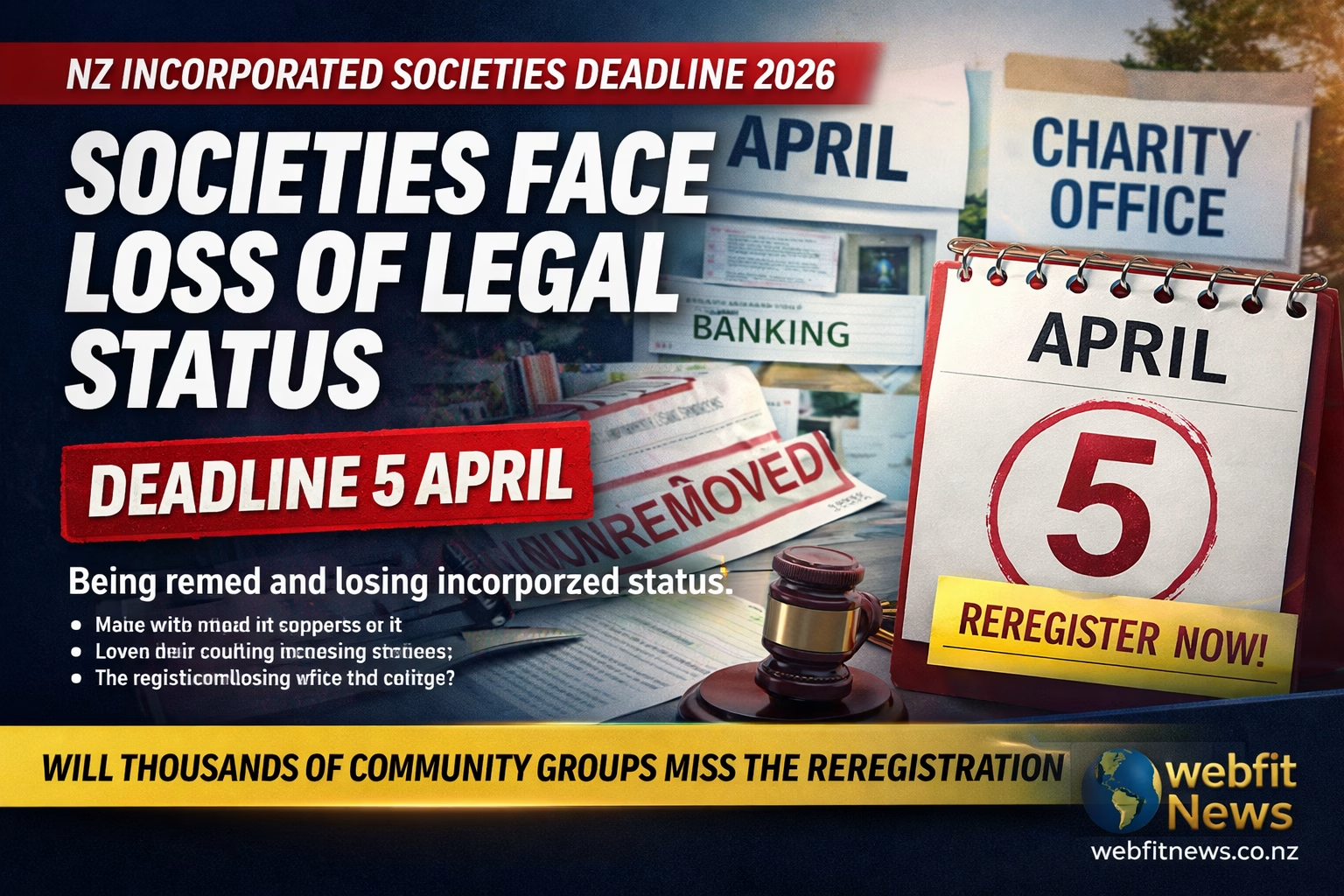
A quiet but critical deadline is approaching in New Zealand, and many community groups may not realise how serious it is.
The Companies Office is warning incorporated societies across the country to reregister under the new Incorporated Societies Act 2022 before 5 April 2026. If they fail to do so, the consequences are immediate and potentially damaging.
This is not a routine update. It is a legal reset.
What is happening and why it matters
Incorporated societies are the backbone of New Zealand’s community structure. They include:
- Cultural associations
- Sports clubs
- Religious organisations
- Community trusts and volunteer groups
Under the new law, all existing societies must formally re-register to continue operating as legal entities.
If they miss the deadline, they will be removed from the official register.
That means, in simple terms, they stop existing legally.
What happens if societies miss the deadline
The risks are not theoretical. They are immediate and practical.
According to the Companies Office, societies that fail to reregister could face:
1. Banking disruption
- Bank accounts may be frozen or closed
- Payments and transactions could stop overnight
2. Contract and lease uncertainty
- Venue agreements may become invalid
- Equipment leases could be terminated
- Suppliers may refuse to deal with the organisation
3. Tax complications
- Charities may lose access to exemptions
- Reporting obligations may be disrupted
- Inland Revenue status could be affected
4. Funding delays
- Grant providers often require proof of incorporation
- Funding applications could be rejected
5. Operational shutdown
- Volunteers may have to pause activities
- Events and services could be cancelled
In short, missing the deadline can bring a functioning organisation to a standstill.
Why the law changed
The Incorporated Societies Act 2022 replaces legislation that was more than a century old.
The goal is to modernise how societies are governed.
Key improvements include:
- Clearer roles and responsibilities for officers
- Stronger accountability and transparency
- Updated rules around disputes and decision-making
- Better protection for members
The government’s message is clear. This is not just compliance. It is an opportunity to upgrade governance.
But here is the problem. Many small organisations are volunteer-run. They do not have legal teams or administrative staff.
For them, this process can feel complex and easy to delay.
That delay now carries real risk.
The reality on the ground
Let’s be blunt.
A lot of societies are going to miss this deadline.
Not because they do not care, but because:
- They underestimated the effort required
- They delayed updating their constitution
- They assumed extensions would come
- They did not fully understand the consequences
That last point is the biggest issue. Many groups think they can fix it later.
Technically, they can apply for restoration.
Practically, that is messy, time-consuming, and disruptive.
What societies need to do right now
If a society has not yet completed reregistration, the priority is simple.
Move now.
The process involves:
- Updating the constitution to meet the 2022 Act requirements
- Getting member approval for the new rules
- Submitting the reregistration application
The Companies Office says once the constitution is ready, the actual application is straightforward.
The real bottleneck is internal approval.
If that step is already in progress, there is still time to complete it.
Where to get help
Support is available, but it needs to be used immediately.
Societies can:
- Visit the Incorporated Societies Register website
- Access step-by-step guides and templates
- Contact the service centre on 0508 762 438
- Refer to guidance from Charities Services
There is no shortage of information. The issue is action.
Webfit News Perspective
This is a classic case of policy meeting reality and reality pushing back.
From a government point of view, the reform makes sense. You cannot run modern organisations on outdated laws.
But from a community point of view, this has not been managed well enough.
Thousands of volunteer-led groups are now facing a compliance deadline that requires:
- Legal understanding
- Governance updates
- Member coordination
That is not trivial.
Here is the uncomfortable truth.
If your organisation misses this deadline, it is not just bad luck. It is poor governance.
And that is exactly what the new law is trying to fix.
So this becomes a filtering moment.
- Well-run organisations will adapt and strengthen
- Poorly managed ones will struggle or disappear
Harsh, but accurate.
What happens next
The next two weeks are critical.
By 5 April:
- Compliant societies will continue operating smoothly
- Non-compliant ones risk legal and operational disruption
After that, restoration processes may begin, but they come with uncertainty and delays.
For many community groups, this could mean:
- Missed events
- Lost funding
- Damaged credibility
All avoidable.
Final takeaway
This is not just a deadline. It is a turning point for how community organisations operate in New Zealand.
If you are involved in a society and this is still on your to-do list, stop delaying.
Because after 5 April, this is no longer a task.
It becomes a problem.
References
- New Zealand Companies Office Media Release, 20 March 2026
- Incorporated Societies Act 2022 guidance, Companies Office
- Charities Services New Zealand