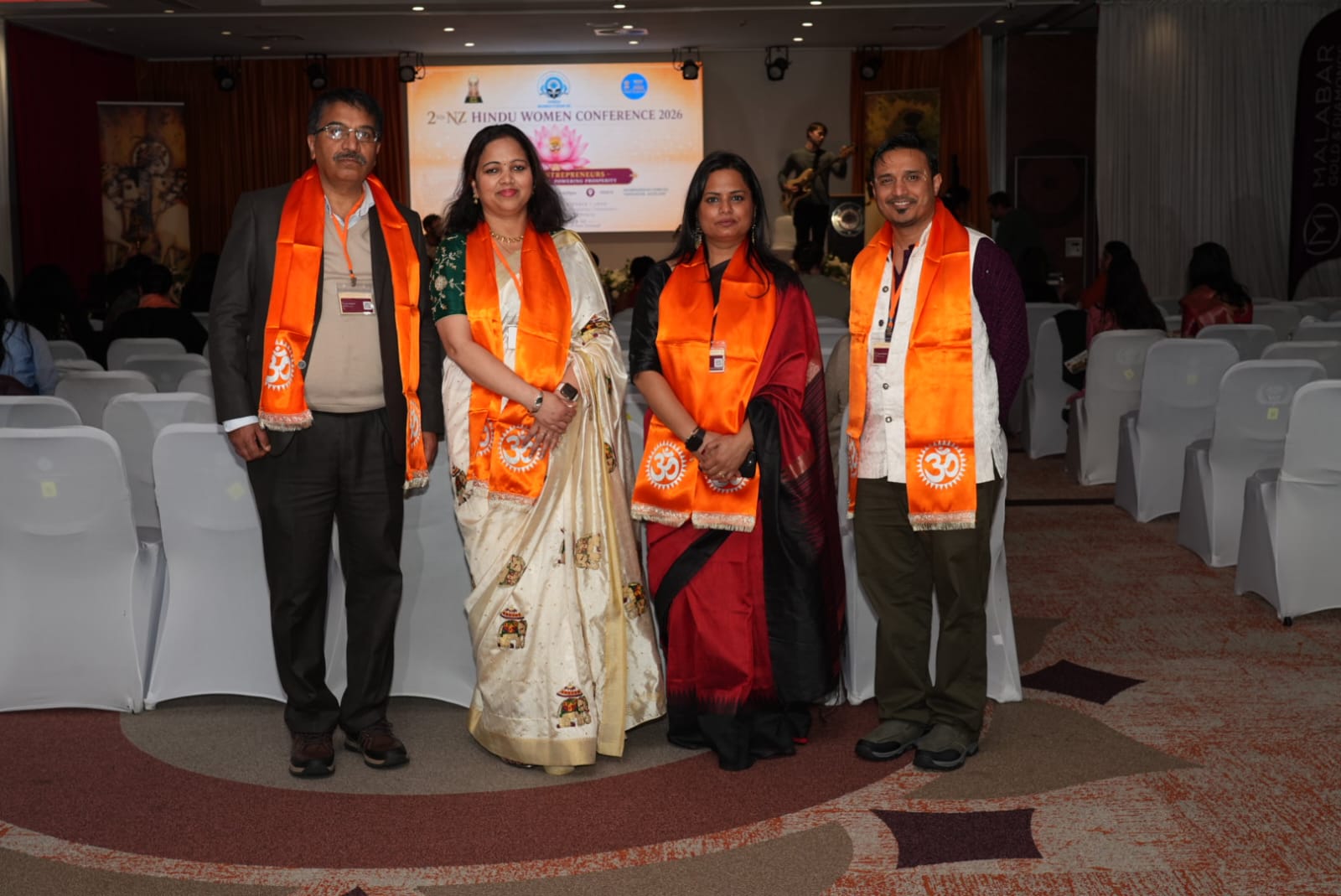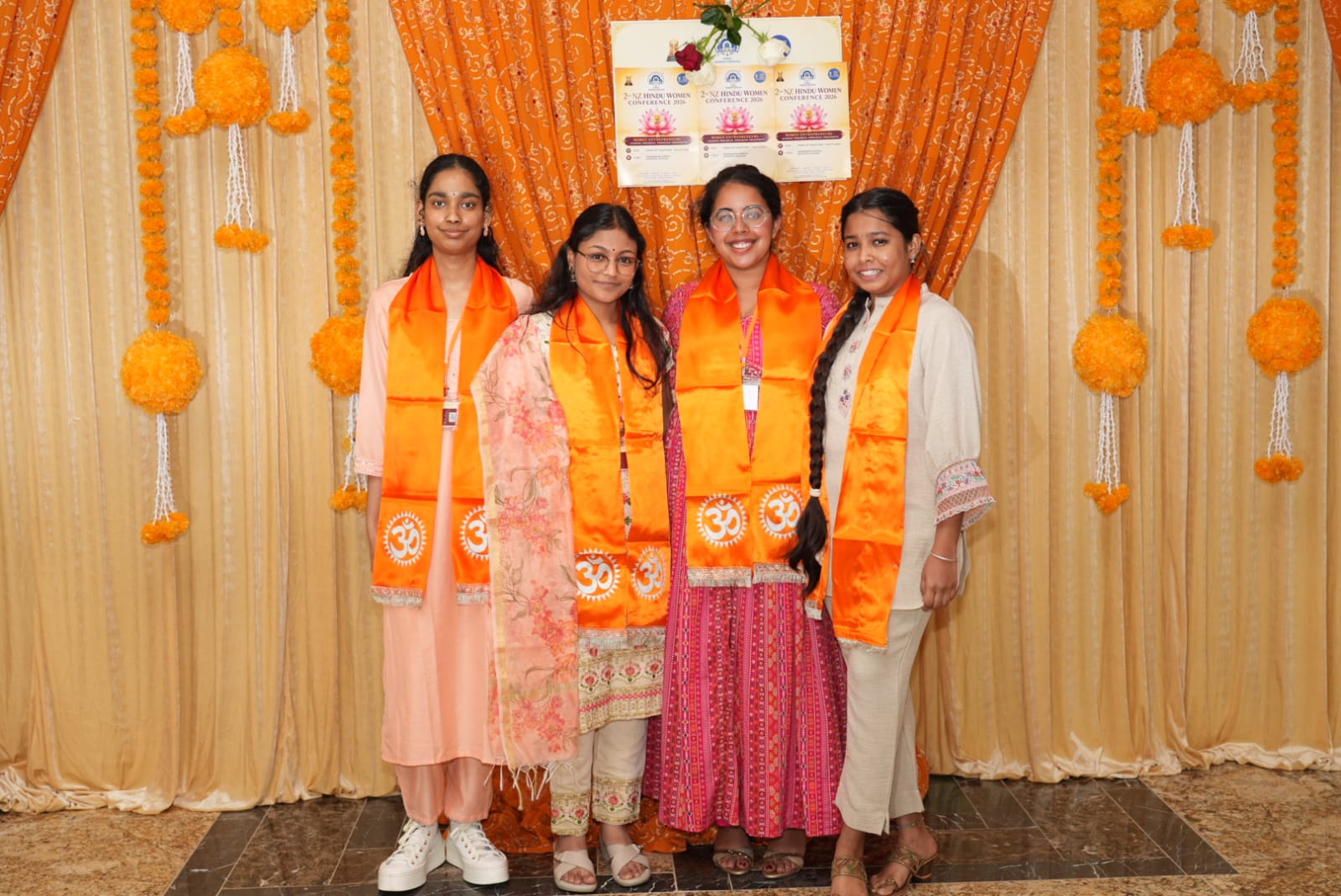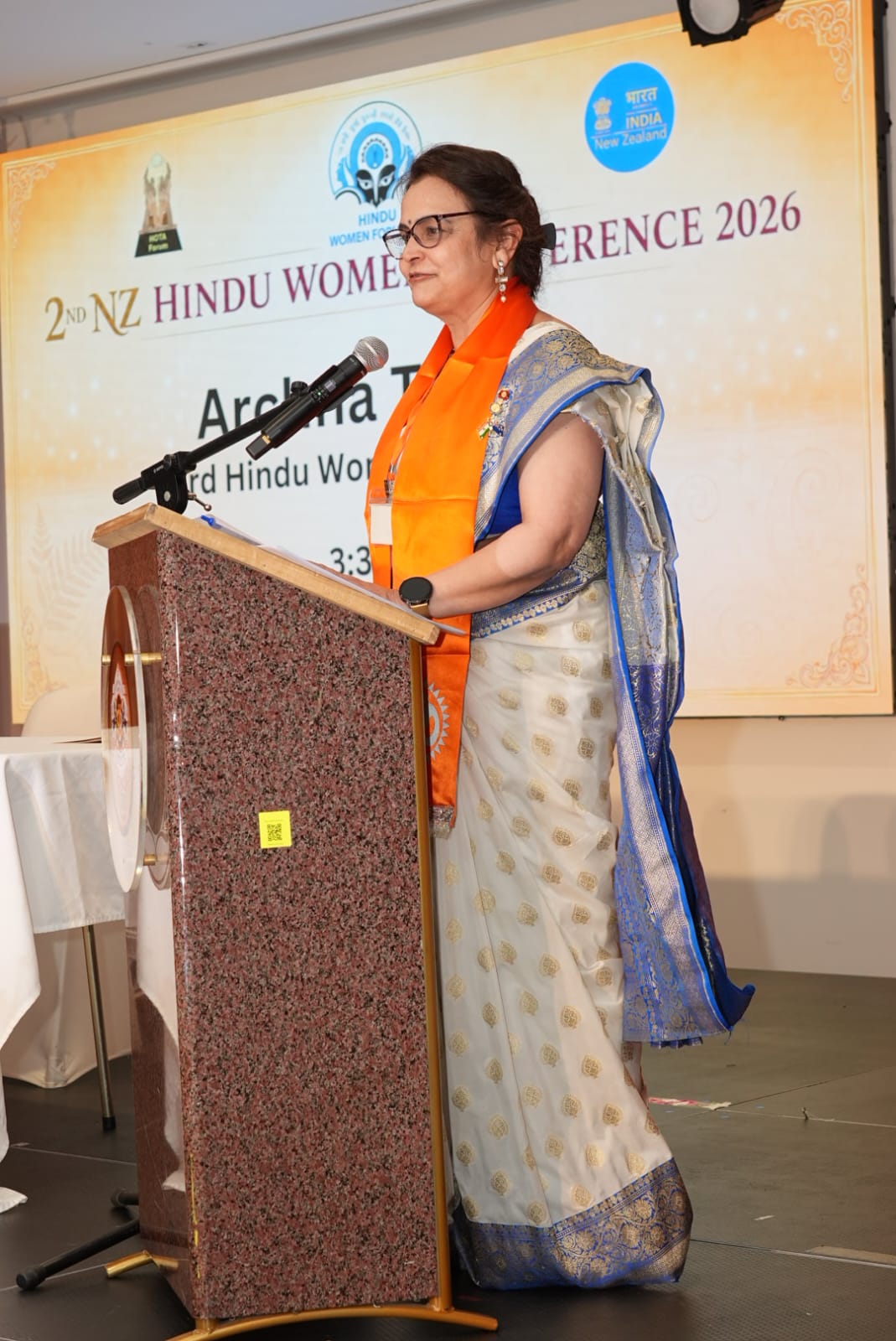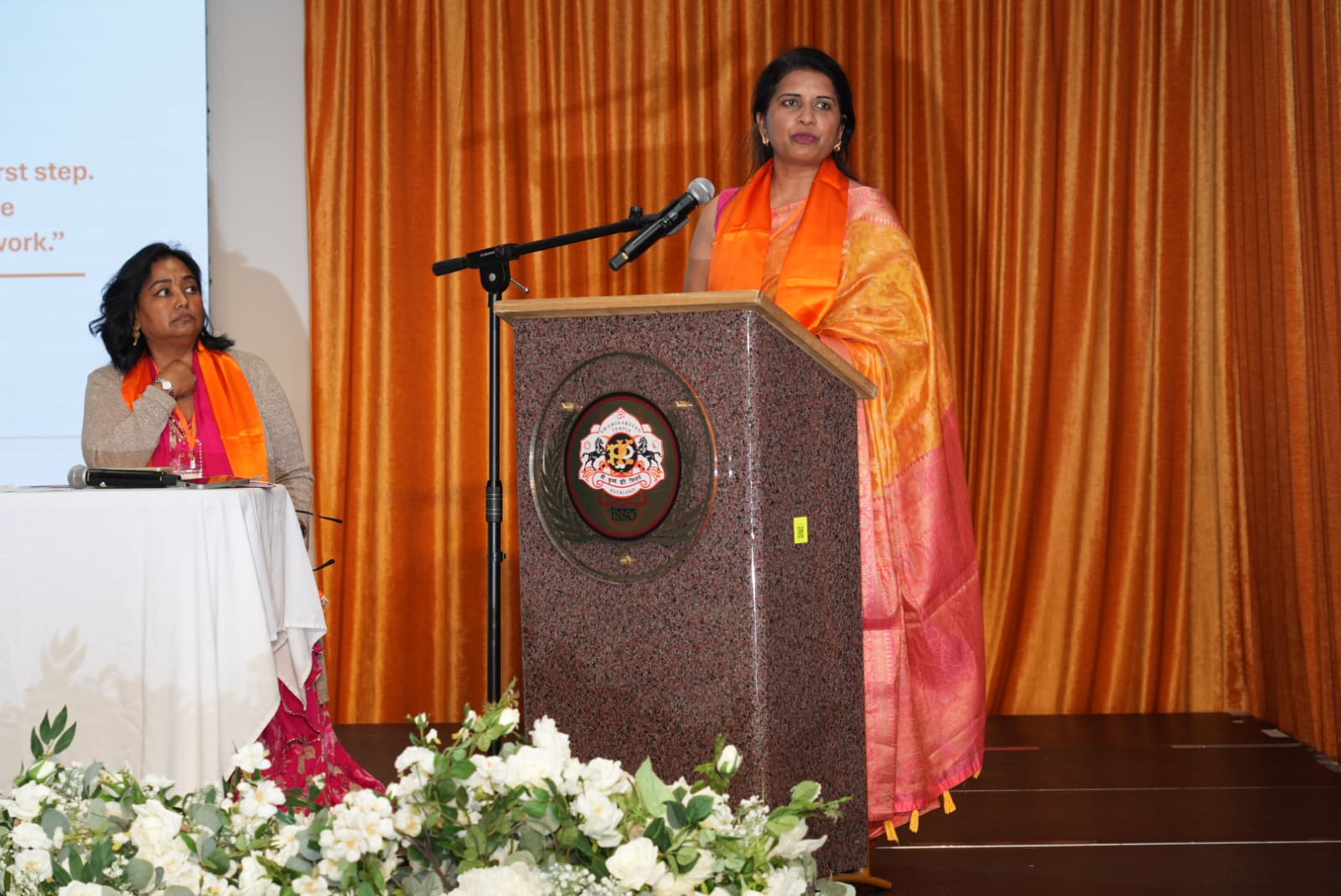
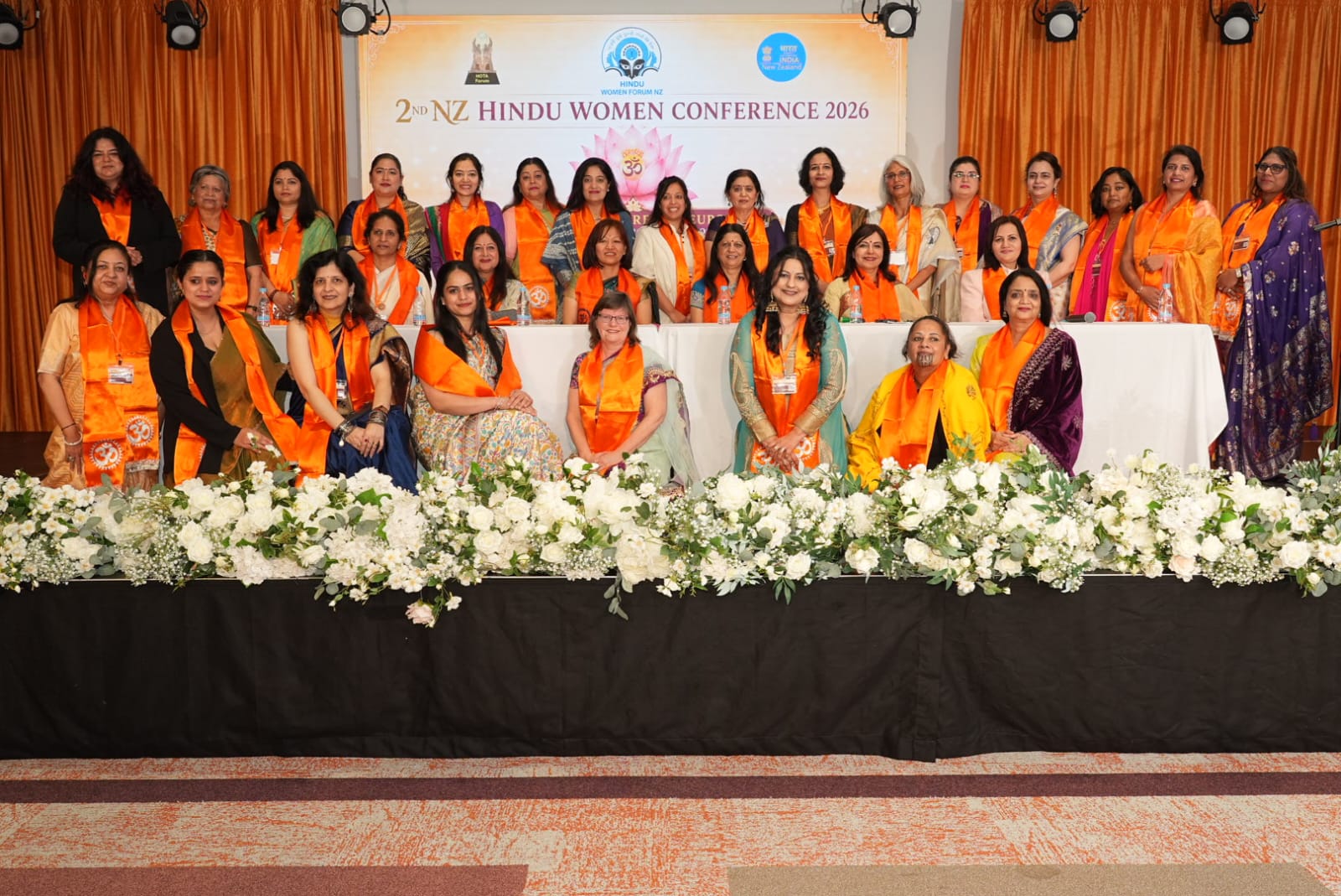
More than a celebration of achievement, the 2nd New Zealand Hindu Women Conference in Auckland became a day-long conversation about something much bigger: how women can move from participation to leadership, from professional success to community influence, and from being represented in New Zealand society to actively helping shape it.
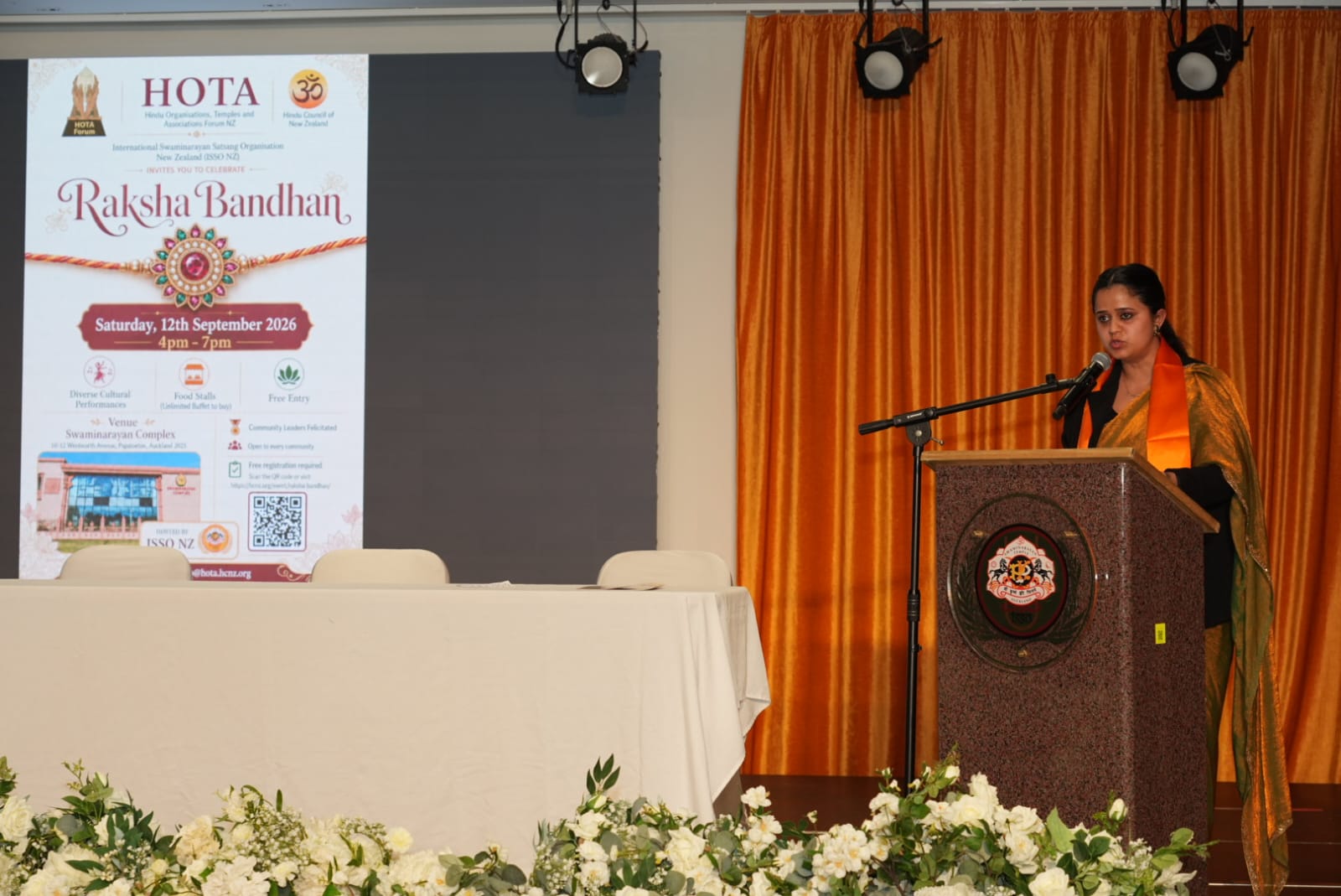
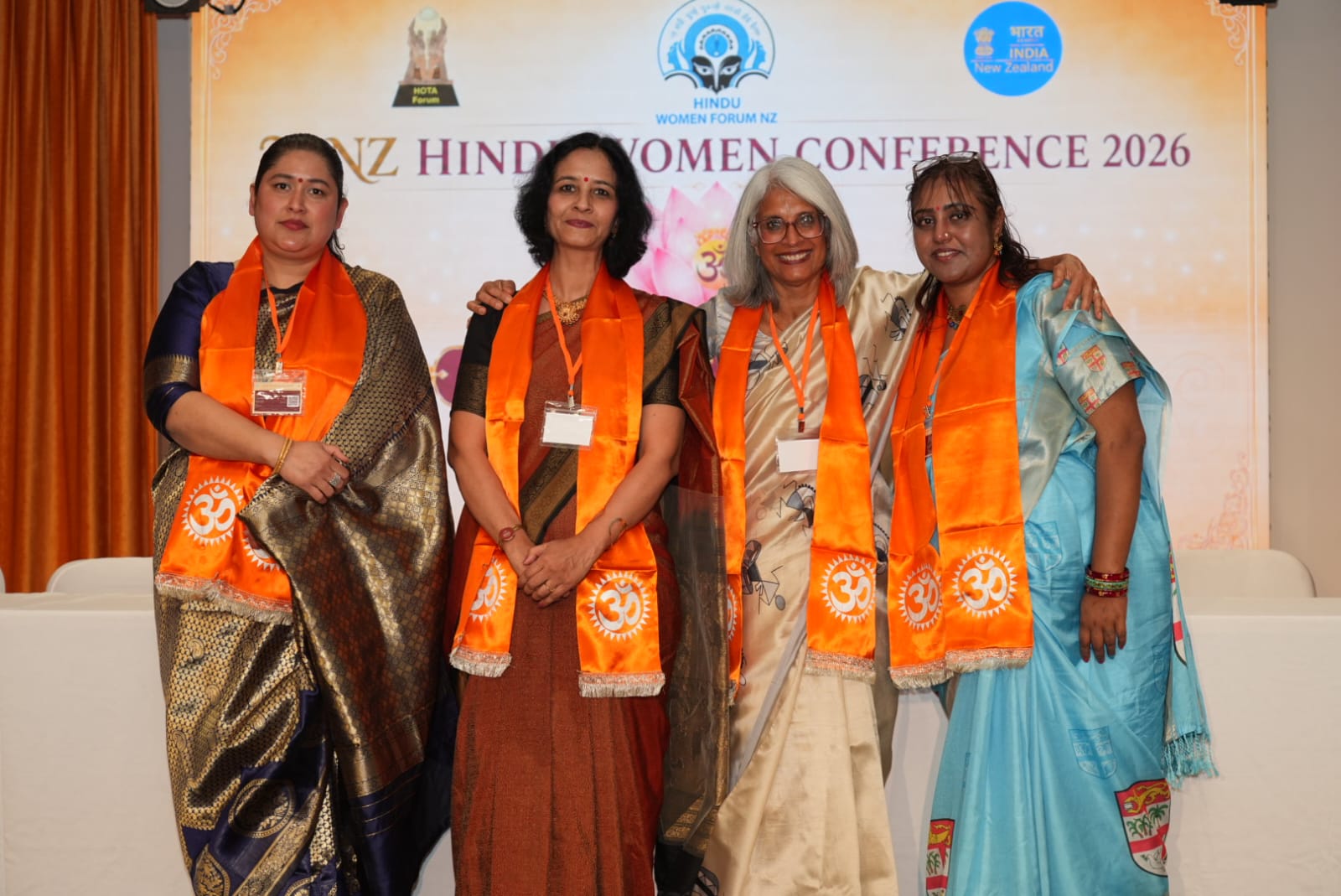
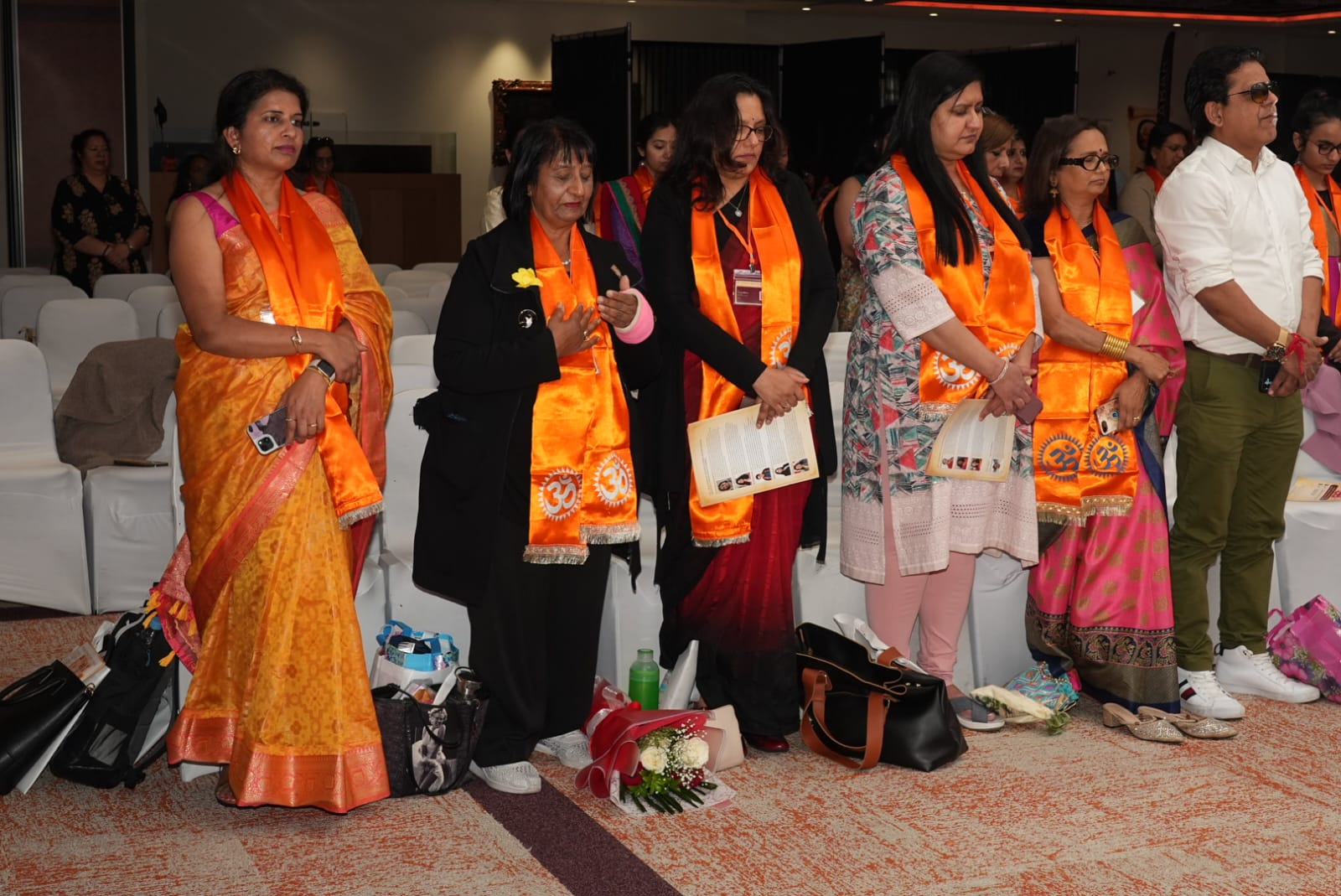
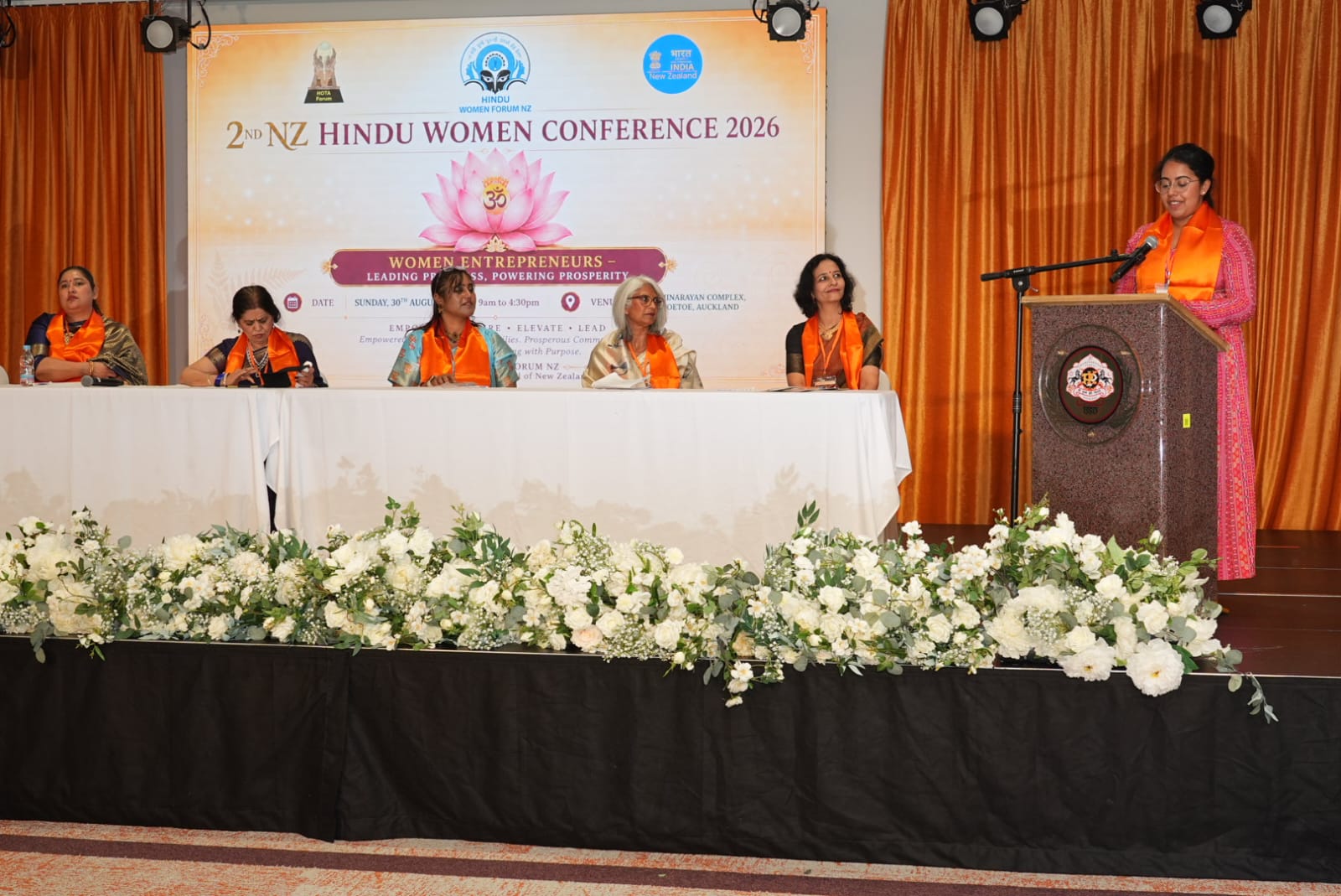
Held on Sunday, 30 August at the Swaminarayan Complex in Papatoetoe, the conference brought together entrepreneurs, academics, public servants, community leaders, professionals, students and women working across business, health, law, education, media, technology and social services.
Organised by the Hindu Women Forum NZ, a division of the Hindu Council of New Zealand, this year's conference carried the theme:
“Women Entrepreneurs: Leading Progress, Powering Prosperity.”
But entrepreneurship was interpreted broadly throughout the day. The discussion was not confined to starting businesses or making money. Speakers repeatedly returned to leadership, service, confidence, cultural identity, professional advancement, social responsibility and creating opportunities for the next generation.
Conference at a glance
| Detail | Information |
|---|---|
| Event | 2nd New Zealand Hindu Women Conference |
| Date | Sunday, 30 August 2026 |
| Venue | Swaminarayan Complex, Papatoetoe, Auckland |
| Theme | Women Entrepreneurs: Leading Progress, Powering Prosperity |
| Organiser | Hindu Women Forum NZ, a division of Hindu Council of New Zealand |
| Chief Guest | H.E. Ms Muanpuii Saiawi, High Commissioner of India to New Zealand |
| Keynote speaker | Dame Ranjna Patel DNZM |
| Major themes | Entrepreneurship, leadership, trade, governance, law, media, academia, health, community service and cultural identity |
| Future conferences | Christchurch in 2027 and Hamilton in 2028 |
From one conference to a growing national platform
The Auckland gathering followed the inaugural New Zealand Hindu Women Conference held in Wellington in September 2025.
That first conference focused on “Promoting Women, Strengthening Communities” and was designed to create a national platform through which Hindu women from different professional, cultural and generational backgrounds could connect.
Organisers said one of its most important outcomes was the creation of stronger national networks.
Women who may previously have been working separately in business, education, community organisations, public service or professional fields were able to meet, exchange ideas and establish relationships that could continue beyond the event itself.
This year's Auckland conference attempted to build on that foundation by moving the conversation further towards economic participation, entrepreneurship and influence.
The programme also made clear that the initiative is intended to continue nationally, with the third conference planned for Christchurch in 2027 and the fourth in Hamilton in 2028.
Prime Minister says Hindu women are contributing to New Zealand's economic and social life
Prime Minister Christopher Luxon sent a written message to delegates, recognising the contribution of Hindu women to New Zealand.
He said the conference theme highlighted the role Hindu women play in driving the economy, fostering innovation and strengthening social cohesion.
Luxon also acknowledged the Hindu Council of New Zealand, Hindu Women Forum and HOTA Forum for creating a platform bringing together business leaders, professionals and young entrepreneurs.
His message placed particular emphasis on the value of initiatives that help women build professional and trade opportunities while contributing to a more inclusive and prosperous New Zealand.
That message was significant because it reflected one of the recurring themes of the conference: the Hindu community does not want its contribution to New Zealand understood only through festivals, temples or cultural celebrations.
Increasingly, its women are participating in mainstream business, government, law, education, health, media, technology and community leadership.
High Commissioner Muanpuii Saiawi highlights growing momentum
India's High Commissioner to New Zealand, H.E. Ms Muanpuii Saiawi, was the chief guest.
In her message to the conference, she described the event as an opportunity to recognise the leadership, contribution and aspirations of Hindu women in New Zealand.
She noted that the Hindu Women Forum had, over the past two years, brought women together through initiatives involving business, culture, health, education, community service and wellbeing.
The High Commissioner also reflected on the success of the inaugural conference and welcomed plans to take future conferences to Christchurch and Hamilton.
Her participation carried additional relevance at a time when the relationship between India and New Zealand is expanding beyond traditional cultural links into trade, business, education, professional mobility and broader strategic engagement.
That connection was explored directly during the conference.
NZ-India trade enters the women entrepreneurs conversation
One of the more topical presentations came from Dr Amita Fotedar, Senior Policy Adviser at the Ministry for Primary Industries.
Her session examined the New Zealand-Bharat Free Trade Agreement, bringing international trade into what might otherwise have been seen as a purely community-focused conference.
The inclusion was important.
Trade agreements are often discussed through exports, tariffs and large companies. But the conference placed another question alongside those discussions: where are the opportunities for women entrepreneurs, professionals and smaller businesses?
For New Zealand's Indian community, deeper commercial engagement between the two countries potentially creates opportunities in food, professional services, education, technology, tourism, investment and entrepreneurship.
The challenge will be turning diplomatic and trade agreements into opportunities that can actually be accessed by people at community and small-business level.
Dame Ranjna Patel brings decades of community leadership to the stage
Dame Ranjna Patel DNZM was one of the conference's most prominent speakers.
A healthcare entrepreneur, philanthropist and long-standing community leader, Patel has spent decades working across health, family harm prevention, education and community initiatives.
Her presence also represented an important bridge between generations.
One purpose of the conference was not simply to showcase successful women, but to put established leaders in the same room as women who may be at the beginning of their professional or entrepreneurial journeys.
That intergenerational exchange became a recurring theme throughout the programme.
Achievement was presented not as the end of the story, but as something that carries a responsibility to open doors for others.
Māori and Hindu business connections also discussed
Raewyn Bhana, a member of the Manurewa Local Board and a community leader of Māori and Indian heritage, spoke about building Hindu-Māori business in Aotearoa New Zealand.
It was one of the more distinctive subjects on the programme.
Rather than treating migrant economic participation as something separate from New Zealand's existing communities, the discussion recognised the potential for business relationships built around shared values, local connections and mutual understanding.
Bhana's background reflects both Māori and Indian heritage, giving the discussion a perspective that sits naturally between the two communities.
It also reinforced a wider principle behind the Hindu Council's work: integration does not have to mean abandoning heritage, and maintaining cultural identity does not have to mean remaining isolated from wider New Zealand society.
Entrepreneurship was about resilience, not simply business ownership
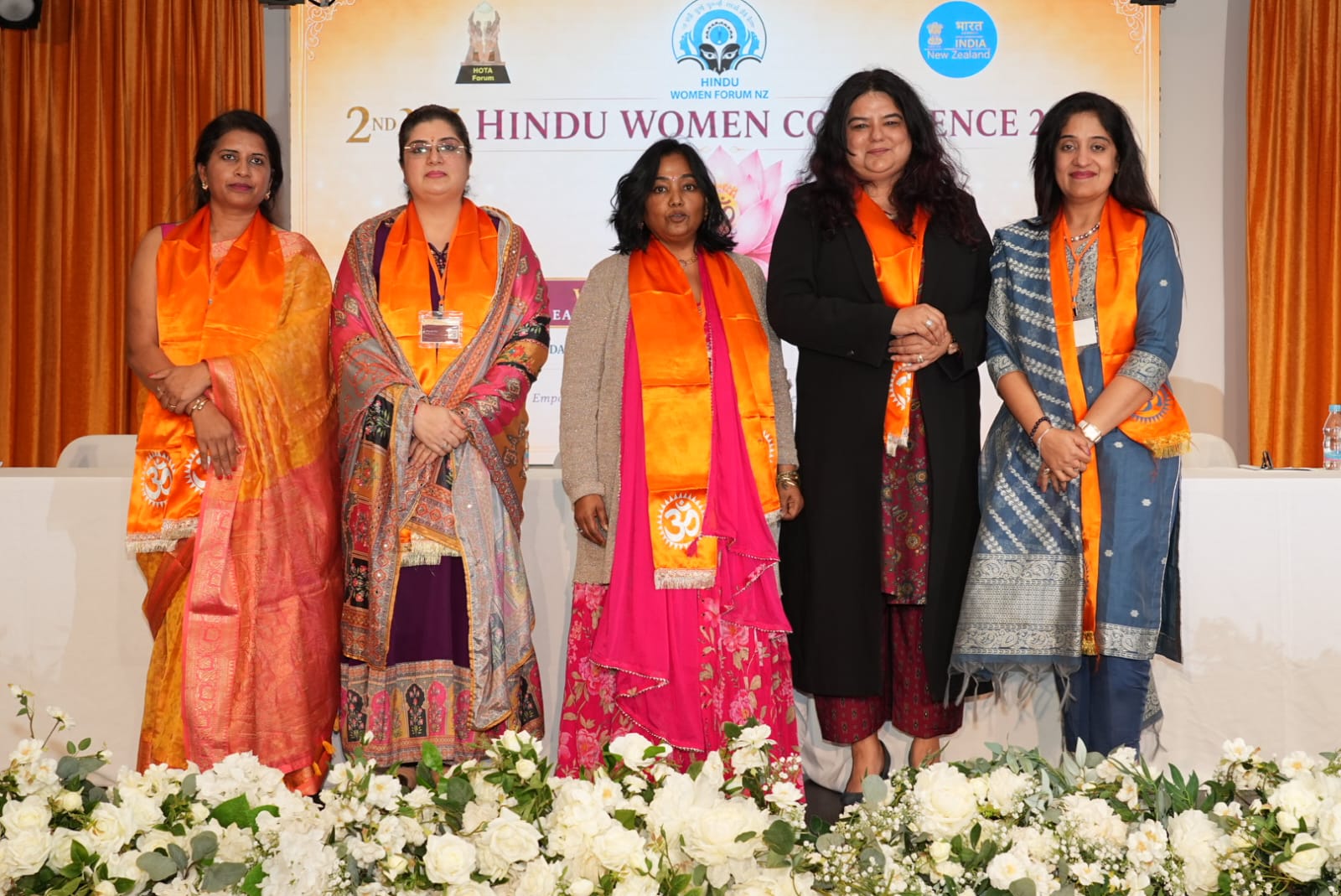
The Hindu Women Entrepreneurs Network session featured women with very different professional journeys.
Rachana Dave, an experienced mortgage adviser and financial services professional, chaired the session and brought the perspective of a woman who has built a career in a highly competitive industry.
Binal Nagar, associated with Unitec, spoke under the theme “Rooted in Dharma, Rising in Leadership: Hindu Women, Business and Legacy in Aotearoa.”
Her story also reflected another reality familiar to many migrant women: professional development does not necessarily follow a straight line.
Career changes, study, family responsibilities, migration and rebuilding professional identity can all happen at the same time.
Dr Julia Anne, Managing Director of Look After Me and associated with the Hindu Heritage Centre in Rotorua, spoke about building a “wellness bridge” connecting women and communities.
Together, those presentations broadened the definition of entrepreneurship.
It could mean running a company.
But it could also mean developing an idea, changing careers, creating a community organisation, pursuing further education or building something new after migration.
Public leadership moved discussion beyond business
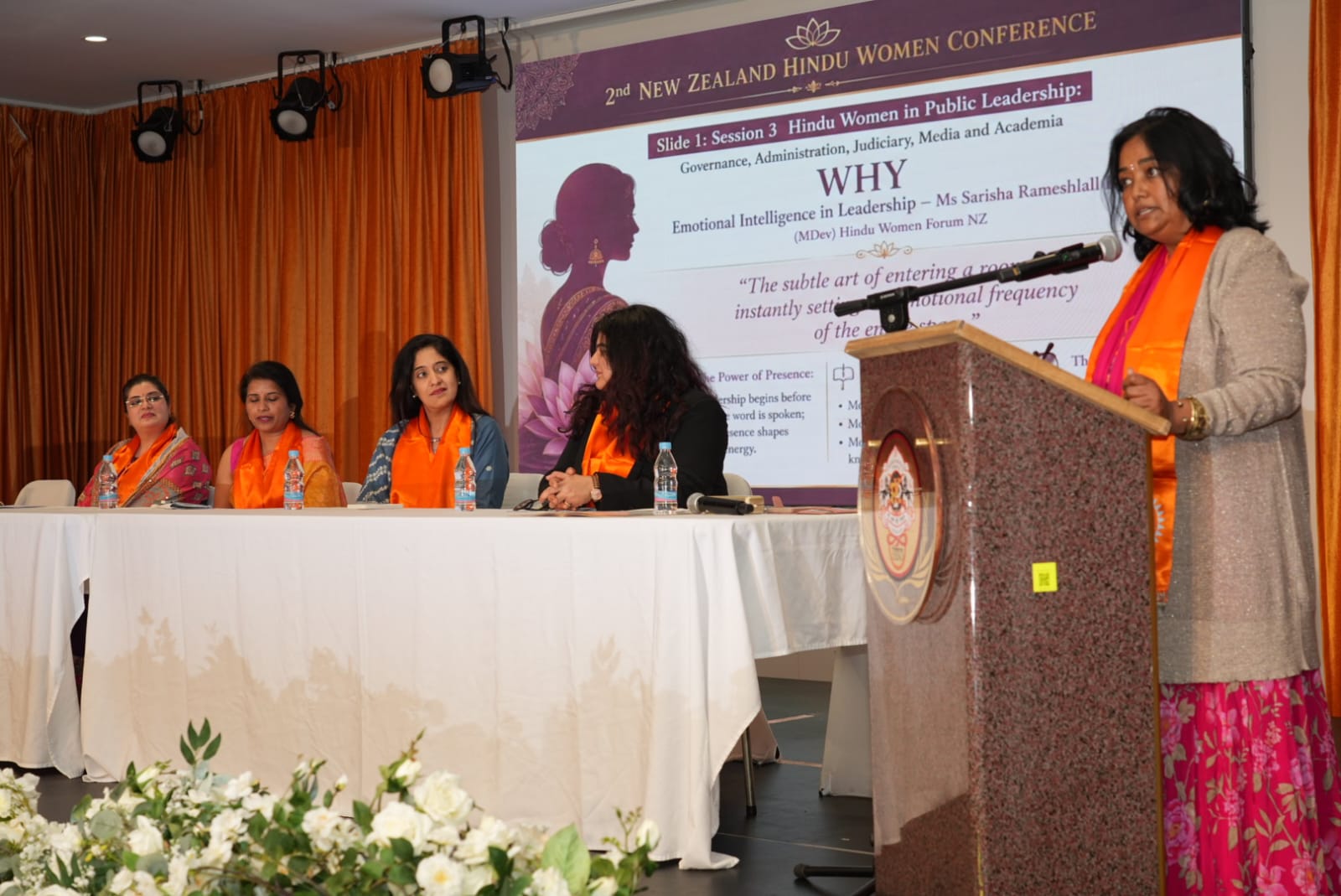
The afternoon programme shifted towards Hindu women in public leadership, including governance, administration, judiciary, media and academia.
The session featured Sarisha Rameshlall Komal, Nalini Dutt, Dr Sheerali Arya, Ashima Singh and Sangita Gupta.
Komal, an education specialist, author and holistic counsellor, opened discussion around emotional intelligence and leadership.
Nalini Dutt, a senior business leader with extensive professional experience, explored Dharma and decision-making, considering how values can inform leadership and governance.
Dr Sheerali Arya, an academic at the University of Waikato College in Hamilton, addressed the role of Hindu women in academia and the importance of women participating in creating knowledge and shaping the future.
Solicitor and Notary Public Ashima Singh discussed Hindu women in law and the judiciary, with a focus on justice, leadership and equality.
The common thread was clear: representation in professional sectors matters, but participation at decision-making level matters more.
Sangita Gupta: ‘Being seen is important. But being heard is even more important’
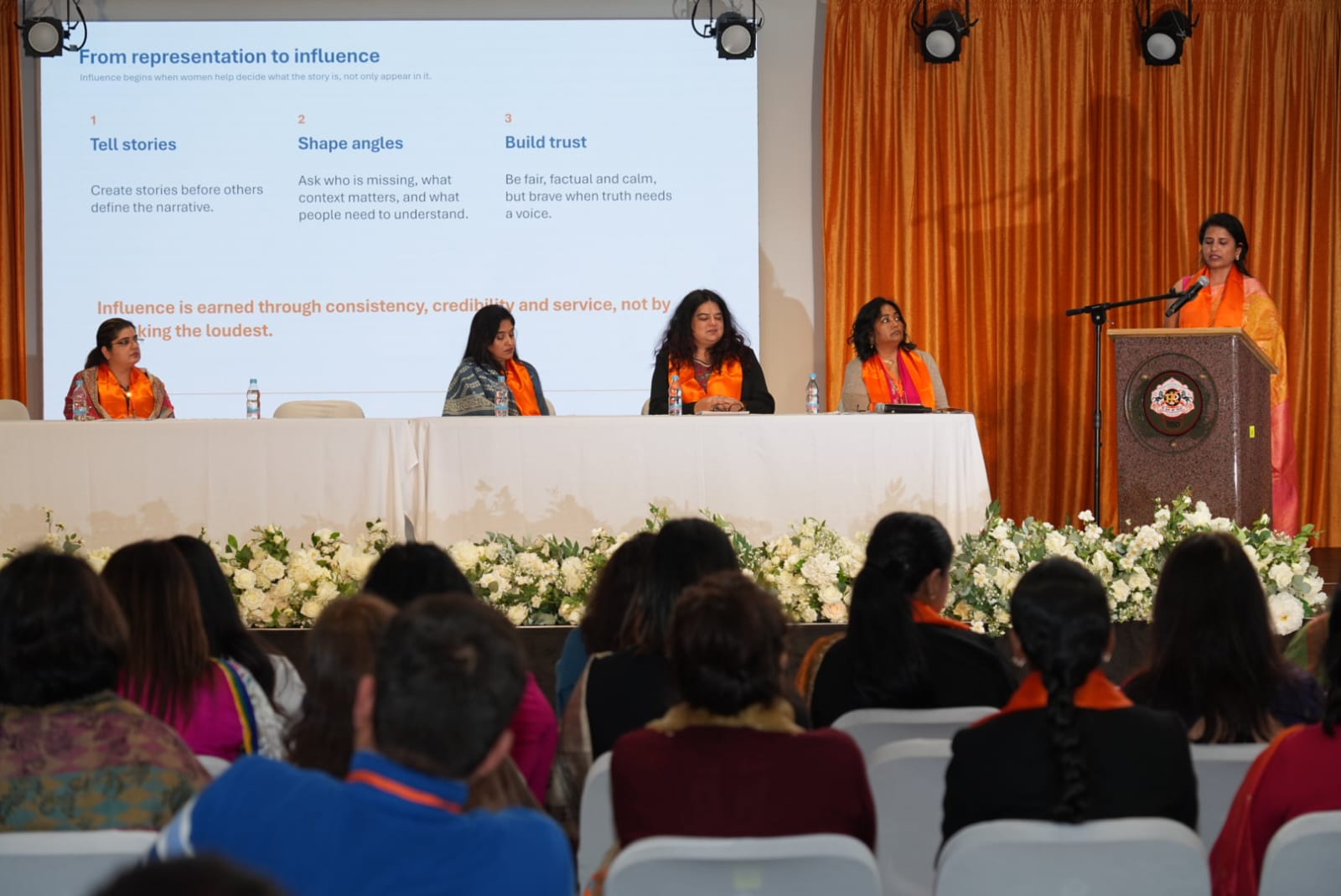
Webfit News Founder and Editor-in-Chief Sangita Gupta addressed the role of Hindu women in mainstream and ethnic media.
Her presentation, “From Representation to Influence”, challenged the idea that visibility alone should be considered success.
“Being seen is important. But being heard is even more important,” she told the conference.
Gupta argued that Hindu and Indian women should not appear in the media primarily during festivals, cultural celebrations or community events.
New Zealand's Hindu community also includes lawyers, doctors, business owners, academics, educators, public servants, scientists and community leaders whose knowledge can contribute to wider national debates.
Her message was that communities need to move from simply appearing in stories to participating in shaping the conversation.
“We should tell our own stories before someone else tells them for us,” she said.
At the same time, she emphasised that influence brings responsibility.
Media credibility, she said, must come through facts, fairness, context and trust.
Gupta also drew a distinction between the roles played by large national outlets and community-focused publications.
“Mainstream media gives reach. Ethnic media gives depth. We need both.”
Her presentation called for more female voices not simply behind the scenes, but on microphones, in editorial discussions and in positions where decisions about stories and representation are made.
She also encouraged established women to support girls and younger women considering careers in journalism and communications.
“Our community becomes stronger when we tell our own story,” she said.
“We should not wait for others to speak for us. We should speak, lead and help shape the conversation.”
Women already leading across New Zealand institutions
Another strength of the conference programme was the diversity of sectors represented.
The speakers were not drawn from a single profession.
Participants included women working in the Ministry for Primary Industries, Ministry of Social Development, Health New Zealand, tertiary education, law, business, financial services, local government, real estate, technology, community organisations and media.
Archana Newaskar, a senior manager with Health New Zealand and an experienced technology and community leader, chaired the professional and community leadership discussion.
Nonita Jaura, Senior Appeals Officer at the Ministry of Social Development, spoke about her experience working in a government environment.
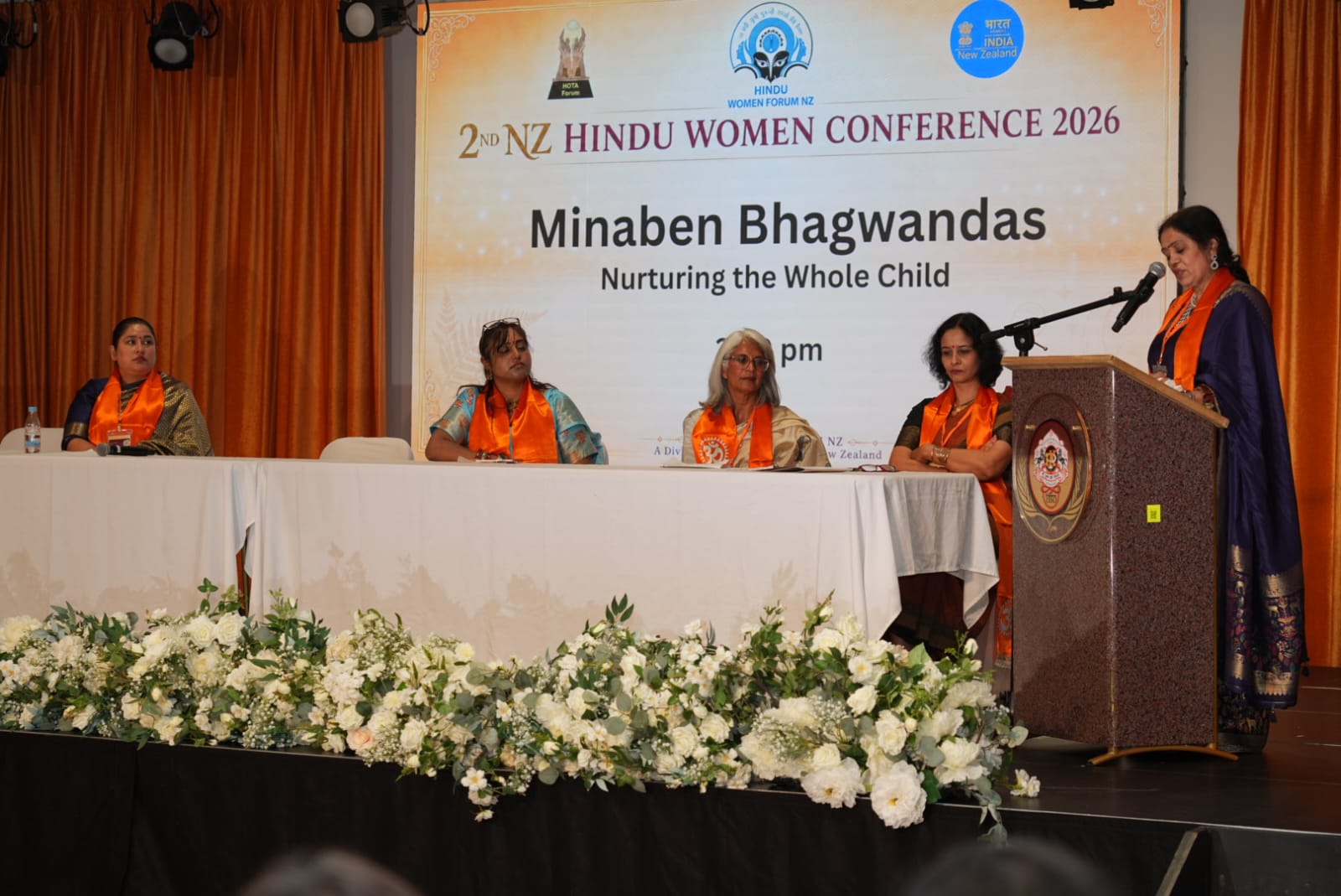
Minaben Bhagwandas, an educator and community leader from Wellington, addressed education from a broader perspective of developing the whole child, including values, identity, wellbeing and leadership.
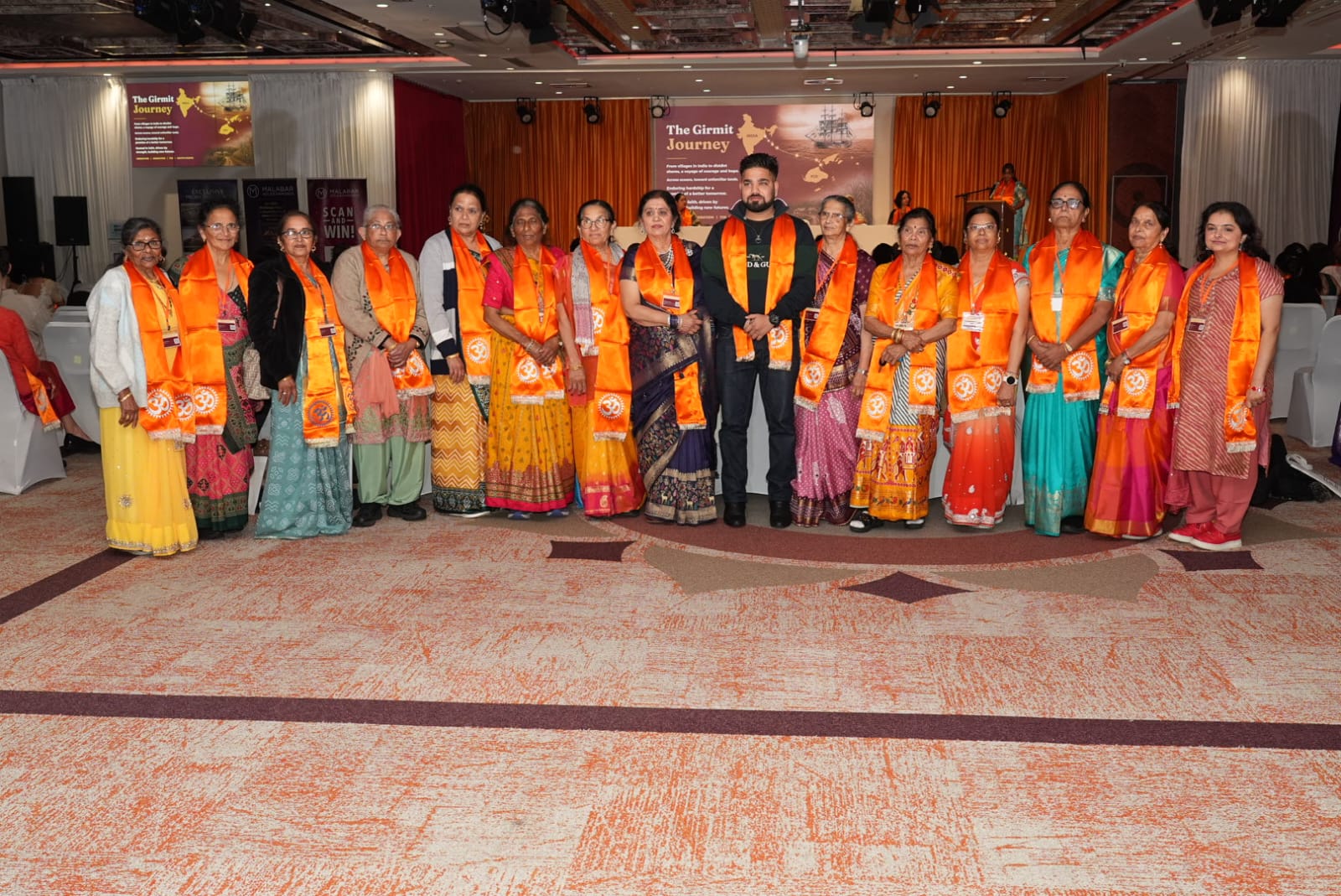
Archna Devi, an education researcher and community advocate in Canterbury, spoke about the contribution of Girmit women in the South Pacific.
Her contribution was particularly relevant because the history of Indian communities in the Pacific is not limited to recent migration.
The Girmit experience connects generations of Indo-Fijian families to a much longer story involving indentured labour, resilience, cultural preservation and rebuilding communities across the Pacific.
Loveleen Dobhal Malhan, from Queenstown, discussed the role Hindu women are playing in bringing communities together across the South Island.
That geographic diversity mattered.
The Hindu community in New Zealand is not simply an Auckland story.
Women represented Wellington, Hamilton, Christchurch, Rotorua, Tauranga, Hawke's Bay, Palmerston North, Queenstown and other centres.
Yoga, meditation and wellbeing remained part of leadership conversation
The programme also included a dedicated yoga and meditation session led by Amita Changoilwala, a Classical Hatha Yoga practitioner.
Its inclusion reflected a broader theme running through the conference.
Professional success was not presented as separate from personal wellbeing.
Several speakers connected leadership with emotional intelligence, mental wellbeing, resilience, spirituality and a sense of purpose.
That approach reflects a particularly Hindu framing of leadership where ideas such as Dharma, Seva, compassion, responsibility and collective wellbeing are viewed alongside professional achievement.
The conference therefore did not ask women simply to become more successful.
It also asked what kind of leadership they want to practise once they get there.
Young women were not treated as spectators
One of the strongest ideas carried over from the inaugural conference was the importance of younger women and students.
The organisers have described developing the next generation as essential to the future of the Hindu community in New Zealand.
That means encouraging young women to pursue education, professional opportunities, entrepreneurship and leadership while also maintaining confidence in their cultural identity.
The conference attempted to place established women and emerging leaders in the same environment so that networking could lead to mentorship and practical opportunities.
This may ultimately be one of the event's more important outcomes.
Conferences can produce speeches and photographs.
Their longer-term value is determined by what happens after everyone goes home.
If a professional connection becomes a job opportunity, if an entrepreneur finds a mentor, if a student decides to enter public service, or if a young woman gains the confidence to speak publicly, the effect lasts much longer than the event itself.
From Auckland to Christchurch and Hamilton
The final sessions also looked ahead.
Archna Tandon, who is coordinating the third New Zealand Hindu Women's Conference, spoke about community work in Christchurch and plans for the next gathering.
Sonali Hegde, joint coordinator of the Auckland conference, addressed the way forward.
The conference programme indicates Christchurch will host the third conference in 2027, with Hamilton following for the fourth conference in 2028.
Taking the event to different cities could prove important in turning what began as a conference into a genuinely national network.
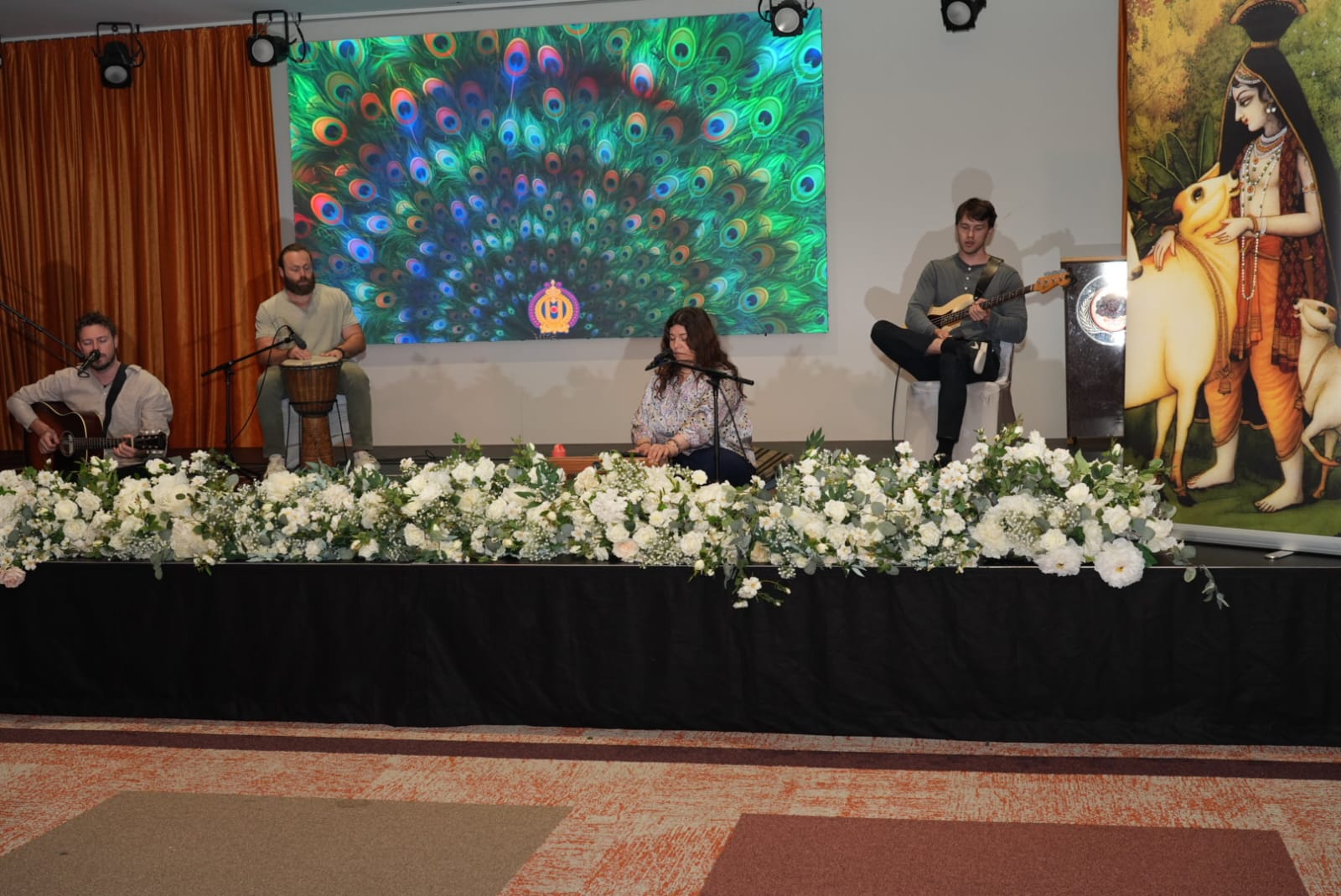
The day concluded with networking, followed by kirtans supported by the Meditation NZ Kirtan Band.
A conference about something larger than one community
It would be easy to describe the gathering simply as a Hindu women's event.
That would miss much of what was happening.
The conference was also about New Zealand.
It explored how women with strong cultural identities can participate fully in mainstream institutions without treating heritage as something that must be left at the door.
It brought discussions about India-New Zealand trade into the same programme as Māori business relationships.
It placed spirituality alongside entrepreneurship, community service alongside professional leadership, and ethnic media alongside mainstream public discourse.
Perhaps most importantly, it treated Hindu women not as one homogeneous group but as entrepreneurs, officials, academics, lawyers, educators, journalists, mothers, migrants, volunteers and leaders with very different experiences.
The first New Zealand Hindu Women Conference created a national platform.
The second appears to be asking a more ambitious question:
Now that the platform exists, what will women do with it?
For many of those who spoke in Auckland, the answer was similar.
Participate more.
Speak with confidence.
Create opportunities.
Support the next generation.
And move beyond simply being represented in New Zealand towards helping shape its future.