By Webfit News
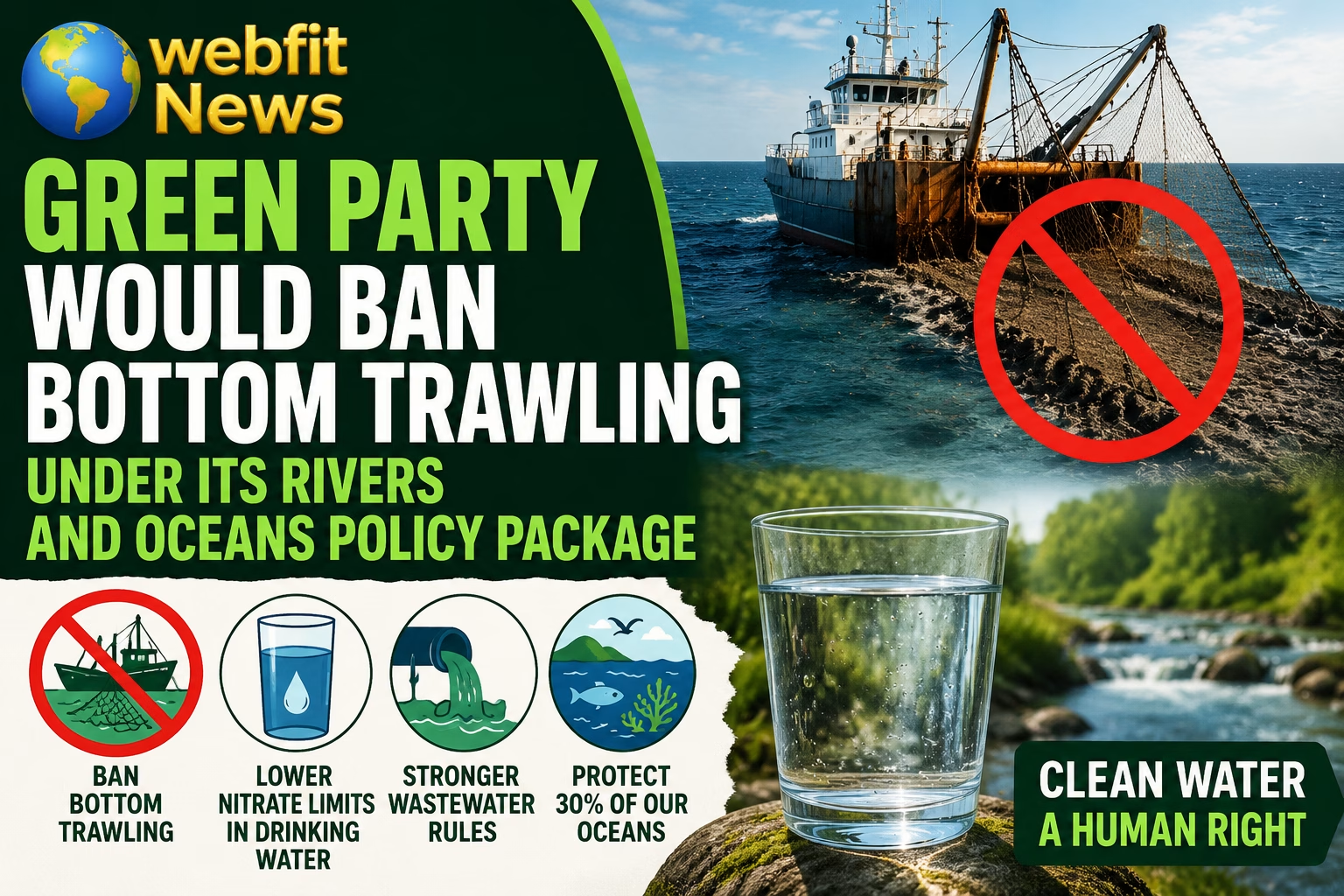
The Green Party has announced a new rivers and oceans policy package that would ban bottom trawling, lower nitrate limits in drinking water, strengthen wastewater rules, and legally protect 30 percent of New Zealand’s marine environment.
The policy package, called Drink Swim Fish, was released as part of the party’s election programme and focuses on clean drinking water, swimmable rivers and beaches, and healthier oceans.
According to reporting by Radio New Zealand, Green Party co-leader Marama Davidson said access to clean and healthy water should be treated as a human right, not something weakened by poor regulation or commercial pressure.
Davidson argued that New Zealanders should not have to accept unsafe drinking water, polluted swimming spots, or declining fish populations as normal.
Auckland-Based Anjali Balwal Takes New Zealand Pride to Cannes Red Carpet – WebfitNews
What the Greens Are Proposing
The Green Party’s policy package includes eight major policy interventions across freshwater, oceans, fisheries, farming practices and conservation.
Key proposals include:
- Banning or phasing out bottom trawling on seamounts
- Phasing out set netting and dredging
- Legally protecting 30 percent of New Zealand’s ocean
- Lowering nitrate limits in drinking water
- Strengthening rules for wastewater discharges
- Reviewing the Quota Management System
- Supporting Māori kaitiakitanga and iwi-led conservation
- Phasing out synthetic nitrogen fertiliser and reducing stocking rates on a catchment basis
The Greens say the package is designed to protect waterways from pollution and reduce pressure on marine life.
Bottom Trawling at the Centre of the Debate
Bottom trawling is one of the most controversial fishing methods in New Zealand.
It involves dragging large weighted nets across the seafloor to catch fish. Environmental groups say it damages seabed habitats, including fragile seamounts, corals and sponge ecosystems. The commercial fishing sector argues it remains an important part of New Zealand’s seafood supply and economy.
The Green Party has long called for stronger restrictions on bottom trawling, particularly around seamounts and sensitive marine areas.
Davidson said protecting oceans “isn’t rocket science” and argued that New Zealand should not put short-term private profits ahead of the health of rivers, beaches and oceans.
The party has also repeated its call to legally protect 30 percent of New Zealand’s marine environment, a target supported by several conservation organisations globally.
Nitrate Limits Could Be Lowered
Another major part of the policy is drinking water safety.
New Zealand’s current maximum acceptable value for nitrate in drinking water is 11.3mg/L nitrate-nitrogen. Environmental campaigners, including Greenpeace, have called for this limit to be reduced to 1mg/L, citing emerging concerns about possible health impacts from long-term nitrate exposure.
Davidson said the Greens would look at international examples, including Denmark, which has moved toward a much lower nitrate threshold.
She argued reducing nitrate levels is about putting the health of communities and rivers first.
However, the policy document does not set an exact nitrate limit. This matters. Politically, the Greens are making a clear direction-of-travel promise, but voters and farmers will want to know the actual number, timing, transition plan and compensation approach before deciding whether the policy is practical or just ambitious.
Wastewater and Water Regulation
The Greens also want stronger rules for wastewater discharges to protect rivers, lakes and oceans.
Davidson said the party would give water regulator Taumata Arowai more power to enforce laws and improve compliance.
She also said environmental performance standards for wastewater should be treated as a minimum, not a target to be negotiated down.
The issue is likely to resonate with many communities, especially during summer when beaches and swimming spots are sometimes closed because of contamination or poor water quality.
Government Pushes Back on Bottom Trawling Ban
Prime Minister Christopher Luxon has expressed reluctance to support a full ban on bottom trawling.
He said moving away from the method would be “very difficult” and argued that a balance must be found between environmental protection and economic realities.
Luxon pointed to the fishing industry’s role in supporting around 9000 jobs, generating almost $2 billion in economic value, and supplying a large share of fish consumed in New Zealand.
He also said bottom trawling takes place in just under 2 percent of New Zealand’s ocean area, but acknowledged the industry needs to use more technology to reduce environmental damage.
That is the core political divide: the Greens are framing the issue as environmental protection and public health, while the government is framing it as balance, jobs and food supply.
Federated Farmers Warns of Higher Food Costs
Federated Farmers has strongly criticised the proposal to phase out synthetic nitrogen fertiliser.
Freshwater spokesperson Mark Hooper said removing modern fertilisers would increase food costs and damage New Zealand’s agricultural economy.
He argued global food production would fall significantly without modern fertilisers and said agriculture remains central to New Zealand’s export economy.
Federated Farmers also warned that changing nitrate standards before official health advice is complete could create confusion and panic in rural communities.
The Ministry of Health is expected to complete a technical review into the health effects of nitrate in drinking water by the end of the year. Taumata Arowai is also expected to include nitrates in its next five-yearly review of drinking water standards.
Luxon said any decision on lowering nitrate limits should wait until that review is complete.
Election Battle Over Water and Farming
The policy is likely to sharpen election-year debate over farming, fishing and environmental regulation.
For Green voters and environmental advocates, the package will be seen as a long-overdue plan to protect rivers, beaches and marine ecosystems.
For farmers and fishing operators, it raises serious questions about compliance costs, food production, rural jobs and export competitiveness.
The political challenge for the Greens is not whether people support clean water. Most voters do. The harder question is whether voters believe the party’s proposed path is practical, affordable and fair to rural communities and fishing workers.
Conclusion
The Green Party’s Drink Swim Fish package sets out one of the strongest environmental policy positions of the election campaign so far.
It promises cleaner drinking water, swimmable rivers, stronger wastewater controls and greater protection for the ocean. But it also opens a major fight over farming rules, fishing jobs and the cost of environmental transition.
The debate now moves from principle to detail. Clean water is easy to support. The real test is how fast change should happen, who pays for it, and how New Zealand protects both its natural environment and the communities whose livelihoods depend on it.
Source: Radio New Zealand / Scoop Media / Green Party policy comments / Government and Federated Farmers responses.