
By Webfit News
For most New Zealand families, the supermarket competition debate comes down to one simple question:
Will my weekly grocery bill actually get cheaper?
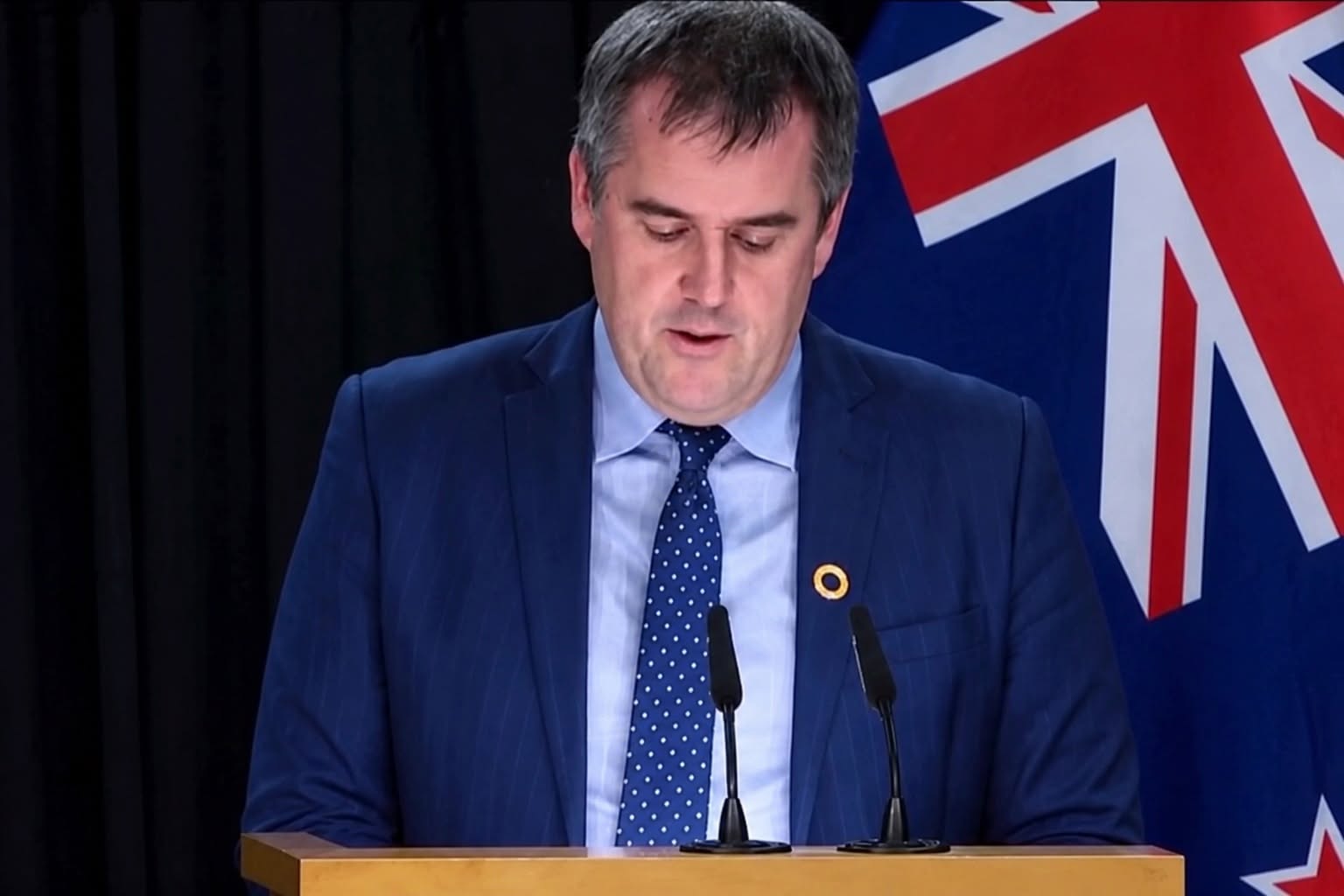
The Government says new guidance released by Land Information New Zealand could make it easier for credible overseas supermarket investors to enter or expand in New Zealand.
Associate Finance Minister David Seymour says more investment could mean more supermarket choices and, ultimately, lower prices at the checkout.
The new LINZ guidance is designed to give overseas grocery investors clearer information about New Zealand’s Overseas Investment Act, including which rules apply, what tests they must meet and how applications will be assessed.
But Kiwi shoppers should be clear about one thing.
This does not mean grocery prices are about to fall next week.
The policy removes one potential obstacle for a new supermarket investor.
It does not magically build stores, create distribution centres or force existing supermarkets to cut prices overnight.
So what does the announcement actually mean for an ordinary New Zealander?
Webfit News breaks it down.
Why Is the Government Trying to Attract More Supermarkets?
New Zealand has been talking about supermarket competition for years.
The Commerce Commission’s 2022 grocery market study found that competition was not working well for consumers and said stronger competition was needed to improve grocery prices, quality and choice.
Four years later, the problem has not disappeared.
The Commerce Commission’s latest Annual Grocery Report, published in June 2026, found there had been little observable change in the main competition measures during 2025.
The major grocery retailers still controlled a combined 82 percent of the national retail grocery market.
The Commission also said retail prices had increased and the country’s grocery sector remained highly concentrated.
For shoppers, that matters because competition affects how hard businesses have to fight for your money.
Imagine two petrol stations on an isolated road.
If one station is the only option for 100 kilometres, it has less pressure from a nearby competitor.
Put three or four serious rivals beside it, and suddenly every operator has a reason to watch pricing, service and customer loyalty more carefully.
Supermarkets are obviously more complicated than petrol stations, but the basic competitive pressure is similar.
Food Prices Are Still Hurting Kiwi Households
The Government’s announcement comes while food costs remain a real concern for households.
Stats NZ reported that food prices increased 1 percent between April and May 2026 and were 3.2 percent higher than a year earlier.
Earlier in the year, annual food price inflation had reached 4.6 percent in January and 4.5 percent in February.
Those percentages can sound abstract.
For a family spending $250 a week on groceries, even a relatively small price increase becomes noticeable over 52 weeks.
And unlike a holiday, new phone or restaurant meal, groceries are difficult to avoid.
Milk still needs buying.
School lunches still need making.
People still need fruit, vegetables, meat, rice, bread and household essentials.
That is why supermarket competition attracts so much public attention.
So What Has Actually Changed?
The new LINZ guidance is aimed primarily at overseas investors that may want to establish or expand grocery retail operations in New Zealand.
An overseas investor may need consent under the Overseas Investment Act when buying or leasing certain sensitive land or making a qualifying investment in New Zealand.
LINZ guidance confirms that overseas investment rules can apply to supermarket developments involving sensitive assets or land.
The Government’s argument is that uncertainty, time and legal complexity can discourage overseas companies from seriously considering New Zealand.
The new guidance is intended to explain more clearly:
- which Overseas Investment Act provisions may apply
- which investment pathway an applicant may need to use
- what tests must be satisfied
- how LINZ will assess an application
The basic idea is simple.
A supermarket company considering investing hundreds of millions of dollars wants to know the rules before committing serious time and money.
Seymour says the Government wants to make the process easier to understand for credible investors.
Does This Mean Aldi or Lidl Is Coming to New Zealand?
No.
And this is where the headline hype needs to stop.
The Government has not announced that Aldi, Lidl or another major international supermarket chain is opening stores in New Zealand.
The LINZ guidance does not guarantee that any specific international retailer will enter the market.
It simply attempts to make one part of the investment process clearer.
Past Commerce Commission work has discussed the competitive impact that new entrants such as Aldi and Lidl have had in overseas markets.
However, the Commission has also warned that a new national supermarket competitor can take years to establish stores and build meaningful market share.
So Kiwi shoppers should not read this announcement as:
“A cheap overseas supermarket is opening next month.”
That has not been announced.
A more accurate interpretation is:
“The Government is trying to remove one barrier that may discourage a major overseas supermarket investor.”
That is useful.
But it is not the same thing.
Why Would an Overseas Supermarket Find New Zealand Difficult?
Building a serious supermarket competitor involves much more than getting permission from LINZ.
A new supermarket operator needs land.
It needs suitable sites in major towns and cities.
It needs resource and planning approvals.
It needs warehouses and distribution networks.
It needs reliable suppliers.
It needs access to thousands of products at prices that allow it to compete.
It needs staff, technology, refrigeration systems and enormous working capital.
The Commerce Commission has previously identified problems involving the availability of suitable supermarket sites, planning processes and wholesale grocery access.
It has also said Overseas Investment Act and Resource Management Act requirements can create time, cost and uncertainty for new competitors.
Wholesale access is particularly important.
A smaller supermarket cannot compete properly if it cannot obtain products at commercially competitive prices.
The Commerce Commission has continued investigating wholesale grocery supply because it considers wholesale access a key barrier to stronger retail competition.
That means the Government’s latest LINZ guidance addresses one piece of a much larger supermarket competition problem.
That is the honest assessment.
Could a Third Major Supermarket Really Lower Prices?
Potentially, yes.
But no responsible news outlet should promise that prices will automatically fall.
Competition can create pressure on retailers to:
- offer sharper prices
- improve promotions
- provide better service
- increase product choice
- respond more quickly to customers
The Commerce Commission has consistently said stronger competition can improve prices, quality and range for New Zealand consumers.
However, the final result depends on the type of competitor entering the country.
One new supermarket in central Auckland will not transform grocery prices in Invercargill, Rotorua or Northland.
A serious competitor would need scale.
It would need enough stores, or a sufficiently strong online and distribution model, to put pressure on the existing national supermarket groups.
The Commerce Commission has previously noted that a third major player with a network of physical stores could create serious competitive pressure, but establishing such a network would take time.
That is the key point.
Competition needs to be visible where people actually shop.
What Should Kiwi Shoppers Watch for Now?
Forget political speeches for a moment.
There are some very practical signs that will tell us whether this policy is working.
1. Does a serious international supermarket announce a New Zealand investment?
This is the obvious one.
A credible announcement should include actual investment, locations, sites or a development programme.
Expressions of interest are not enough.
2. Are new supermarkets opening outside Auckland?
Auckland may be the easiest place for a new entrant to start because of its population.
But real national competition requires expansion into other centres.
The Commerce Commission has previously highlighted geographic differences in grocery competition across New Zealand.
3. Does the major retailers’ 82 percent market share start falling?
This is one of the clearest numbers to watch.
The combined market share of the major retailers remained at 82 percent in the latest Commerce Commission reporting.
If competition genuinely improves, that concentration should eventually come under pressure.
4. Do prices move differently in areas with stronger competition?
This is where ordinary shoppers may see the real effect.
If a serious new competitor enters a city, researchers and regulators should monitor whether local grocery pricing becomes more competitive.
5. Can independent supermarkets get better wholesale access?
A foreign supermarket chain is not the only possible answer.
Asian supermarkets, Indian grocery stores, independent operators and smaller retailers can also create competition.
But they need commercially workable access to products and suppliers.
Wholesale reform therefore remains critical.
What Can You Do About Your Grocery Bill Right Now?
Here is the frustrating reality.
The Government’s announcement may help future competition, but it does nothing immediate for the trolley you are pushing this weekend.
For now, Kiwi households still need to shop strategically.
Compare the unit price, not only the big yellow promotional sticker.
A 900-gram product at a “special” price may still cost more per 100 grams than a larger pack.
Check multiple retailers for expensive regular purchases.
You probably do not need to compare the price of every spice jar in your pantry.
That way madness lies.
But regularly comparing meat, milk, nappies, pet food and other high-spend products can make a bigger difference.
Be careful with loyalty pricing.
A loyalty discount is not automatically the cheapest price available in the wider market.
Consumer NZ has recently raised concerns about grocery loyalty data and supermarket pricing practices.
Most importantly, watch your total weekly spend, not how much the receipt says you “saved”.
A receipt claiming “$28 savings” feels lovely.
Your bank account is less emotionally invested in supermarket marketing.
The Government Says Faster Investment Decisions Are Already Happening
Seymour said LINZ granted consent to 230 transactions in the past financial year, involving gross investment of approximately $23.8 billion.
He also said the average processing time for overseas investment applications had fallen from 71 working days to 23 since the Government took office.
Under recent Overseas Investment Act reforms, most investments other than residential land, farmland and fishing quota are subject to a 15-working-day decision requirement unless a potential national interest concern is identified.
The Government’s target is five working days.
LINZ’s current guidance reflects reforms to the Overseas Investment Act that came into effect on 6 March 2026.
The Government believes faster and clearer processes will make New Zealand more attractive to international investors.
Whether international supermarket companies agree is the next question.
Webfit News Analysis: Good Step, But Do Not Promise Cheap Groceries Yet
The new LINZ guidance makes logical sense.
If New Zealand genuinely wants another major supermarket competitor, making the investment rules clearer is better than forcing potential investors to navigate unnecessary uncertainty.
The Commerce Commission itself has previously identified Overseas Investment Act compliance as one barrier facing overseas grocery entrants.
But let us be brutally honest.
A guidance document does not lower the price of cheese.
It does not build a distribution centre.
It does not solve wholesale supply problems.
It does not create supermarket sites.
And it does not guarantee Aldi, Lidl or any other international chain will arrive.
The real test is execution.
If the changes result in a serious new supermarket investor establishing a large network in New Zealand, then Kiwi shoppers may finally see stronger competitive pressure.
If no major new entrant arrives, the Government will have made the investment process easier without materially changing the supermarket market.
For ordinary New Zealanders, this is the number that matters:
The major grocery retailers still control around 82 percent of the national market.
When that number starts moving significantly, we may finally be able to say supermarket competition is genuinely changing.
Until then, Kiwi shoppers should treat the Government’s announcement as a potentially useful step.
Not a promise of a cheaper trolley next Monday.
References
New Zealand Government, “Guidance to Increase Supermarket Competition and Help Lower Prices”, 13 July 2026.
Toitū Te Whenua Land Information New Zealand, Overseas Investment Guidance and Overseas Investment Act Reform information.
New Zealand Commerce Commission, 2025 Annual Grocery Report, published 2 June 2026.
New Zealand Commerce Commission, Market Study into the Retail Grocery Sector.
New Zealand Commerce Commission, grocery competition and geographic inequity reporting.
Stats NZ, Selected Price Indexes, May 2026.
Ministry of Business, Innovation and Employment, Supermarket Competition work programme.