By Webfit News Desk
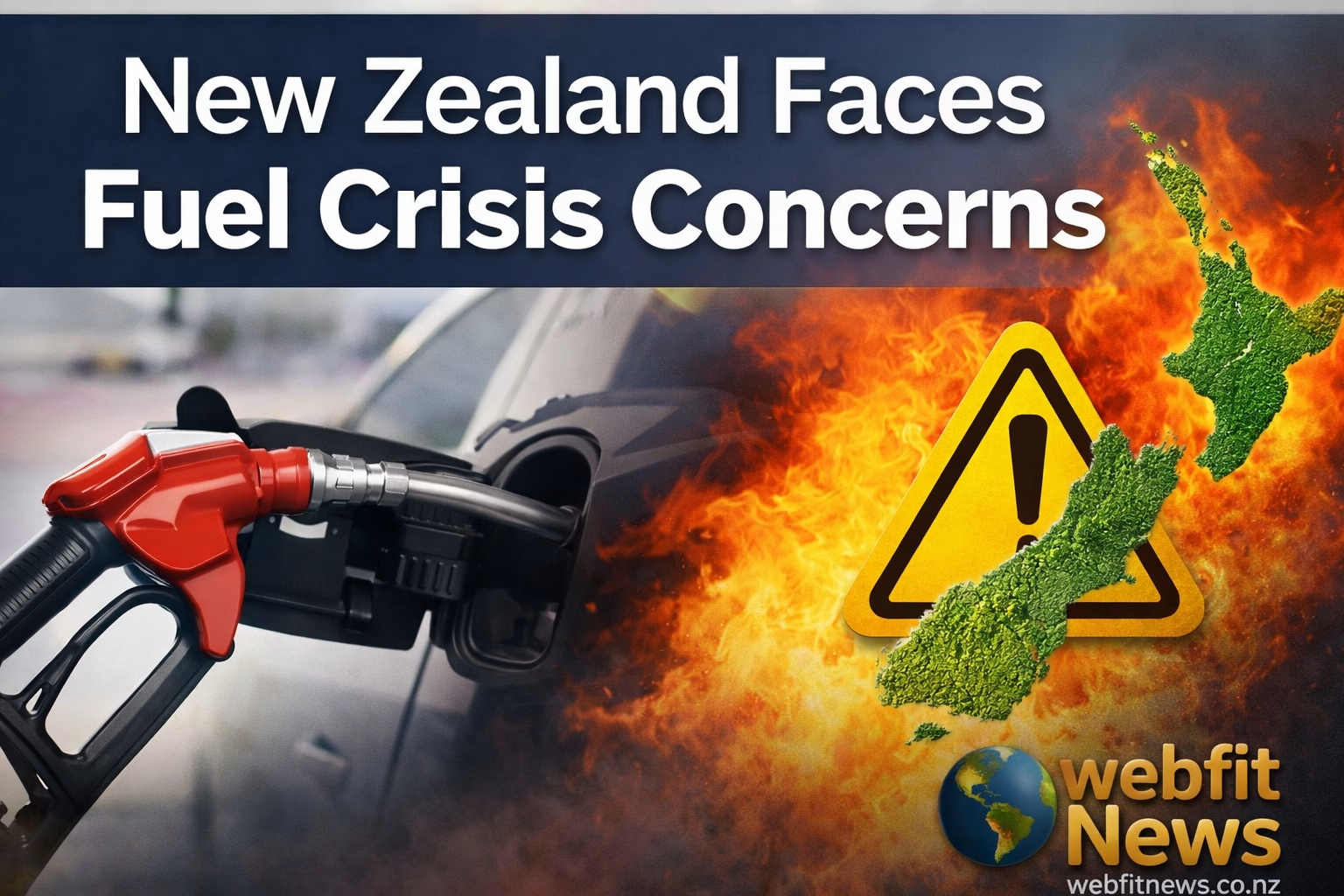
A growing sense of unease is spreading across New Zealand as concerns mount over fuel supply disruptions, rising prices, and what critics are calling a lack of clear leadership during a potentially serious crisis.
While the government continues to reassure the public that the situation is under control, analysts and industry voices are warning that the issue may be far deeper than what is being communicated.
A Crisis Brewing Beneath the Surface
🇳🇿 Easter in New Zealand: Do You Really Know Your Work Rights? – WebfitNews
New Zealand sits at the far end of global fuel supply chains. That reality has always made the country vulnerable. But recent global disruptions have exposed just how fragile that position is.
Reports suggest that oil and diesel supplies to Australia and New Zealand could face major interruptions as early as mid to late April. This is not a distant possibility. It is a near-term risk that could affect transport, logistics, food supply, and everyday life.
Despite this, the current messaging from leadership has focused largely on distribution challenges, meaning how fuel is moved across the country, rather than addressing whether there is enough fuel coming in at all.
That distinction matters. A distribution problem can be managed. A supply shortage is a completely different situation.
Global Signals vs Local Response
What makes this situation more concerning is the contrast between how other countries are reacting and what is happening in New Zealand.
Several nations have already taken early steps to reduce fuel usage and protect their economies:
- Some countries have cut fuel taxes to ease pressure on households
- Others have introduced free or subsidised public transport
- Governments are actively planning for worst-case scenarios
In contrast, New Zealand’s visible response has been limited. The main measure announced so far has been targeted financial support for selected households. Critics argue this looks more like short-term relief rather than a long-term strategy.
The bigger issue is not just what actions are being taken, but how much is being shared with the public.
South Korea Example Raises Hard Questions
South Korea offers a sharp comparison.
Despite having significantly larger fuel reserves than New Zealand, the country has already:
- Introduced price controls
- Created multiple emergency response teams
- Encouraged reduced energy consumption
- Coordinated with major companies on contingency planning
New Zealand, on the other hand, is estimated to have only around 40 to 50 days of fuel reserves.
That gap is not small. It is massive.
If a supply shock happens, New Zealand will have far less buffer time to respond.
What Happens If Things Get Worse
There are early indications of phased response planning within New Zealand. These include:
- Encouraging reduced fuel usage
- Prioritising fuel for essential services
- Potential stricter control over fuel distribution
But here is the problem. These plans are still not clearly communicated or finalised.
That creates uncertainty.
When people do not understand what is coming, panic becomes more likely than preparation.
Business and Public Impact
If fuel shortages do materialise, the ripple effects will be wide:
- Transport and logistics costs will rise sharply
- Food supply chains could be disrupted
- Businesses relying on fuel will face operational challenges
- Household expenses will increase further
This is not just an economic issue. It becomes a social issue very quickly.
And right now, many businesses are already dealing with tight margins and cost pressures.
The Communication Gap
One of the strongest criticisms is not just about policy, but about communication.
There is a growing perception that the public is not being fully informed about the scale of the risk.
Even if work is happening behind the scenes, the lack of transparency creates a trust gap.
People are asking simple questions:
- How serious is the situation really?
- What is the plan if the supply stops?
- What should households and businesses do now?
So far, there are not enough clear answers.
Webfit News Perspective
This is where things get uncomfortable, but it needs to be said clearly.
New Zealand is not facing a problem. It is facing a potential shock.
And right now, the response feels reactive, not strategic.
If the warnings from global markets are even partly correct, then waiting until the problem becomes visible will be too late.
What is missing is leadership that prepares people early, not reassures them late.
There is also a mindset issue here. New Zealand often assumes stability because it has been stable. But global supply chains do not care about geography or optimism.
The hard truth is this:
If supply stops, there is no quick fix.
You cannot negotiate fuel overnight. You cannot build reserves in a week. You cannot control global conflicts from Wellington.
So the only real advantage a country has is preparation.
And that is exactly where the pressure is now building.
What Needs to Happen Next
At a minimum, three things are needed immediately:
- Clear communication
The public needs honest, simple updates about risks and plans - Visible action
Early measures to reduce consumption and protect essential sectors - Strategic planning
Long-term thinking about energy security, not just short-term relief
Without these, the situation risks moving from concern to crisis very quickly.
Conclusion
New Zealand may still have time. But that window is closing.
The difference between a manageable disruption and a full crisis will depend on decisions made right now.
This is not about panic. It is about preparation.
And right now, the country is walking a very fine line between the two.
Credit
This article is based on reporting and analysis by Gordon Campbell, Scoop Media.