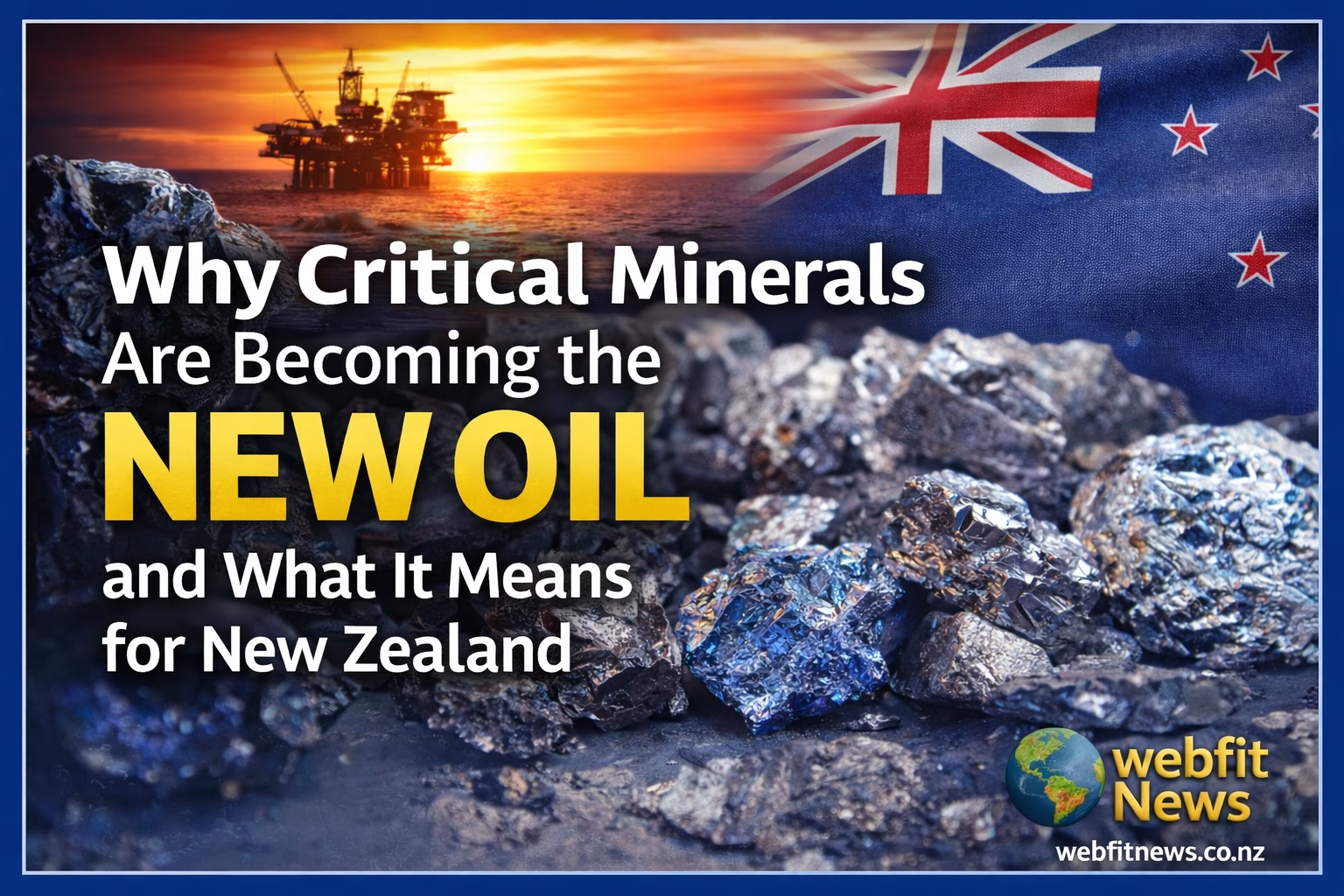
The world is entering a new kind of resource race.
This time, it is not about oil or gas.
It is about critical minerals.
Lithium, rare earth elements, gallium, and germanium now sit at the centre of modern life. These materials power electric vehicles, renewable energy systems, smartphones, data centres, and defence technology. Without them, modern economies slow down quickly.
In early 2026, the United States made it clear that it no longer trusts global markets to supply these materials safely. Instead, it launched a large state-backed plan to secure minerals at home and with trusted partners. That shift is changing global trade patterns and it has real consequences for countries like New Zealand.
Why the Global System Is Breaking
For years, China quietly built dominance over critical minerals. By 2025, it controlled most of the world’s rare earth processing and a large share of mining. This was not accidental. It came from long-term government support, cheaper production costs, and fewer environmental limits.
That dominance turned into leverage during recent trade tensions. China restricted exports of several minerals used in electronics and defence equipment. Manufacturers in the United States, Europe, and Asia felt the impact almost immediately.
Even after trade talks cooled tensions, the risk remained clear. Relying on one country for essential materials leaves economies exposed. Major powers have now decided that this risk is too high.
The United States Changes Direction
In February 2026, the US government launched a $12 billion plan to secure critical minerals for its industries. Instead of leaving supply to the market, it created a strategic reserve for civilian use.
The idea is simple.
If supply is disrupted or prices spike, manufacturers can still access what they need.
Large companies now pool their demand through this system. The government helps purchase and store minerals, reducing exposure to political pressure or sudden shortages. The approach is similar to how oil reserves were used in the past, but this time it focuses on the materials needed for clean energy and advanced technology.
A New Global Alignment Is Forming
This strategy does not stop at US borders.
In early 2026, more than 50 countries met in Washington to discuss cooperation on critical minerals. The goal was to diversify supply chains, speed up mining approvals, and block strategic assets from falling under hostile control.
New partnerships followed. India, Australia, South Korea, and several Asian and Central Asian nations are now working more closely with Western economies on mineral supply, processing, and investment.
This is not ideology. It is risk management.
Countries are choosing reliability over cheap supply. That choice is reshaping global trade.
Why This Matters for New Zealand
New Zealand does not mine large volumes of critical minerals. But it depends heavily on them.
Electric vehicles, renewable energy projects, advanced manufacturing, and digital infrastructure all rely on stable mineral supply. New Zealand’s clean energy goals, transport transition, and technology sector are tied to global supply chains it does not control.
If major economies lock in supply through strategic reserves and long-term contracts, smaller countries may face higher prices and tighter access. At the same time, trade routes could shift away from open markets toward closed networks of trusted partners.
New Zealand also faces decisions about where it aligns. As global supply chains become more strategic, neutrality becomes harder to maintain. Trade, defence partnerships, and industrial planning are becoming more connected than before.
The Cost of Security
Securing mineral supply is not cheap.
New mines take years to develop. Processing facilities are expensive. Environmental concerns slow approvals. Prices will likely rise in the short term as countries move away from low-cost Chinese supply.
But governments are accepting that cost. They see it as the price of security.
The risk of doing nothing is greater.
Jensi Kanabar and the Rise of a New Indian Tennis Pathway – WebfitNews
A Quiet but Lasting Shift
The global race for critical minerals marks a deeper change in how economies think about security. Resources once treated as ordinary commodities are now seen as strategic infrastructure.
For New Zealand, this is a warning and an opportunity.
Ignoring the shift could leave the country exposed to higher costs and supply risks. Understanding it early gives policymakers and businesses time to adapt.
The world is not running out of minerals.
It is running out of trust in how they are supplied.
That reality will shape trade, energy, and security decisions for decades to come.