How one case in New Zealand and a towering building in New York reveal the same global truth
It starts with something that feels almost ordinary.
A shipment.
A few household items.
Beer cans. Rice cookers.
Nothing unusual.
Until authorities in New Zealand looked closer.
Inside those everyday objects was something far from ordinary.
Methamphetamine. Carefully hidden. Professionally concealed.
And at the centre of the case was a man whose story quickly drew wider attention.
A Name That Carries History
Baltej Singh is not just another name in a criminal investigation.
What made headlines more striking was a reported family connection to one of the most defining moments in modern Indian history.
His uncle, Satwant Singh, was one of the individuals involved in the assassination of Prime Minister Indira Gandhi in 1984.
That event changed a nation.
Now, decades later, that same historical reference has resurfaced in an entirely different context.
Not politics.
But an alleged organised crime case.
Why This Detail Matters
Let’s be clear.
A family connection is not a crime.
But in public perception, history carries weight.
And when a name linked to such a moment appears again, it changes how the story is seen, discussed, and remembered.
This is where the narrative becomes uncomfortable.
Because it raises a deeper question:
👉 Does history shape perception more than facts alone?
From Ideology to Illicit Trade
What once began as political conflict in one era has, in today’s world, taken on completely different forms.
Money now drives global networks.
The modern drug trade is no longer limited to street-level operations.
It is structured. International. Coordinated.
New Zealand, with some of the highest meth prices globally, becomes an attractive target.
And the methods used?
Simple, but effective:
- Beer cans modified from inside
- Rice cookers hollowed out
- Designed to avoid detection
This is not random.
This is calculated.
A Different World, Thousands of Kilometres Away
Now shift your attention.
From a courtroom in New Zealand
To the skyline of New York City
A completely different story is unfolding.
But strangely, it connects.
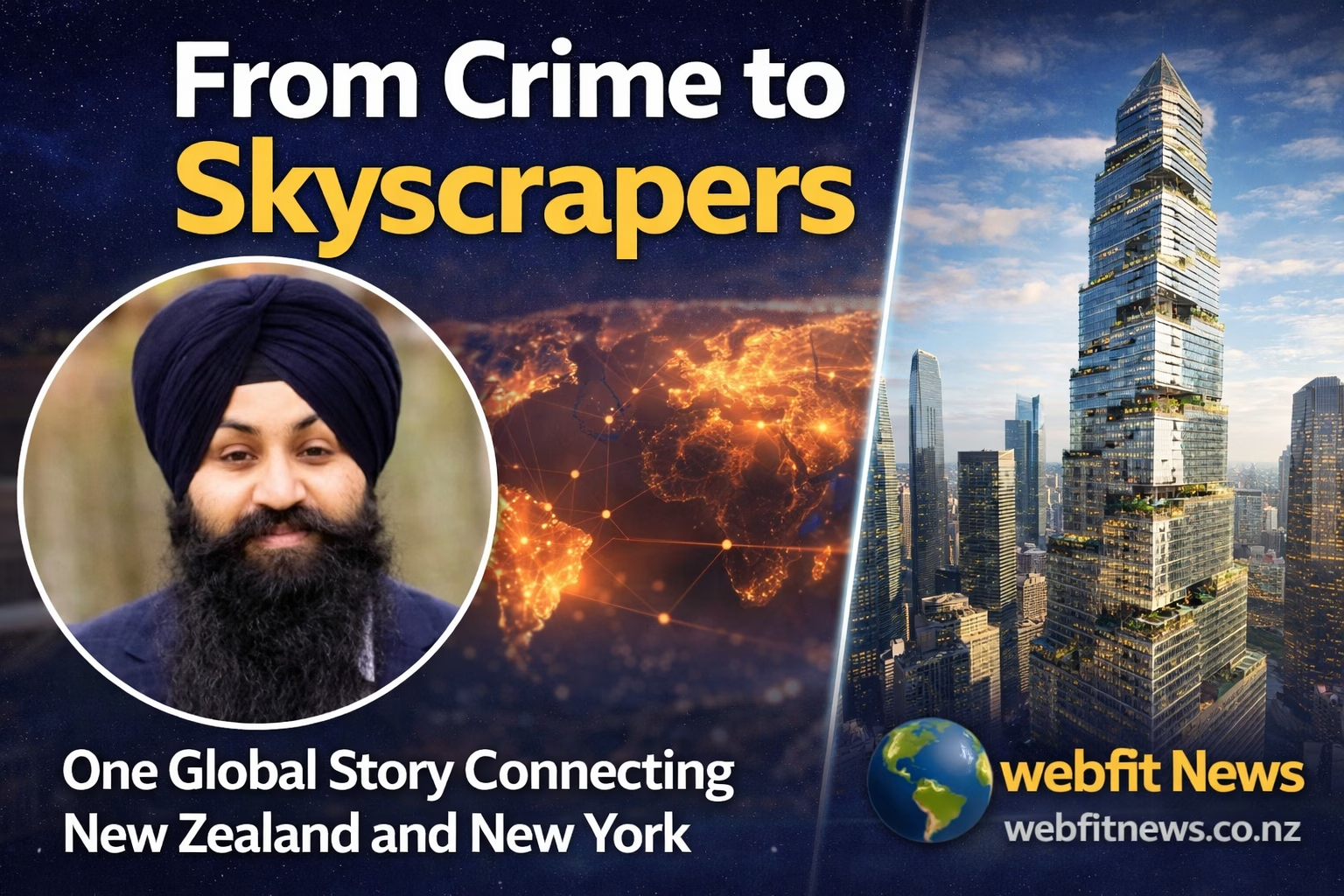
The Rise of “The Spiral”
In Manhattan, a new skyscraper rises.
It is called The Spiral.
And it is unlike anything built before.
A continuous ribbon of greenery wraps around the building from bottom to top.
At over 1,000 feet, it is not just architecture.
It is a message.
Why This Building Matters
At first glance, it represents innovation.
But look deeper.
It reflects how the world is changing.
After the pandemic, companies realised something critical:
People need a reason to return to offices.
So buildings are no longer just functional spaces.
They are designed experiences.
- Open air terraces
- Natural light
- Green environments
- A focus on wellbeing
Even at extreme heights.
Engineering Control and Efficiency
The Spiral uses advanced engineering:
- Sloping structural columns
- High-strength materials
- Smart elevator systems
Even rainwater is reused to sustain its greenery.
Every detail is intentional.
Every system is controlled.
Two Stories, One Reality
Now step back.
On one side:
A global network moving illegal substances across borders.
On the other:
A controlled corporate environment designed for efficiency and performance.
Different worlds.
But connected by the same force.
👉 Global connectivity
Webfit News Perspective
This is the reality many people miss.
The same systems that enable innovation
Also enable risk.
The same global networks that build cities
Also move crime.
New Zealand is not separate from this.
We are part of it.
Supply chains. Migration. Technology. Trade.
Everything is connected.
What This Means
If this trend continues:
- Crime will become more sophisticated
- Cities will become more controlled
- Global dependence will increase
The challenge is not avoiding this future.
It is understanding it.
Conclusion
From a hidden drug operation in New Zealand
To a billion-dollar skyscraper in New York
This is not just two stories.
It is one reality.
A world where history, perception, and global systems collide.
And where every country, including New Zealand, must decide:
👉 How to manage risk
👉 While still embracing progress