By Webfit News
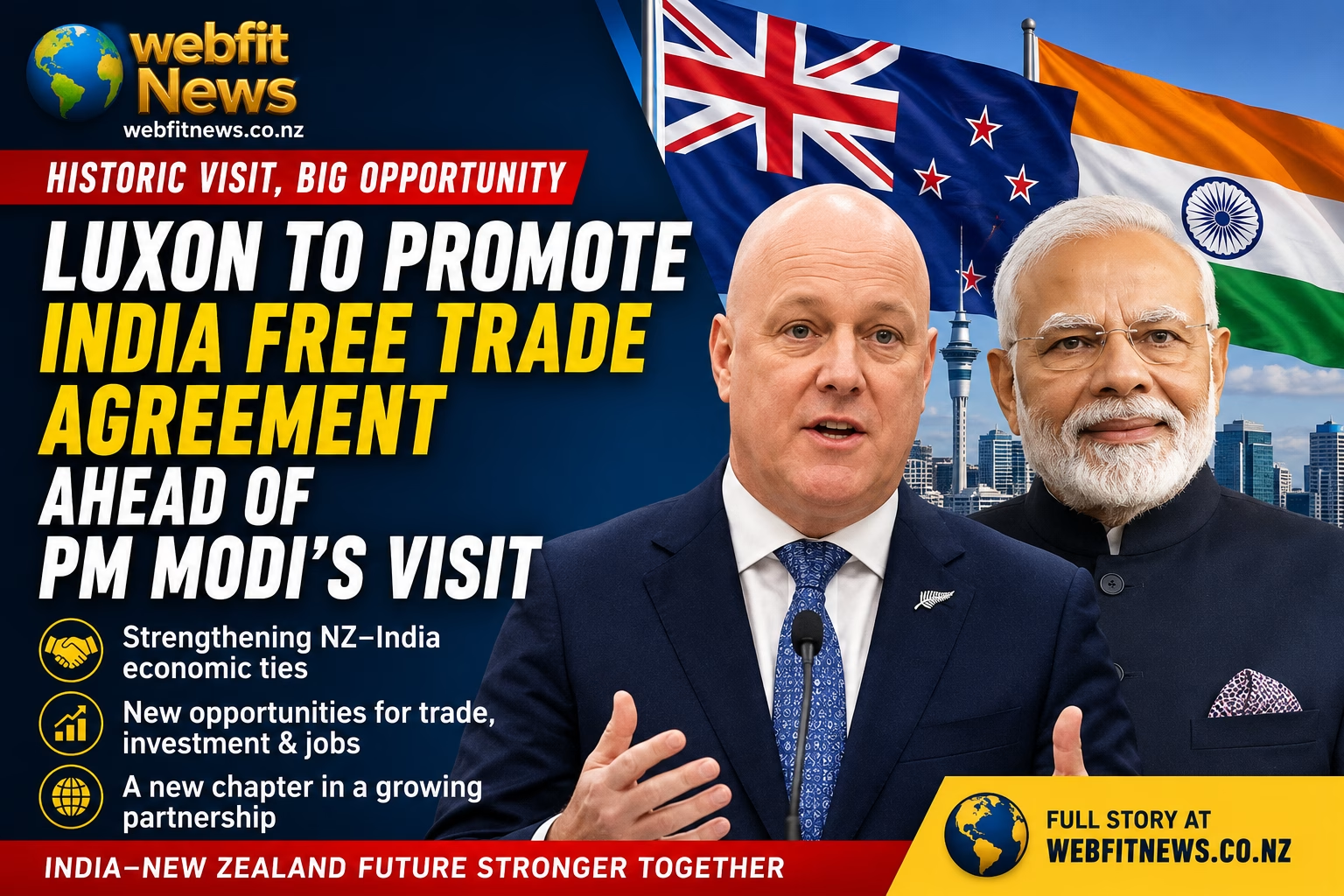
As anticipation builds for Indian Prime Minister Narendra Modi’s historic visit to New Zealand later this week, Prime Minister Christopher Luxon is expected to place the spotlight on the recently signed India-New Zealand Free Trade Agreement (FTA), describing it as one of the country’s most significant economic opportunities in decades.
The visit marks the first official trip by an Indian Prime Minister to New Zealand in around 40 years and comes at a time when bilateral relations between the two countries are entering a new chapter focused on trade, investment, education and strategic cooperation.
A Historic Visit with Economic Significance
Prime Minister Modi’s three nation tour includes Indonesia, Australia and New Zealand. While discussions are expected to cover regional security, education, technology and the Indian diaspora, economic cooperation is likely to dominate the agenda during his meetings with Prime Minister Luxon.
The recently concluded India-New Zealand Free Trade Agreement has already been described by both governments as a landmark achievement that will reshape commercial ties between the two nations.
For New Zealand, the agreement opens improved access to one of the world’s fastest growing economies with a population of more than 1.4 billion people. For India, it creates fresh opportunities for exporters, skilled professionals, students and businesses seeking stronger engagement with the South Pacific.
Luxon Expected to Promote the Benefits
According to publicly reported information, Christopher Luxon is expected to actively promote the economic benefits of the agreement ahead of Modi’s arrival, highlighting how New Zealand exporters, farmers and businesses stand to gain from improved market access.
The Government has consistently argued that expanding trade with India supports its broader goal of doubling New Zealand’s export earnings over the coming decade while reducing dependence on traditional markets.
The agreement is expected to reduce or eliminate tariffs on a wide range of products while encouraging greater investment flows and closer commercial partnerships.
Opportunities Across Multiple Sectors
Industry observers believe several sectors could benefit significantly from the agreement.
Agriculture remains one of New Zealand’s biggest export strengths. Products such as kiwifruit, apples, seafood, wine, forestry products and premium food exports are expected to gain improved access to the vast Indian consumer market under various implementation phases.
India, meanwhile, is expected to see expanded opportunities for exports in textiles, pharmaceuticals, engineering goods, automotive products and technology services.
The agreement also includes provisions aimed at improving business mobility, employment opportunities and educational exchanges between the two countries.
More Than Just Trade
While economics will be a major focus, the visit carries broader diplomatic significance.
India has emerged as one of the world’s fastest growing major economies and an increasingly influential player across the Indo-Pacific region. Strengthening ties with India aligns with New Zealand’s wider foreign policy objectives of diversifying international partnerships and expanding engagement across Asia.
Officials are also expected to discuss cooperation in areas including innovation, renewable energy, food security, tourism, digital technology, education and regional security.
Strong Interest from the Indian Community
Modi’s visit has generated considerable excitement among New Zealand’s Indian community, one of the country’s fastest growing and most influential migrant communities.
Community organisations, business leaders and cultural groups have been preparing for months, with thousands expected to participate in public events during the Prime Minister’s visit to Auckland.
Beyond the official meetings, many see the visit as recognition of the important role Indian New Zealanders play in business, healthcare, education, technology and public life.
Business Leaders Watching Closely
Business organisations on both sides are expected to monitor the visit carefully.
Many exporters believe the agreement could unlock new opportunities for small and medium sized businesses that previously found India’s market difficult to access because of tariff barriers and regulatory challenges.
For New Zealand companies looking to diversify beyond traditional export destinations, India presents one of the world’s largest long term growth opportunities.
Likewise, Indian businesses may increasingly view New Zealand as a gateway for investment, innovation partnerships and access to Asia-Pacific markets.
A Defining Moment in Bilateral Relations
Prime Minister Modi’s visit represents more than a ceremonial diplomatic event.
It signals a new phase in India-New Zealand relations built on stronger economic cooperation, increased people-to-people connections and shared strategic interests across the Indo-Pacific.
If the momentum created by the Free Trade Agreement continues, the visit could become a defining milestone that shapes bilateral relations for many years to come.
For both governments, the challenge now will be turning the promises of the agreement into practical outcomes that benefit businesses, workers, students and communities in both countries.
As New Zealand prepares to welcome Prime Minister Narendra Modi, expectations are high that the visit will not only strengthen diplomatic ties but also lay the foundation for a deeper economic partnership between two increasingly important Indo-Pacific nations.
Sources: Publicly available reporting from NZ Herald (paywalled), Reuters, and official statements regarding Prime Minister Narendra Modi’s July 2026 visit and the India-New Zealand Free Trade Agreement.