15 February 2026 | Community Awareness Report
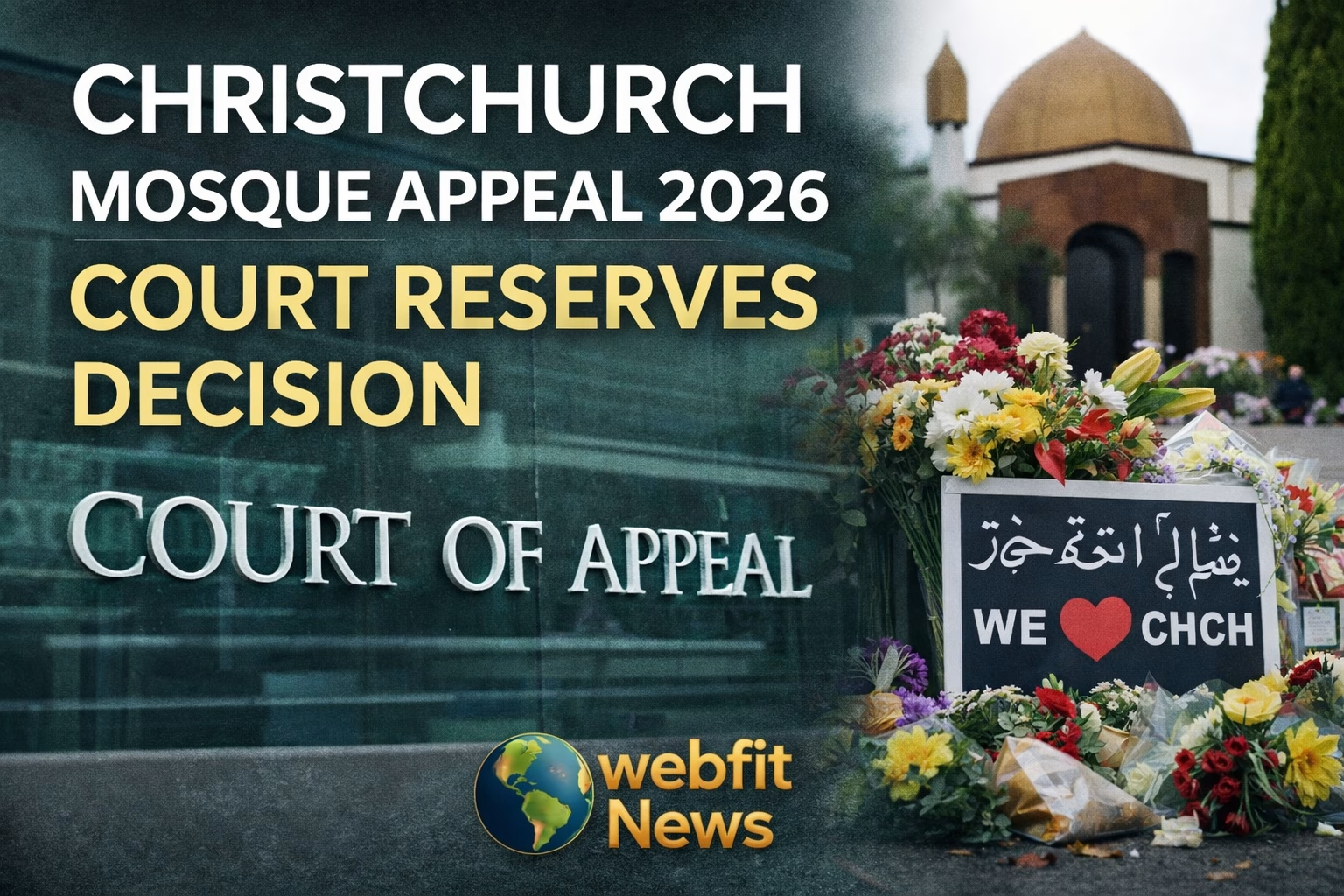
New Zealand has concluded a significant and emotionally charged week in the Wellington Court of Appeal. Between 9 and 13 February 2026, the individual responsible for the 15 March 2019 Christchurch mosque attacks appeared before a three-judge panel seeking to overturn his 2020 guilty pleas and life sentence without parole.
The Court has reserved its decision. As of today, 15 February 2026, the country waits.
This article aims to provide a careful, factual context for community awareness while respecting the victims, survivors, and the wider Muslim community.
Background: The 2019 Atrocity
On 15 March 2019, coordinated attacks were carried out at Masjid Al Noor and the Linwood Islamic Centre in Christchurch during Friday prayers. Fifty-one people were killed. Forty others were injured by gunfire. The attacks were livestreamed online for approximately 17 minutes, causing widespread distress and rapid global dissemination before platforms intervened.
The perpetrator was arrested within minutes. In 2020, after initially pleading not guilty, he changed his plea to guilty on 51 counts of murder, 40 counts of attempted murder, and one charge under the Terrorism Suppression Act. The High Court imposed life imprisonment without parole, the first such sentence in New Zealand history.
Many survivors and families regarded the guilty plea as sparing them a prolonged and traumatic trial.
The 2026 Appeal: Core Arguments
The appeal filed in late 2022 challenges both conviction and sentence. The primary argument heard this week concerns whether the 2020 guilty pleas were entered voluntarily and rationally.
The appellant claims his plea resulted from prolonged solitary confinement and prison conditions that he describes as oppressive. His legal team argues those conditions impaired his mental state at the time of the plea.
The Crown rejects this claim. Prosecutors maintain that independent psychological assessments in 2020 found him fit to stand trial and capable of making informed legal decisions. They argue the guilty plea reflected the overwhelming evidence and the inevitability of conviction.
The Court must now determine whether there is a credible basis to revisit the convictions. If the application is dismissed, the conviction stands and attention may shift to the sentence appeal. If granted, the case could return to the High Court for a full trial.
Psychological Evidence in Dispute
Expert opinion presented during the hearing differed. One psychologist suggested that prolonged isolation could impair judgment and decision-making. A separate forensic expert disputed that conclusion, stating there was no evidence of incapacity at the time the pleas were entered.
This divergence places the Court in a difficult position to evaluate retrospective claims about mental state against contemporaneous court findings and expert reports.
Community Response
For many families of the 51 victims and for survivors, the appeal represents a reopening of trauma—several watched proceedings from Christchurch via video link. Public comments reflected exhaustion and frustration but also resilience.
Community leaders have emphasized unity and dignity. The Federation of Islamic Associations of New Zealand reiterated the importance of preventing extremist narratives from regaining public attention. Government representatives have reaffirmed that hatred and Islamophobia have no place in New Zealand.
The justice system adopted a restrained approach during the hearing. Public access was limited, visual exposure controlled, and media coverage largely focused on procedural facts rather than amplification.
Legal and Societal Implications
Beyond the individual case, the appeal raises broader questions:
• How should democratic societies balance prisoner rights with national security in extreme-risk detention?
• What constitutes voluntariness in guilty pleas entered under high-security conditions?
• How does the justice system protect victims from repeated retraumatization while preserving due process?
The Prisoner of Extreme Risk Unit, where the offender is housed, was designed for unprecedented security needs. The Court’s eventual ruling may influence future policy around high-risk incarceration.
A Nation in Deliberation
New Zealand’s response to the 2019 attacks was marked by swift gun law reform, cross-community solidarity, and international recognition of compassion and resolve. The current appeal does not reopen those events, but it does test the durability of judicial finality and national healing.
The Court of Appeal has not indicated when its decision will be released. Legal observers suggest several months may pass before judgment is delivered.
For now, the focus across communities remains clear: remembrance of those lost, support for survivors, and continued commitment to a society where faith and identity are never grounds for violence.
Webfit News Perspective
Community awareness must walk a careful line. The justice process must run its course without sensationalism. At the same time, survivors deserve empathy and protection from renewed harm. The strength shown in Christchurch after 2019 remains the defining narrative, not the legal maneuvers of the individual responsible.
As New Zealand approaches the seventh anniversary of the attacks, reflection continues. Whatever the Court ultimately decides, the broader commitment to unity, accountability, and peaceful coexistence remains unchanged.
Disclaimer: This article is provided for general informational purposes only and reflects publicly reported legal proceedings as of 15 February 2026. It does not constitute legal advice.