By Webfit News Desk
Politics does not often offer clarity. This week, it did.
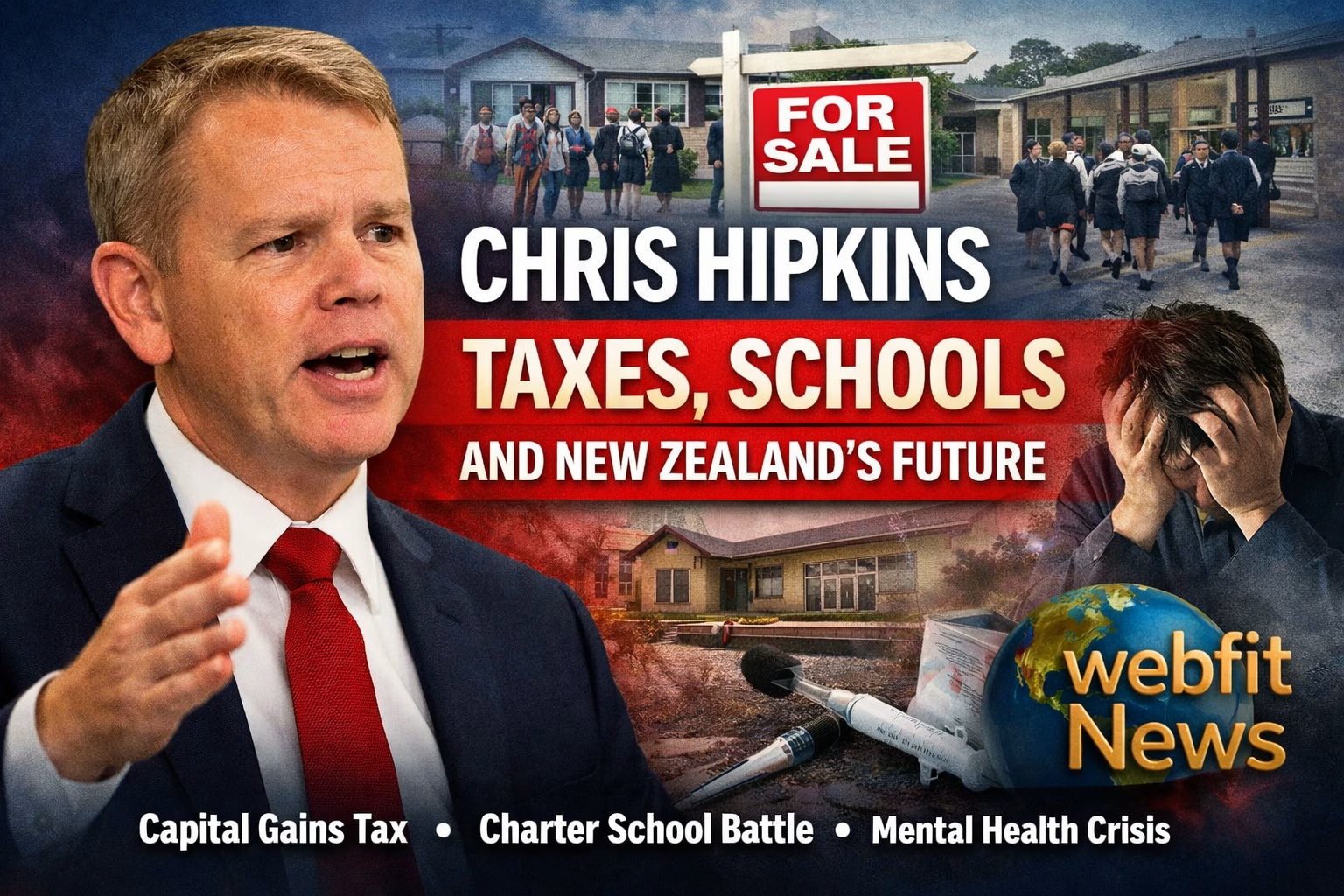
In a wide-ranging interview, Chris Hipkins spoke plainly about what he believes is going wrong in New Zealand, and what Labour would do differently.
He focused on housing speculation, public education, mental health, and the growing feeling that the economy no longer works for most people.
Whether voters agree with him or not, his message was direct. New Zealand is drifting, and ordinary people are paying the price.
A Tax Debate That Will Not Go Away
At the centre of the discussion was Labour’s proposed targeted capital gains tax. It would apply to frequent buying and selling of rental and commercial property.
Hipkins made a simple point. If a policy causes panic among property investors and loud political attacks from the right, it is worth asking why.
Labour says the tax is not about punishment. It is about balance. The revenue would fund three free GP visits each year for every New Zealander, along with more support for public health.
The political maths is clear. Most people would never pay the tax, but everyone would benefit from the services it funds.
Hipkins suggested this is why critics have shifted away from debating the policy itself and towards attacking Labour instead.
Moving Away From Housing Speculation
Another key theme was Labour’s push to move investment away from housing speculation and towards businesses that create jobs.
Hipkins argued that New Zealand has built an economy where wealth gains flow to a small group, while wages struggle to keep up with rising costs.
The effects are easy to see. People work long hours. Incomes remain low compared to other developed countries. More New Zealanders are leaving in search of better opportunities overseas.
Labour’s Future Fund and tax proposals are designed to appeal to voters looking for stability and fairness, not radical change. Hipkins said that is exactly why the response from opponents has been so intense.
The Charter School Controversy
The interview turned serious when the issue of charter schools came up, particularly the situation involving Kelston Boys’ High School.
Hipkins described it as a warning sign of what happens when schools are treated like commercial assets instead of community institutions.
Under current rules, a school can be fundamentally changed without the consent of parents, teachers, or students. That, he said, is the real concern.
Labour’s position is clear. The charter school model would be repealed. Any schools created under it would be reviewed on a case-by-case basis.
The issue goes beyond one school. It raises a broader question many parents are now asking. If it can happen there, could it happen anywhere?
Māori Relations and Political Tension
On the government’s relationship with Māori, Hipkins struck a sombre note.
He accused the current leadership of using Māori issues as a political weapon, rather than working towards long-term unity.
According to Hipkins, this approach risks undoing years of progress made by leaders across different parties. It replaces nation-building with short-term political advantage.
His warning was calm but firm. Divisions once used in opposition, he said, are now being deepened in government.
Mental Health and Social Pressure
The interview ended with some of New Zealand’s hardest realities.
Suicide rates remain high. Mental health services are harder to access. Reports show hundreds of children in state care have been abused. Methamphetamine use is rising, despite strong law-and-order rhetoric.
Hipkins linked these problems to deeper issues. Economic stress. Housing insecurity. Social marginalisation.
These are not problems that can be fixed with slogans or tough talk alone. His conclusion was blunt. If criminal groups are making record profits from drugs, current approaches are not working.
A Clear Political Choice Ahead
This was not a campaign launch. It was something more deliberate.
Hipkins presented Labour as a party willing to challenge speculation, protect public institutions, and address inequality directly.
Whether voters accept that argument will shape the next election.
One thing is already clear. The debate is no longer about whether change is needed. It is about who pays for that change, and who continues to benefit if nothing changes.