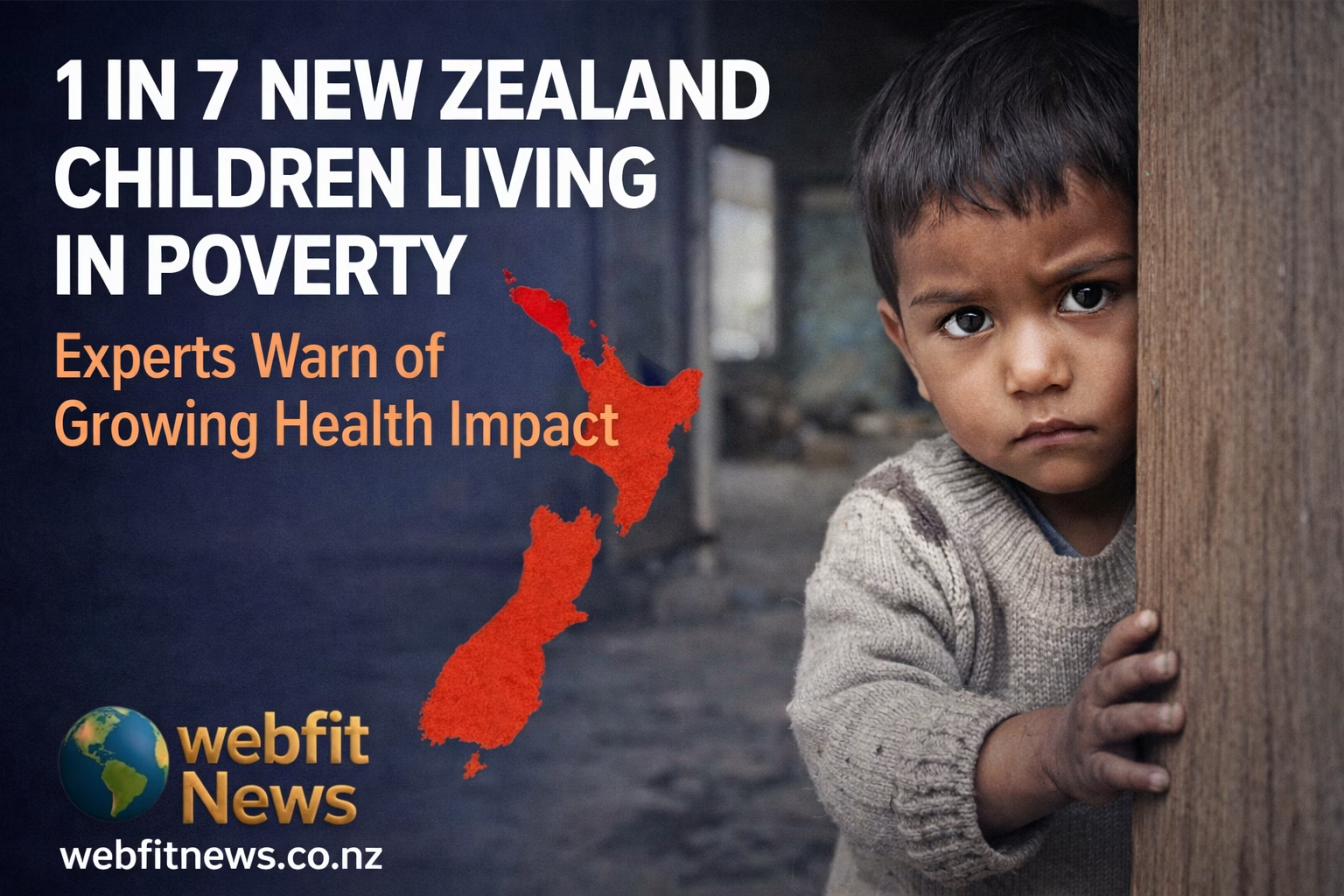
About 1 in 7 children in New Zealand live in material hardship. Experts say child poverty is avoidable and has major impacts on health and public spending.
child poverty NZ, social determinants of health, New Zealand poverty statistics, health system pressure, inequality NZ
Introduction
Child poverty remains one of the most serious social challenges in New Zealand.
Recent figures show that about one in seven children in Aotearoa New Zealand are living in material hardship. That means thousands of young people grow up without reliable access to basic needs such as warm clothing, healthy food, or regular healthcare.
While poverty statistics often appear as numbers in reports, the real impact shows up in everyday life. Families delay doctor visits, homes stay cold in winter, and children miss out on opportunities many others take for granted.
Experts say the issue goes beyond economics. Poverty shapes long-term health outcomes, education opportunities, and the overall demand placed on the country’s healthcare system.
Latest Data: 1 in 7 Children Living in Hardship
Statistics from Stats NZ for the year ending June 2025 show that around 14 percent of children in New Zealand live in material hardship.
This measure tracks whether families can afford basic items such as:
• Enough food
• Warm clothing
• Heating during winter
• Medical visits when needed
Children living in these conditions often experience daily tradeoffs. Families may postpone doctor visits or struggle to keep homes warm in cold weather.
The impact is not spread evenly across society.
Certain groups are affected at much higher rates:
- Māori children: about 1 in 4
- Pacific children: about 1 in 3
- Disabled children: about 1 in 4
These figures highlight long standing inequalities that continue to shape life outcomes across the country.
Poverty Is Not Inevitable
Policy experts say these numbers are not unavoidable.
International comparisons show that countries with similar economies can have far lower child poverty rates. Denmark, for example, reports child poverty levels of around 4 to 5 percent, far below New Zealand’s rate.
Public policy researcher Max Rashbrooke has argued that the difference comes down largely to government decisions.
According to Rashbrooke, New Zealand currently has around 150,000 children living in poverty, roughly the population of Tauranga.
In his view, the persistence of child poverty reflects policy choices around income support, housing costs, and social welfare.
His conclusion is blunt. Child poverty is not an inevitable outcome of modern economies. It is the result of decisions governments make about how wealth and resources are distributed.
Why Poverty Affects Health
One of the most important consequences of poverty appears in the healthcare system.
Health experts often talk about social determinants of health. This term describes the everyday conditions that influence whether people stay healthy or become sick.
These factors include:
• Income levels and financial support
• Housing quality and neighbourhood conditions
• Education opportunities
• Access to healthy food
• Exposure to pollution
• Access to healthcare services
Among these factors, income is often considered the most powerful driver of health outcomes.
When families struggle financially, the consequences can include:
- Poor nutrition
- Cold or damp housing
- Delayed medical care
- Higher levels of stress
Over time, these conditions lead to more illness and greater pressure on hospitals and health services.
Pressure on the Health System
New Zealand’s healthcare system has already been under strain for years.
When people cannot access early treatment or preventive care, their conditions often become worse. That leads to more acute hospital admissions, which are more expensive and harder for hospitals to manage.
Health professionals say this creates a cycle.
If early care is delayed, more patients end up needing urgent treatment later. Hospitals become overcrowded, emergency departments struggle to cope, and planned procedures are pushed further back.
Many health workers say they have been experiencing this pressure for more than a decade.
In simple terms, poverty outside the health system drives demand inside the health system.
The Limits of “Balance Sheet Thinking”
Another issue raised by analysts is how governments evaluate public services.
Finance ministers often focus on financial balance sheets when assessing spending. These reports provide a snapshot of government finances at a particular moment.
However, critics say balance sheets alone can miss the bigger picture.
If policy analysis focuses only on short term budgets, it may ignore deeper social problems that drive future costs.
Child poverty is one example.
Reducing poverty may require higher spending in areas such as income support or housing. But if poverty remains high, the healthcare system may face larger costs later due to increased illness and hospital demand.
In other words, the long term economic impact of poverty often appears in other parts of the public system.
Why Reducing Child Poverty Could Save Money
Researchers often highlight a simple chain of cause and effect:
- Poverty worsens health outcomes
- Poor health increases demand for hospitals and treatment
- More demand increases health system costs
If poverty levels fall, health outcomes tend to improve.
That can reduce hospital demand, lower healthcare costs, and improve overall wellbeing.
For many experts, the logic is straightforward.
Lower child poverty means healthier children, healthier adults in the future, and less strain on public services.
The Bigger Picture for New Zealand
Despite years of debate, child poverty rates in New Zealand have remained stubbornly high.
The latest figures show little change in recent years.
For advocates and researchers, the issue remains one of the country’s most significant social challenges. It raises difficult questions about income inequality, housing affordability, and public policy priorities.
With tens of thousands of children affected, the choices made by policymakers today will shape long term outcomes for the next generation.
Conclusion
Child poverty is often discussed as a statistic. But behind the numbers are real families making difficult choices every day.
The data shows that around one in seven New Zealand children lack basic essentials.
Experts say this situation is avoidable and largely driven by policy decisions around income support, housing costs, and social welfare.
Beyond the moral and social implications, poverty also has clear economic consequences. It increases pressure on healthcare services and creates long term costs for the country.
For many researchers, the conclusion is simple. Reducing poverty would not only improve lives but also strengthen the health system and the wider economy.
The real question is not whether the problem can be solved. It is whether the country chooses to solve it.
References
- Statistics New Zealand. Latest Child Poverty Data (year ending June 2025).
- Julia Gaben. NZ Herald feature on child poverty.
- Max Rashbrooke. Public policy analysis published in The Spinoff.
- Ian Powell. Opinion analysis on child poverty, social determinants of health, and health system policy.