
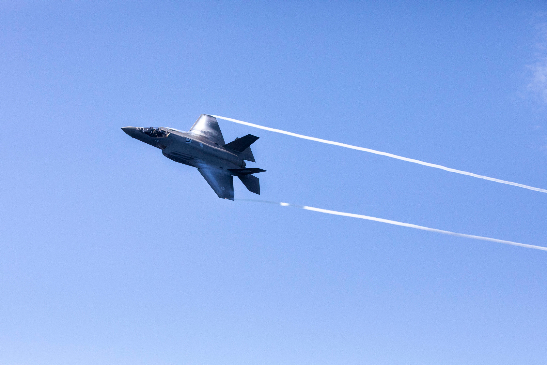
Royal New Zealand Air Force Base Ohakea will host two Royal Australian Air Force F-35A Lightning II stealth fighters next week, marking the first visit to New Zealand by the advanced combat jets.
The aircraft will take part in joint exercises with the New Zealand Army and the RNZAF, including simulated strike activity at Waiouru and rehearsed interceptions involving New Zealand’s P-8A Poseidon maritime patrol aircraft.
The visit is significant not simply because of the aircraft involved, but because it gives New Zealand forces a rare opportunity to train directly with one of the most advanced combat aircraft currently operating in the region.
Chief of Air Force Air Vice-Marshal Darryn Webb said the exercise would allow the New Zealand Defence Force to work alongside high-end military technology while strengthening operational cooperation with Australia.
“This is an exciting opportunity for the New Zealand Defence Force to work in concert with some of the most advanced warfighting technology in the world,” he said.
First F-35A visit to New Zealand
The Royal Australian Air Force operates the F-35A Lightning II as a core part of its modern combat fleet.
The aircraft is a fifth-generation multirole fighter designed for air-to-air combat, strike missions, intelligence gathering and operations in highly contested environments.
Its arrival at Ohakea will therefore be notable for the RNZAF, which does not operate fast jets of its own.
New Zealand retired its Air Combat Force in 2001 and today relies on aircraft including the P-8A Poseidon, C-130J Hercules and NH90 helicopters for its principal air operations.
That makes direct training with Australian fighter aircraft particularly valuable for interoperability.
Joint attacks to be practised at Waiouru
On Tuesday, 8 September, the two Australian F-35As are scheduled to conduct simulated jet attack exercises within the Waiouru Military Training Area.
New Zealand Army personnel on the ground will coordinate the activity.
That element of the exercise is important because modern air operations depend heavily on coordination between aircraft and forces operating on the ground.
Ground teams need to be able to identify targets, communicate accurately with aircraft and manage the risks involved when air power is used close to friendly forces.
Training with the F-35A gives New Zealand Army teams experience working with a platform they could realistically encounter during future coalition operations.
Australia to establish overseas refuelling point
One of the more technically significant parts of the exercise will involve the Royal Australian Air Force establishing a Forward Arming and Refuelling Point, known as a FARP, outside Australia for the first time.
A FARP allows combat aircraft to refuel, and in some circumstances rearm, from a temporary or forward location rather than returning to a major operating base.
That can extend the reach of aircraft and allow them to operate more efficiently during military operations.
According to the NZDF, this will be the first time the RAAF has established an overseas FARP for its F-35A operations.
That means the exercise is also testing Australia’s ability to deploy and sustain its fighter capability away from its home bases.
For New Zealand, hosting the activity provides direct exposure to the logistics and support systems required to operate high-end combat aircraft.
F-35As will also train against RNZAF Poseidons
After the Waiouru exercises, the Australian fighters will take part in rehearsed interceptions involving RNZAF P-8A Poseidon aircraft.
New Zealand’s Poseidons are primarily designed for maritime surveillance, anti-submarine warfare, reconnaissance and search operations.
Training against fighter aircraft allows crews to rehearse procedures they would use when interacting with military aircraft in contested or complex airspace.
The F-35As are expected to return to Australia on Thursday.
More than a ceremonial visit
While the arrival of F-35As will attract considerable public interest, the exercise is operational rather than ceremonial.
The focus is interoperability.
Australia and New Zealand have long-standing defence ties, but modern military cooperation increasingly requires personnel and equipment to work together at a technical level, not simply under the same command structure.
Communications systems need to be compatible.
Ground controllers must understand aircraft procedures.
Aircrews need shared operating practices.
Logistics teams need to know how equipment can be sustained away from home bases.
Exercises such as this are designed to test those relationships before they are ever needed in a real operation.
Why interoperability matters
Air Vice-Marshal Webb said developing shared combat capability was one of the objectives of closer cooperation between the two air forces.
“One of the key objectives we have set in working together is to enhance our operational readiness by conducting combined exercises which develop shared combat capability,” he said.
“This exercise is an important step forward on that path.”
That reflects a broader trend in New Zealand defence policy.
New Zealand operates a much smaller military than Australia and cannot independently maintain the same range of high-end capabilities.
Its defence effectiveness therefore depends heavily on being able to integrate with trusted partners, particularly Australia.
That includes being able to operate alongside capabilities New Zealand itself does not possess.
A changing regional security environment
The training also comes at a time when both Australia and New Zealand are placing greater emphasis on military readiness in the Indo-Pacific.
Australia has invested heavily in combat aircraft, naval capability, long-range strike systems and deeper military cooperation with the United States and other partners.
New Zealand has also been rebuilding parts of its defence capability, including introducing the P-8A Poseidon and the C-130J Super Hercules.
The two countries do not have identical defence strategies or military resources, but both increasingly speak about the need for greater readiness and regional cooperation.
The F-35A deployment to Ohakea fits into that wider pattern.
What the exercise does not mean
The presence of Australian stealth fighters in New Zealand should not be interpreted as New Zealand rebuilding its own fighter capability.
No such announcement has been made.
The RNZAF remains structured around transport, maritime surveillance, helicopter and support operations rather than fast-jet combat.
Instead, the exercise demonstrates how New Zealand can train with allied combat aircraft without operating them itself.
That distinction is important.
Interoperability allows New Zealand forces to participate more effectively in coalition operations while maintaining a defence structure that reflects the country’s own policy choices and budget.
Ohakea’s role becomes increasingly important
RNZAF Base Ohakea remains one of New Zealand’s most important military aviation facilities.
Its location and infrastructure make it a natural hub for international exercises involving visiting aircraft.
Hosting F-35As also tests the base’s ability to support a more demanding category of military aircraft.
That experience could be useful if New Zealand hosts more advanced allied aircraft in future exercises.
A rare opportunity for NZDF personnel
For the personnel involved, the value of the exercise will be practical.
Army teams will work directly with Australian fighter crews.
RNZAF aircrew will rehearse interceptions.
Ground and logistics personnel will observe how fifth-generation aircraft are sustained during overseas operations.
That kind of exposure can be difficult to replicate without real aircraft operating in New Zealand airspace.
The two F-35As will only be in the country for a short period.
But the significance of the visit lies less in how long they stay and more in what New Zealand personnel are able to learn while they are here.
For the NZDF, the exercise is another step towards being able to operate seamlessly with Australia in situations where both countries may need to deploy together.
And for the public, it will offer a rare sight over New Zealand skies: some of the world’s most advanced combat aircraft training alongside New Zealand forces.
Source: New Zealand Defence Force media release.
Photo credit: Australian Defence Force, file photo