

4
Auckland, April 7, 2026
Auckland Student Drowning at Lake Taupō Raises Serious Questions on Water Safety in New Zealand – WebfitNews
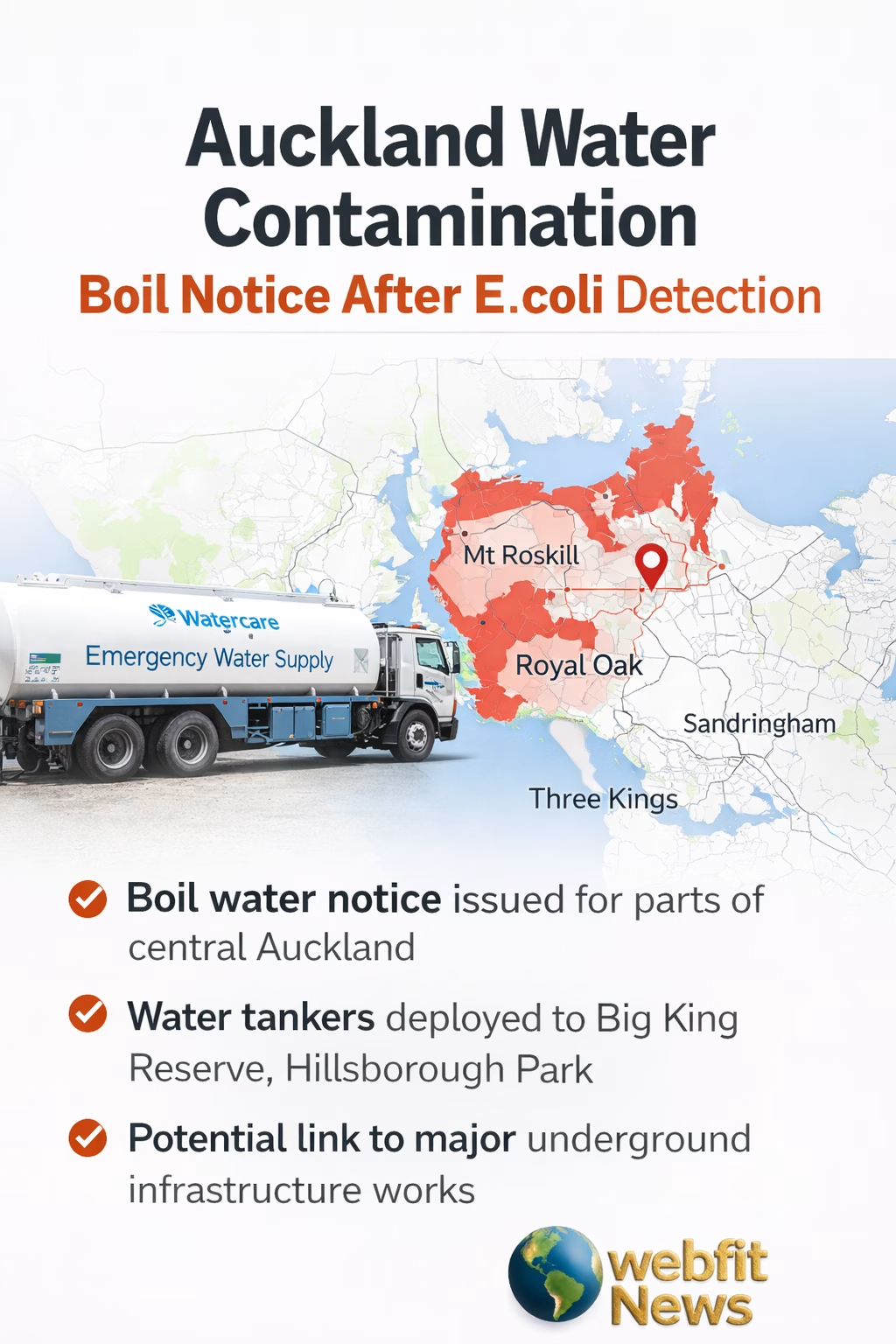
Auckland’s central isthmus woke up to a serious public health alert this week after E. coli bacteria was detected in the city’s drinking water supply, triggering a precautionary boil water notice across multiple suburbs.
The affected areas include Hillsborough, Mt Roskill, Royal Oak, and Three Kings, with concerns extending to nearby locations such as Sandringham due to interconnected water networks. Residents have been urged to boil all tap water before consumption until further notice.
This is not a routine advisory. This is a system-level failure signal.
What Happened
The contamination was identified during routine water quality testing on April 6, with laboratory confirmation later that evening. Once E. coli was detected, authorities moved quickly to activate emergency protocols.
Key developments include:
- A boil water notice was issued late at night on April 6
- Emergency alerts sent via SMS and email
- Water tankers deployed to Big King Reserve and Hillsborough Park
- Ongoing testing and network flushing are underway
While other water quality indicators, such as pH and turbidity, remained within acceptable limits, E. coli presence alone is enough to trigger a full public health response.
Why This Matters More Than It Looks
Let’s be blunt.
E. coli in treated water is not just “bacteria found.” It is a red flag for faecal contamination. That means something has gone wrong either in:
- The treatment process
- The pipe network integrity
- Or external contamination entering the system
And here is the uncomfortable truth most people will not say clearly:
👉 If E. coli got in, other pathogens may also be present.
That includes:
- Campylobacter
- Salmonella
- Giardia and Cryptosporidium
- Even viruses like Norovirus
Some of these are harder to kill than bacteria and can cause serious illness, especially in children and elderly populations.
The Real Suspect: Infrastructure Stress
Now we get to the uncomfortable engineering reality.
This is not happening in isolation.
Auckland is currently undergoing one of its largest infrastructure projects ever, the Central Interceptor. Massive tunnelling, excavation, and underground works are actively happening in areas like Sandringham and Mt Roskill.
That creates real risks:
- Vibration damage to aging pipes
- Micro-cracks in old water mains
- Ground movement and pressure shifts
- Back-siphonage pulls contaminated groundwater into pipes
Combine that with recent saturated soil conditions, and you have a perfect setup for system vulnerability.
So if you are thinking this is just “bad luck,” you are missing the bigger picture.
This looks like a system under stress, not a one-off incident.
What Residents Must Do Right Now
No shortcuts here.
If you are in affected areas:
Boil water for at least 1 minute before:
- Drinking
- Brushing teeth
- Washing vegetables
- Making baby formula
- Making ice
Safe without boiling:
- Showering (do not swallow water)
- Washing clothes
- Flushing toilets
If you feel symptoms like:
- Stomach cramps
- Vomiting
- Diarrhea
Get medical advice immediately.
Public Reaction: Frustration Is Rising
There is a growing sentiment among residents:
“How does a developed city still face this?”
And honestly, that frustration is justified.
People are paying high rates. They expect reliable infrastructure.
But here is the reality most people ignore:
👉 Auckland is sitting on aging water infrastructure, while simultaneously trying to rebuild massive underground systems.
That overlap is messy. And we are now seeing the consequences.
Webfit News Perspective
This incident is not just about contaminated water.
It is about trust in public infrastructure.
Auckland is in a transition phase. Old systems are being pushed while new ones are not fully ready. That creates a fragile middle zone where failures like this become more likely.
The real question is not:
“Why did this happen once?”
The real question is:
👉 “How many more times can this happen before confidence breaks?”
Because once public trust in water safety is shaken, rebuilding it is far harder than fixing a pipe.
What Happens Next
Authorities will continue:
- Network flushing
- Chlorine level adjustments
- Follow-up testing
The boil notice will only be lifted after clear consecutive test results confirm safety.
Until then, this remains an active public health situation.
References
- Watercare operational updates and sampling reports
- Auckland Regional Public Health Service guidance
- Taumata Arowai drinking water standards
- Infrastructure analysis from Central Interceptor project data