Why Auckland, Northland, and Wellington Observe Different Anniversary Days
Every January, New Zealand quietly tells its own origin story through regional anniversary days. For long-time residents, these public holidays often mean a long weekend, a regatta, or a family outing. For new migrants and younger generations, they can raise a simple but important question: why do different parts of the country celebrate on different days, and what exactly are we marking?
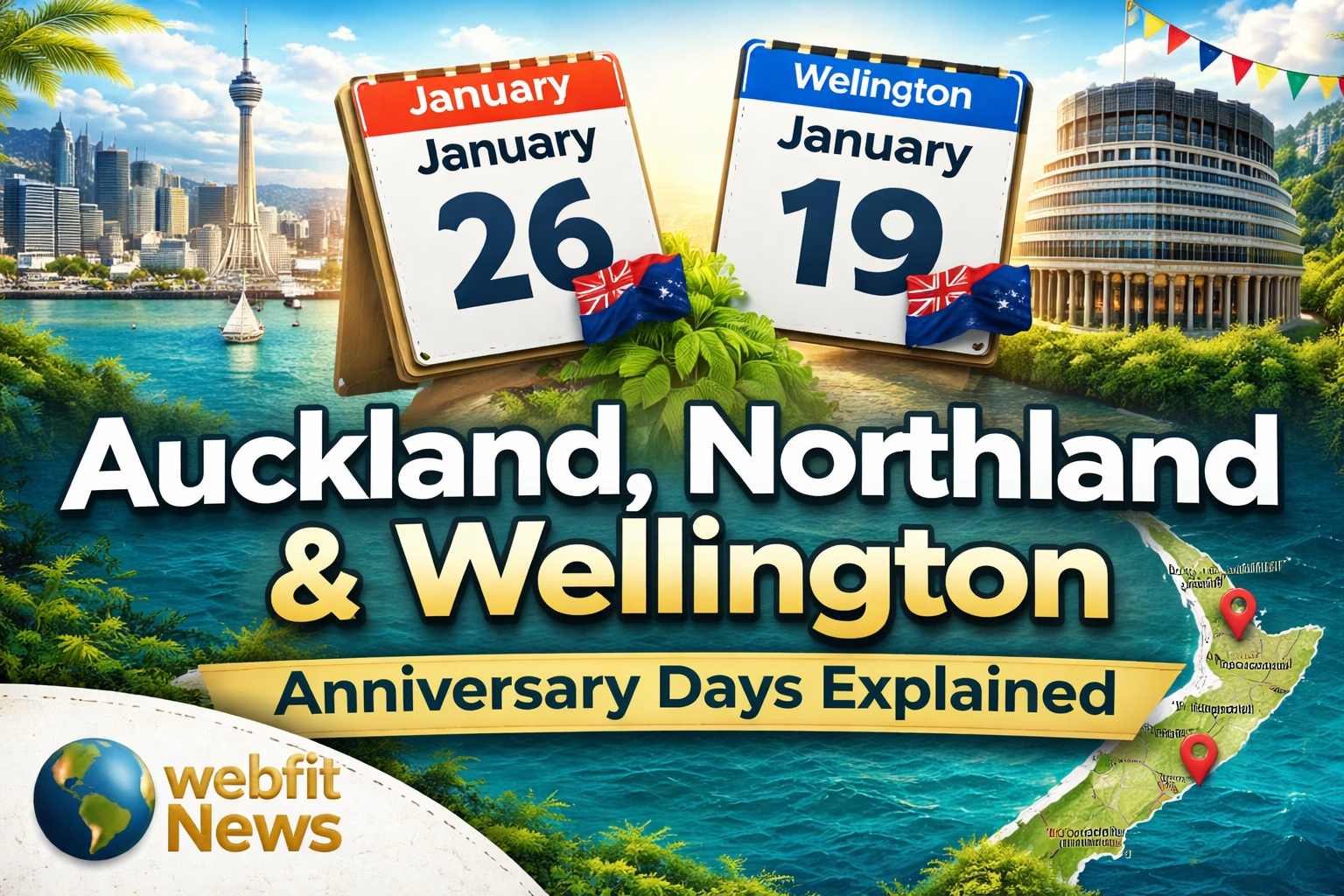
In January 2026, this question becomes particularly relevant. Wellington Anniversary was observed on Monday, 19 January, while Auckland and Northland shared their anniversary on Monday, 26 January. Though separated by only a week, these dates reflect two distinct paths in the formation of modern Aotearoa New Zealand. Understanding them offers insight into the nation’s legal foundations, regional identities, and evolving multicultural character.
A System Rooted in Law, Not Just Tradition
Regional anniversary days in New Zealand are not informal customs. They are legally recognised public holidays governed by the Holidays Act 2003. Unlike nationwide observances such as Waitangi Day or Anzac Day, anniversary days are tied to historic provincial boundaries established in the nineteenth century.
These boundaries no longer exist as governing units, but their legacy remains. As a result, anniversary days often apply to much wider areas than their modern city names suggest. Auckland Anniversary Day, for example, extends well beyond the Auckland Council area and is observed across large parts of the upper North Island.
The Role of Mondayisation
A defining feature of New Zealand’s holiday system is Mondayisation. When the historical anniversary date does not fall conveniently within the working week, the holiday is observed on the nearest Monday. This ensures consistency, supports work-life balance, and enables large-scale community participation.
In 2026, the Auckland and Northland Anniversary was observed on Monday, 26 January, even though the historical event occurred on 29 January. Wellington Anniversary followed the same logic, moving from its original date of 22 January to Monday, 19 January.
Why Auckland and Northland Share the Same Anniversary
The Auckland and Northland anniversary commemorates the arrival of Captain William Hobson in the Bay of Islands in January 1840. Hobson arrived as the British Crown’s representative, tasked with negotiating sovereignty with Māori rangatira.
This moment directly led to the signing of Te Tiriti o Waitangi on 6 February 1840, one of the most significant events in New Zealand’s history. Although sovereignty was formally proclaimed on 30 January, the anniversary became fixed on 29 January due to early scheduling adjustments. That date has remained part of national custom ever since.
Because the historic Auckland Province once covered most of the upper North Island, the holiday today applies across regions including Northland, Auckland, Waikato, Bay of Plenty, Gisborne, and parts of Manawatū-Whanganui.
For Northland, this day carries particular meaning. The Bay of Islands is where the foundations of modern governance were laid, making the anniversary not just a public holiday, but a moment of regional pride.
The Founding of Auckland and Its Maritime Legacy
While the anniversary recognises events in Northland, it also marks the founding of Auckland itself. Later in 1840, Hobson selected the Waitematā Harbour as the site for the new colonial capital, following an agreement with Ngāti Whātua leaders.
Auckland’s earliest celebrations were maritime in nature. Boat races, ceremonial salutes, and harbour festivities accompanied the first raising of the British flag. From these origins emerged the Auckland Anniversary Regatta, now the world’s largest one-day regatta and New Zealand’s oldest sporting event.
By 2026, the regatta has become a symbol of Auckland’s identity as a harbour city, blending sailing traditions with waka ama, dragon boat racing, and inclusive community events that reflect the city’s diversity.
Why Wellington Celebrates on a Different Day
Wellington’s anniversary follows a separate historical path. It commemorates the arrival of the ship Aurora at Petone on 22 January 1840. Unlike Auckland, Wellington was not founded directly by the Crown but through the New Zealand Company, a private settlement enterprise.
The early settlers were welcomed by Te Āti Awa iwi, particularly Chief Te Puni, whose support was crucial during the settlement’s early months. Although the original township at Petone proved unsuitable due to flooding, settlers soon relocated to Thorndon and Te Aro, forming the basis of modern Wellington.
Because this landing occurred earlier than Hobson’s arrival in Northland, Wellington’s anniversary falls a week earlier. In 2026, it was observed on Monday, 19 January.
A Timeline That Explains the Difference
The close timing of these anniversaries highlights how quickly events unfolded in early 1840:
- 22 January 1840: The Aurora arrives at Port Nicholson, marking the organised private settlement.
- 29 January 1840: Hobson arrives in the Bay of Islands, initiating Crown governance.
Together, these moments reflect the dual forces that shaped New Zealand: private settlement and formal state formation.
Modern Celebrations and Community Meaning
Today, anniversary days are about far more than history. They are opportunities for shared experiences. Auckland’s celebrations centre on the harbour, Northland’s on outdoor community life, and Wellington’s on heritage, arts, and civic identity.
For migrants, these holidays serve as accessible entry points into New Zealand’s story. They explain why certain regions stop on different days and offer a way to connect local geography with national history.
Importantly, most anniversary events are free or low-cost, reinforcing New Zealand’s emphasis on inclusive public spaces and community participation.
A Shared Future Built on Understanding
Auckland, Northland, and Wellington may celebrate on different days, but together their anniversaries tell a coherent story of Aotearoa’s beginnings. They remind residents that the country was shaped through partnership, negotiation, migration, and resilience.
As New Zealand continues to grow as a multicultural society, these regional anniversaries provide more than time off work. They offer context, connection, and a sense of belonging, especially for those building new lives here.
In 2026, the message remains clear: understanding where these days come from helps everyone better understand the country they now call home.