Why Firefighters Are Sounding the Alarm and Why New Zealand Should Listen
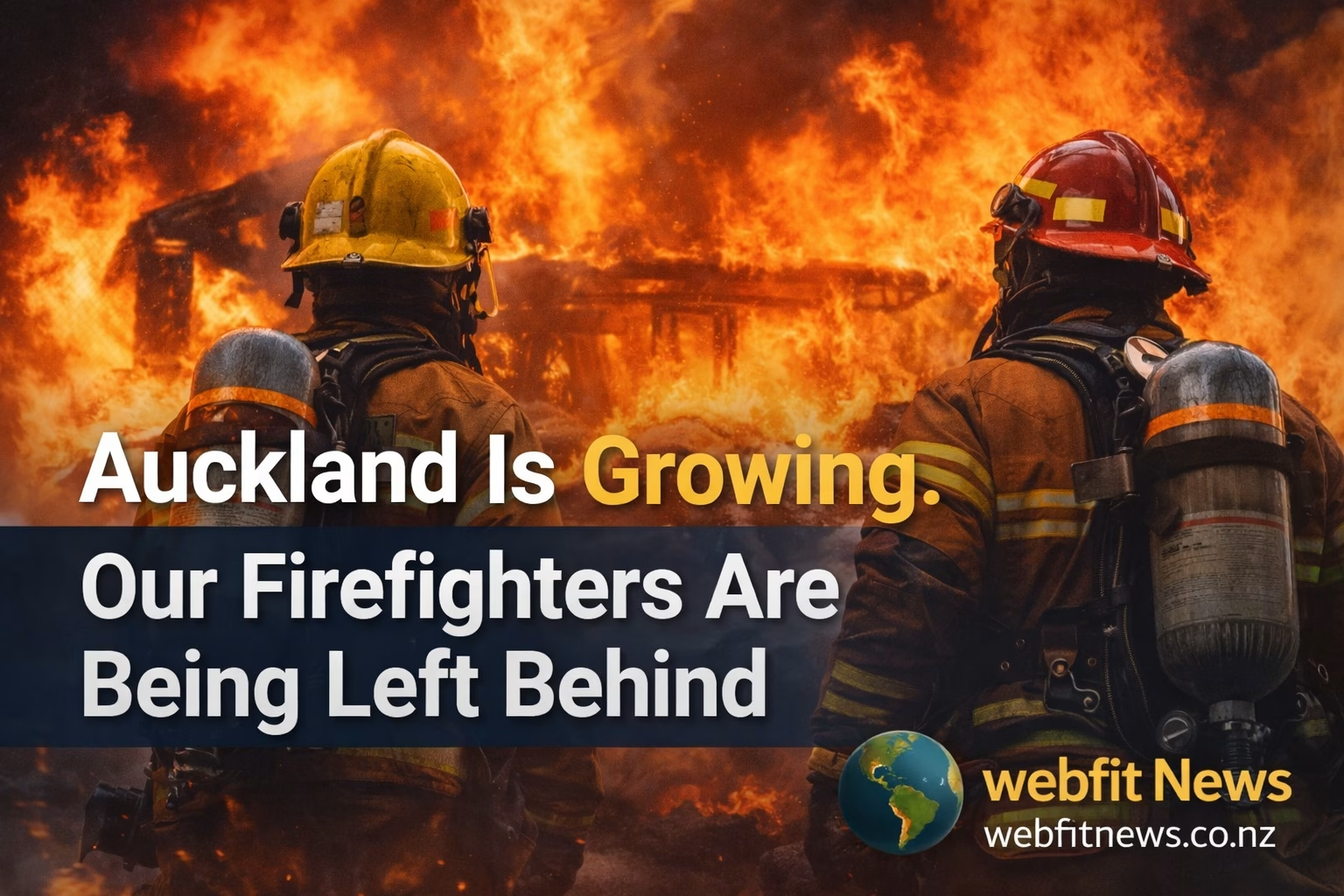
Auckland is racing towards two million people. New apartment towers rise every year. Industrial zones expand. Traffic thickens. Emergency calls increase.
Yet the number of professional firefighters protecting this city has barely changed in more than three decades.
This is not a future risk. It is a present danger.
At Webfit News, we believe some stories matter even when they are uncomfortable. This is one of them.
A city that grew, a service that stood still
In the early 1990s, Auckland had around one million residents. Today, the region is home to nearly 1.8 million people. That is close to 40 percent growth.
Over the same period, the number of career firefighters nationwide has stayed effectively capped below 1,900. In Auckland, this means the same number of firefighters are now covering far more people, far denser housing, taller buildings, and far more complex emergencies Fire fighter .
Firefighters are not just fighting fires anymore. They are first responders to medical emergencies, serious crashes, suicides, hazardous materials, floods, and storms.
The job changed. The resourcing did not.
What happens when stations cannot staff trucks
Across Auckland, firefighters report frequent station brown-outs. That means fire trucks are physically at the station but cannot be sent out because there are not enough trained crew to staff them safely.
To keep the city covered, firefighters work extreme overtime. Eighty to one hundred-hour weeks are no longer unusual.
Fire and Emergency New Zealand management acknowledges that overtime is unsustainable. But the solution has not been to hire enough people. Instead, targets have been adjusted, stations reshuffled, and pressure pushed back onto frontline staff, Fire fighter.
This is not resilience. It is burnout dressed up as commitment.
An ageing fleet in a modern city
Auckland’s skyline has changed dramatically. High-rise apartments and offices now dominate the CBD and inner suburbs. These buildings require specialised heavy aerial appliances to rescue people and fight fires at height.
Yet Auckland has repeatedly had zero heavy aerial trucks available at the same time.
Firefighters describe appliances over 30 years old, breakdowns mid-response, leaking hoses, and equipment that does not fit properly in outdated trucks. At times, Auckland has relied on borrowing appliances from other regions, leaving those communities exposed in turn, Firefighter.
When seconds matter, mechanical failure is not an inconvenience. It is a threat to life.
Slower response times, softer targets
Historically, career fire crews were expected to reach a structure fire within eight minutes, 90 percent of the time.
That benchmark has been quietly lowered.
First to 85 percent. Then to 80 percent. Even then, the target is often missed. In some areas, volunteer and specialist response times have been extended dramatically, including hazardous materials incidents in major cities, being allowed up to an hour Fire fighter.
Firefighters warn that modern fires, fuelled by synthetic materials, reach flashover faster than in past decades. Speed is not a luxury. It is survival.
Changing the metric does not change the fire.
The hidden health cost firefighters carry
Why Life Still Feels Expensive in New Zealand in 2026 – WebfitNews
Firefighters face one of the highest rates of work-related cancer in the world.
International studies show increased risks of mesothelioma, melanoma, testicular cancer, bladder cancer, non-Hodgkin lymphoma, and more. Firefighters are exposed to a toxic mix of benzene, diesel exhaust, asbestos, and chemical smoke on a routine basis.
In Auckland, concerns escalated after asbestos was discovered at the Pitt Street fire station in equipment used to fill breathing apparatus cylinders. Trust was broken. Firefighters began asking a question no one should have to ask at work.
Is the air we breathe safe?
Despite this, funding for comprehensive health monitoring remains minimal, according to union representatives.
The mental toll no one wants to talk about
Firefighters see trauma that most people never will.
Research shows:
- Over 90 percent experienced a traumatic event in the past year
- 24 percent show symptoms of major depression
- 13 percent show signs of probable PTSD
- Only 6.6 percent feel supported by their organisation, though most feel supported by their crewmates Fire fighter
Firefighters are not asking for sympathy. They are asking for systems that recognise reality.
When industrial action becomes a warning sign
Strikes by firefighters have drawn strong criticism from politicians and officials. The Pakuranga fire in January 2026, which occurred during a one-hour strike, became a flashpoint.
Volunteer crews arrived around 30 minutes later than a nearby professional crew normally would.
That incident has been used to attack firefighters. But it also exposed how thin the safety margin has become.
If a city of this size relies on goodwill and overtime to function, then the system is already failing.
Where the money goes
Fire and Emergency New Zealand’s budget has grown from around $350 million in 2017 to nearly $858 million in 2025–26.
Firefighters ask a simple question. If funding has more than doubled, why are trucks ageing, staffing static, and mental health unsupported?
Senior management salaries now reach well over $300,000 per year. A qualified firefighter earns a fraction of that, often inflated only by excessive overtime. Firefighter.
Why Webfit News will not let this fade
This is not a political story. It is a community safety story.
Firefighters do not want medals. They want enough people, working equipment, honest targets, and health protections that match the risks they take on behalf of all of us.
At Webfit News, we believe real journalism means staying with a story after the headlines move on. We will keep raising this issue, asking questions, and giving space to the voices closest to the ground.
Auckland’s growth should not come at the cost of those who run towards danger when the rest of us run away.
If we ignore this now, we will only notice it when it is too late.