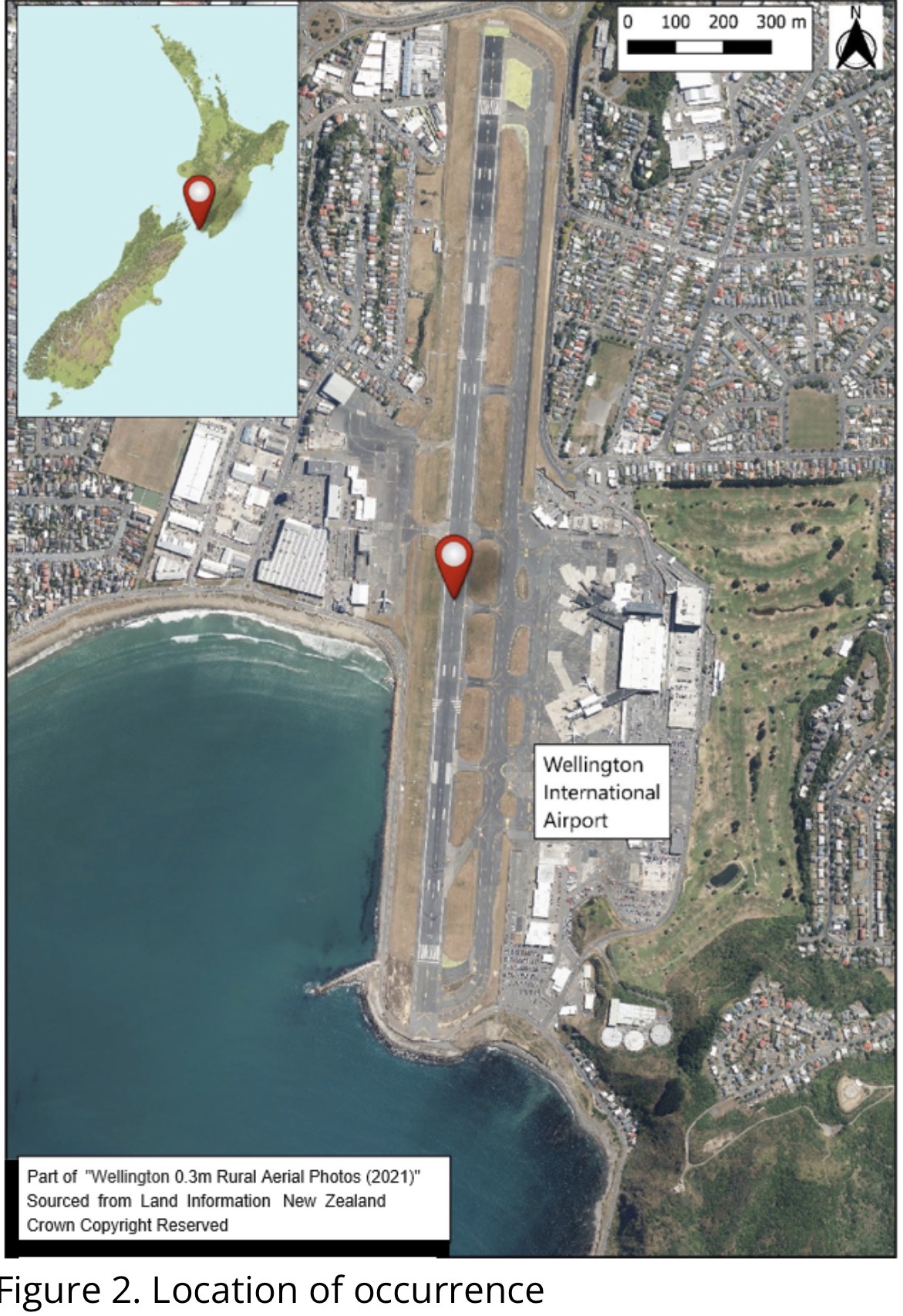
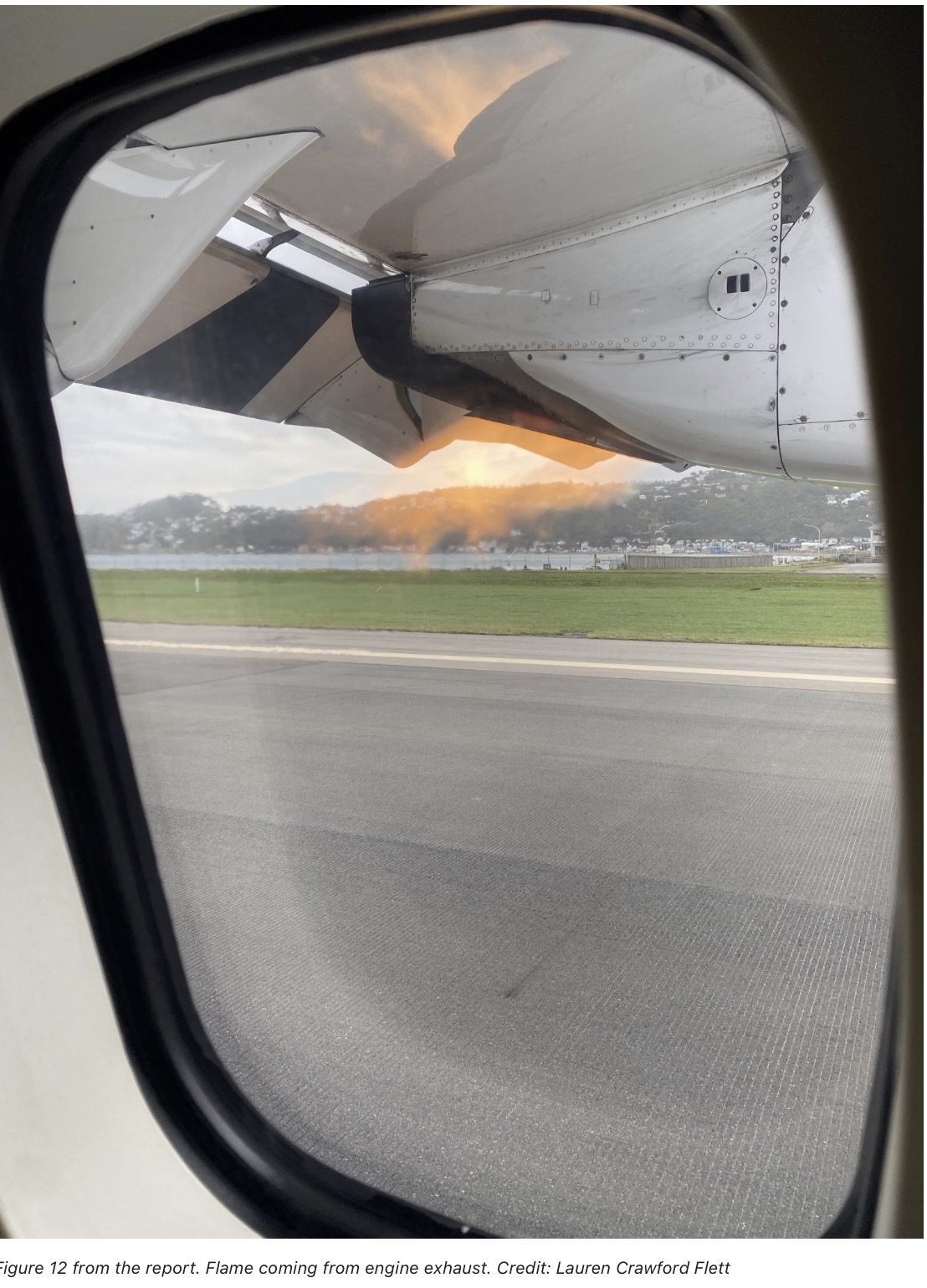
An Air New Zealand flight carrying 74 people suffered an engine fire just moments before landing in Wellington, but a final investigation has found another serious safety issue emerged after the aircraft was safely on the runway: the evacuation took 2 minutes and 51 seconds, with some passengers walking close to the engine that had just been on fire.
WELLINGTON, 25 September 2026: A turbine blade with fatigue cracking that went undetected during an engine overhaul has been identified as the cause of a dramatic Air New Zealand engine fire near Wellington Airport.
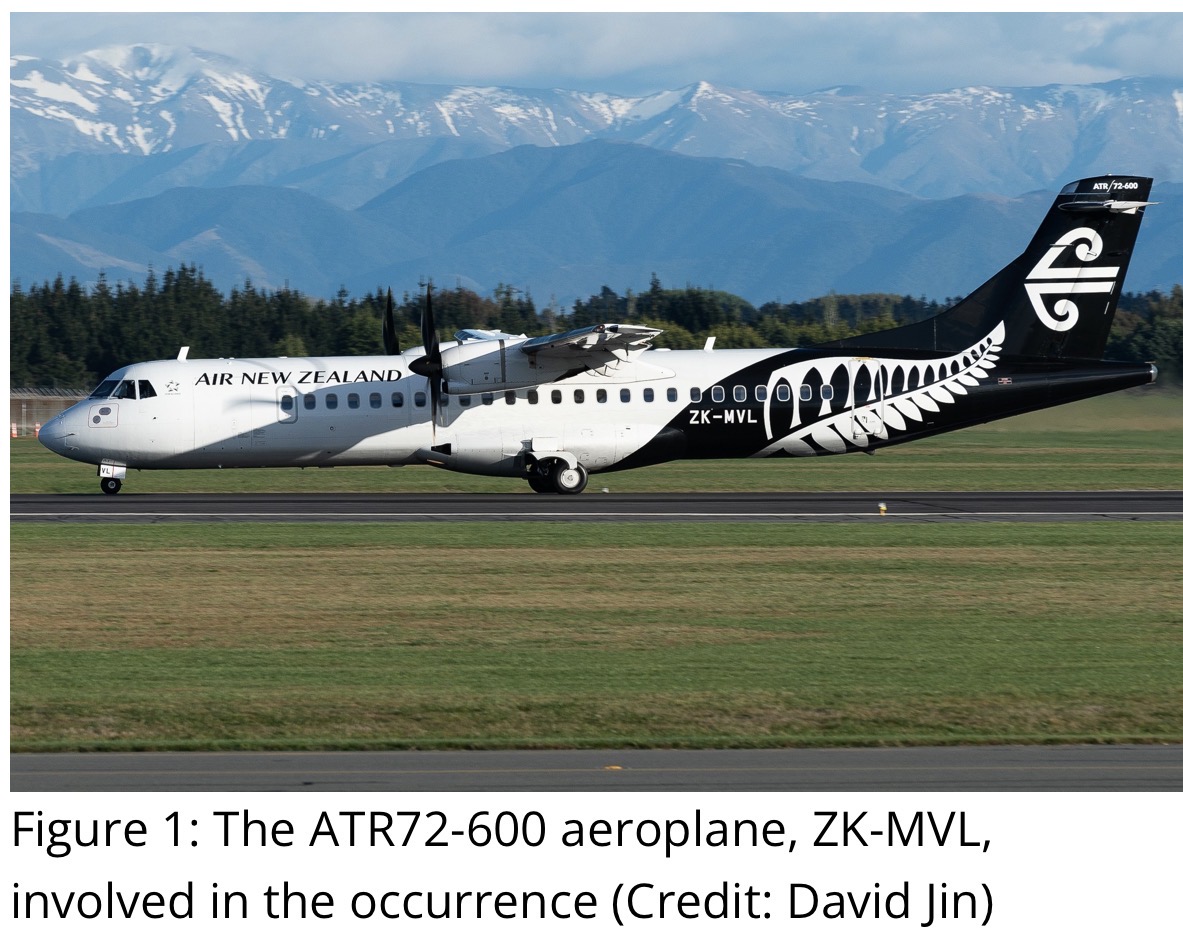
The Transport Accident Investigation Commission (TAIC) has released its final report into the 1 September 2024 incident involving an Air New Zealand ATR72-600, registration ZK-MVL, which was flying from Christchurch to Wellington.
There were 70 passengers and four crew members on board.
The aircraft landed safely and everyone escaped without serious injury.
But TAIC’s investigation found important safety lessons extending well beyond the mechanical failure itself, including the length of the evacuation, the commands given to passengers and what happened after people left the aircraft.
Engine emergency just 300 feet above the ground
The flight was on final approach to Wellington when the emergency developed.
At approximately 300 feet above the ground, the pilots received a low oil-pressure caution for the left engine.
An engine fault followed.
Then came an engine fire warning.
With the aircraft only moments from landing, the flight crew declared a mayday and continued the approach.
The ATR landed safely at Wellington Airport and stopped on the runway as airport emergency services responded.
Fire suppressant used but warning remained
After landing, the pilots discharged fire suppressant into the affected engine.
The fire itself was extinguished, but the cockpit fire warning remained illuminated.
The captain then ordered an evacuation.
All 70 passengers and four crew members ultimately got out of the aircraft.
There were no serious injuries, although some passengers suffered minor injuries during the evacuation.
Evacuation took 2 minutes and 51 seconds
This became one of the most significant findings of the investigation.
TAIC found the evacuation took 2 minutes and 51 seconds.
That compares with the 90-second benchmark used during aircraft certification.
The comparison does not mean every real-world aircraft evacuation must always be completed within exactly 90 seconds. Actual emergencies can involve circumstances very different from controlled certification demonstrations.
However, TAIC says evacuations that take longer can increase the risk to life.
The Wellington incident therefore provided investigators with an opportunity to examine not only whether everyone escaped, but how effectively the evacuation was carried out.
Passengers walked near engine that had just been on fire
Investigators identified another concerning issue once passengers were outside the aircraft.
After leaving through the forward-left exit, some passengers walked near the left engine that had just experienced the fire.
Getting out of an aircraft does not necessarily mean passengers are immediately clear of danger.
Fire, hot aircraft components, propellers, emergency vehicles and other hazards can remain around an aircraft during an emergency.
The finding highlights the importance of passengers receiving clear instructions about where to go after leaving an aircraft, rather than simply being told to evacuate.
What caused the engine fire?
TAIC traced the emergency to a low-pressure turbine blade inside the left engine.
The blade failed because of fatigue.
That failure resulted in oil entering the engine, producing smoke and flames and triggering the fire warning.
The investigation found the engine had undergone an overhaul shortly before the incident.
Critically, the fatigue cracking was not detected during the overhaul quality-assurance process.
Investigators subsequently found that another blade from the same engine also showed signs of fatigue.
That shifted part of the investigation’s attention to whether existing overhaul inspection processes were sufficient to identify this type of damage before an engine was returned to service.
TAIC recommends action by engine manufacturer
TAIC has made a safety recommendation to engine manufacturer Pratt & Whitney Canada.
The Commission wants overhaul quality-assurance procedures strengthened so pre-existing fatigue can be detected and the continued airworthiness of engines can be better supported.
The objective is not simply to explain what happened to ZK-MVL, but to reduce the likelihood of a similar component being returned to service with undetected fatigue.
Air New Zealand also making changes
The investigation identified lessons for Air New Zealand around evacuation procedures and passenger management.
According to TAIC, Air New Zealand has already outlined several initiatives following the incident.
These include development of a cabin emergency evacuation trainer, strengthening training involving the ATR’s rear service door, updating passenger briefing material and aligning the commands cabin crew use during emergency evacuations.
TAIC acknowledged those initiatives but said measures addressing the identified evacuation safety issues had not been fully implemented when its report was completed.
A recommendation has therefore also been issued to Air New Zealand to address the remaining issues.
Why evacuation commands matter
For most passengers, an emergency evacuation may be something they experience only once, if ever.
For cabin crew, it is something they are specifically trained to manage.
During a genuine emergency there may be smoke, noise, panic and confusion. Crew may have only seconds to determine whether an exit is safe while simultaneously directing dozens of passengers.
Clear and consistent commands can therefore become critical.
The Wellington investigation reinforces why passengers should pay attention to the safety briefing before take-off, even on a short and familiar domestic flight.
Information that may seem routine at the beginning of a flight can suddenly become essential during an emergency.
Leave your bags behind
There is another simple lesson from the investigation relevant to anyone who travels by air:
If cabin crew order an emergency evacuation, leave your belongings behind.
Trying to retrieve cabin baggage can slow an evacuation, obstruct aisles and exits and potentially delay other passengers who are trying to escape.
A laptop, handbag or suitcase can be replaced.
Seconds lost during an aircraft fire may not be.
Passengers should follow crew instructions immediately and move away from the aircraft in the direction they are told to go.
A safe landing wasn’t the end of the emergency
The Wellington incident demonstrates how an aviation emergency can have several distinct stages.
First came the mechanical failure.
Then the pilots had to land an aircraft after receiving an engine fire warning only moments before touchdown.
Once on the runway, the fire had to be dealt with.
Then 74 people had to be evacuated.
Finally, those passengers had to be moved away from hazards surrounding the aircraft.
The pilots successfully landed the aircraft and everybody ultimately escaped without serious injury.
But TAIC’s job is not simply to determine whether an incident ended safely.
Its investigations look for weaknesses that could have produced a much worse outcome under slightly different circumstances.
In this case, investigators found lessons stretching from microscopic fatigue cracking inside a turbine blade all the way to how passengers behave once an evacuation command is given.
74 people walked away, but the lessons remain
The most important fact about the incident is that all 70 passengers and four crew survived without serious injury.
The final report nevertheless shows why aviation incidents with relatively good outcomes are still investigated closely.
A different flight altitude, a more severe fire, a slower evacuation or passengers remaining near a dangerous part of the aircraft could have produced a very different result.
The recommendations now put attention on both sides of the emergency: preventing another undetected turbine-blade failure and improving what happens if passengers have to evacuate an aircraft.
For travellers, the takeaway is much simpler.
Pay attention to the safety briefing.
Know where your nearest exit is.
Follow cabin crew instructions.
And if you’re told to evacuate, leave everything behind and get out.
TAIC final inquiry and report:
https://taic.org.nz/inquiry/ao-2024-006
Source: Transport Accident Investigation Commission (TAIC), Final Report AO-2024-006, released 25 September 2026. Reporting and additional context by Webfit News.