
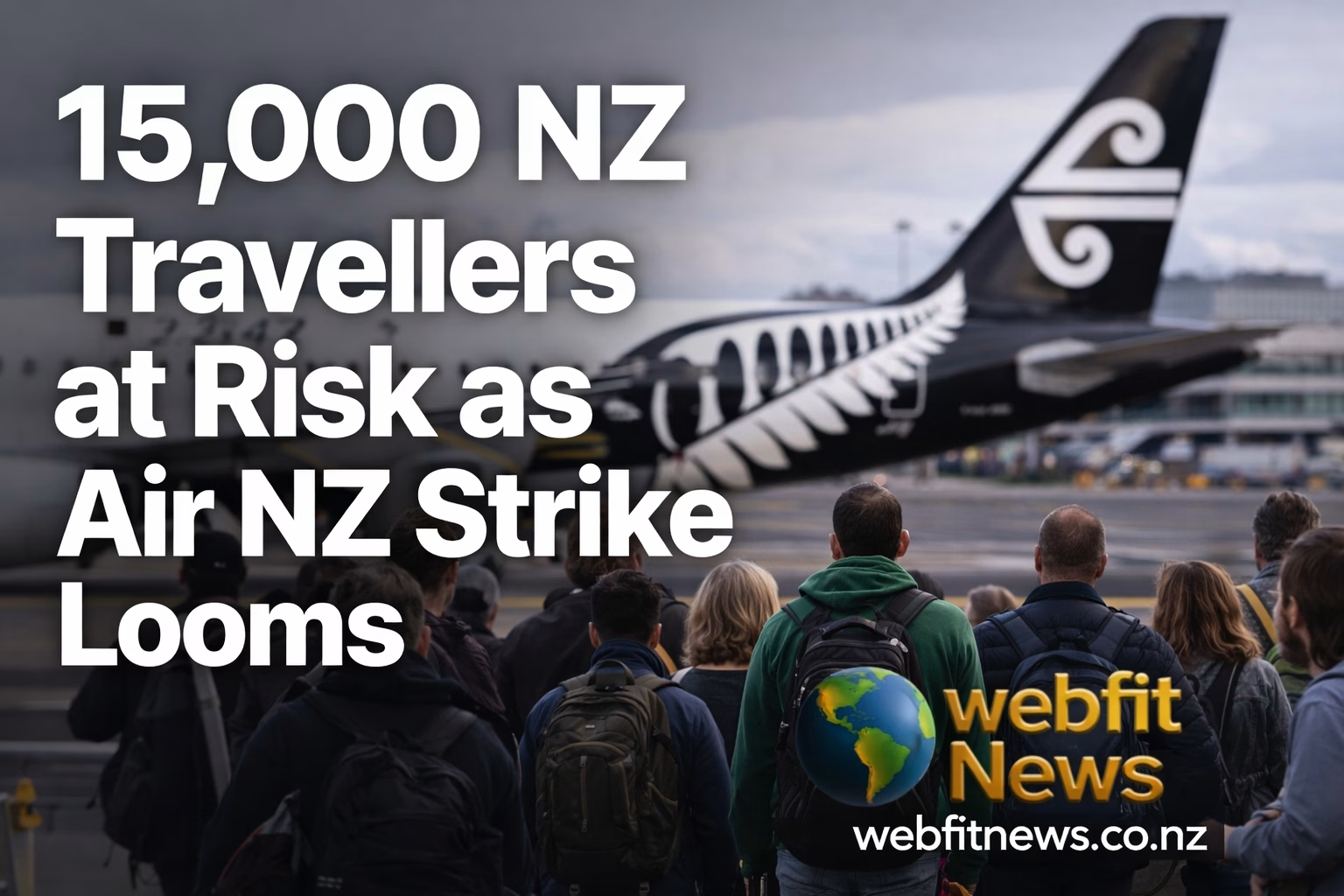
Thousands of New Zealand travellers could face significant disruption if planned industrial action by Air New Zealand cabin crew goes ahead, with up to 15,000 passengers potentially affected by delays or cancellations.
The warning comes at a sensitive time for the national carrier and the country, as Air New Zealand continues to operate under tight capacity constraints and rising operational costs.
Why This Matters to New Zealand
| Item | Details |
|---|---|
| Airline | Air New Zealand |
| Issue | Potential cabin crew industrial action |
| Travellers impacted | Up to 15,000 |
| Type of disruption | Flight delays and possible cancellations |
| Affected routes | Domestic and international |
| Timeframe | If strike action proceeds |
| Alternatives available | Limited, especially on regional routes |
Air New Zealand is not just another airline. For a geographically isolated country, it is a critical part of New Zealand’s national infrastructure.
Domestically, the airline carries the majority of passengers between regions. Internationally, it connects New Zealanders to global markets and supports tourism, exports, and business travel.
When Air New Zealand experiences disruption, the impact is felt well beyond airport terminals.
A disruption affecting up to 15,000 travellers is not a minor inconvenience. It has real consequences for:
- Families travelling for school holidays or urgent personal reasons
- Regional communities with limited transport alternatives
- Tourism operators already operating on thin margins
- Businesses dependent on time-sensitive travel
Strike Threat Comes at a Fragile Moment
| Area | Impact |
|---|---|
| Domestic travel | Major disruption across regional routes |
| Tourism | Risk of cancellations and visitor dissatisfaction |
| Business travel | Delays to meetings, conferences, and time-sensitive trips |
| Regional communities | Fewer backup transport options |
| National connectivity | Heavy reliance on Air NZ as primary carrier |
The potential strike comes while Air New Zealand is already under pressure from multiple fronts.
Around 10 to 20 percent of the airline’s fleet remains grounded due to global engine maintenance issues. This has reduced seat availability across both domestic and international routes, leaving little flexibility to absorb further disruption.
At the same time, the airline has retained a full workforce so it can scale up quickly once aircraft availability improves. While forward-looking, this approach has increased cost pressure during a period of reduced capacity.
Cabin crew, like many New Zealand workers, are facing higher living costs and inflation. Tensions between workforce expectations and the airline’s financial constraints have now reached a critical point.
Limited Alternatives for Travellers
| Metric | Current Situation |
|---|---|
| Annual passengers | ~16 million |
| Domestic passengers | ~10.7 million per year |
| Fleet size | 113 aircraft |
| Fleet grounded | ~10–20% due to engine maintenance |
| Workforce | ~11,700 staff globally |
| Competition | Limited, mainly Jetstar on select routes |
One of the biggest risks highlighted by the strike threat is how dependent New Zealand remains on a single dominant carrier.
Air New Zealand carries more than 10 million domestic passengers each year. While Jetstar provides competition on some main routes, many regions have few or no practical alternatives.
If widespread delays occur, travellers may find there are limited rebooking options available. This lack of redundancy turns industrial action into a national issue rather than a purely commercial dispute.
Impact Extends Beyond Passengers
| Scenario | Likely Outcome |
|---|---|
| Short domestic flights | Delays and reduced frequencies |
| Regional routes | Higher risk of cancellations |
| International flights | Knock-on delays due to crew shortages |
| Rebooking options | Limited availability |
| Peak travel periods | Higher disruption risk |
The effects of disruption would not stop with travellers.
Air New Zealand also plays a key role in transporting high-value exports, particularly perishable goods such as seafood, fresh produce, and meat. Any instability in flight schedules risks knock-on effects for exporters working within tight international delivery windows.
Tourism operators, already rebuilding after the pandemic, could also face cancellations and reputational damage if visitors experience widespread delays.
A Delicate Balance Ahead
| Factor | Why It Matters |
|---|---|
| Single dominant carrier | Few alternatives if disruption occurs |
| Geographic isolation | Aviation is essential, not optional |
| Export reliance | Air freight critical for perishables |
| Tourism recovery | Confidence-sensitive sector |
For Air New Zealand, the challenge is navigating a narrow path between financial discipline and workforce stability.
For the government and regulators, the situation raises broader questions about national resilience, competition, and whether New Zealand’s reliance on a single dominant carrier leaves the country exposed during disruptions.
For travellers, the message is simple but uncomfortable. Even routine journeys are vulnerable when the system is under strain.
What Happens Next
At the time of writing, no final resolution has been announced. Talks between the airline and cabin crew representatives are ongoing, and travellers are being advised to monitor updates closely.
If the strike proceeds, it will test not only Air New Zealand’s operations but also New Zealand’s wider transport resilience.
One thing is clear. When the national airline faces disruption, the whole country feels it.