AUCKLAND, 23 July 2026
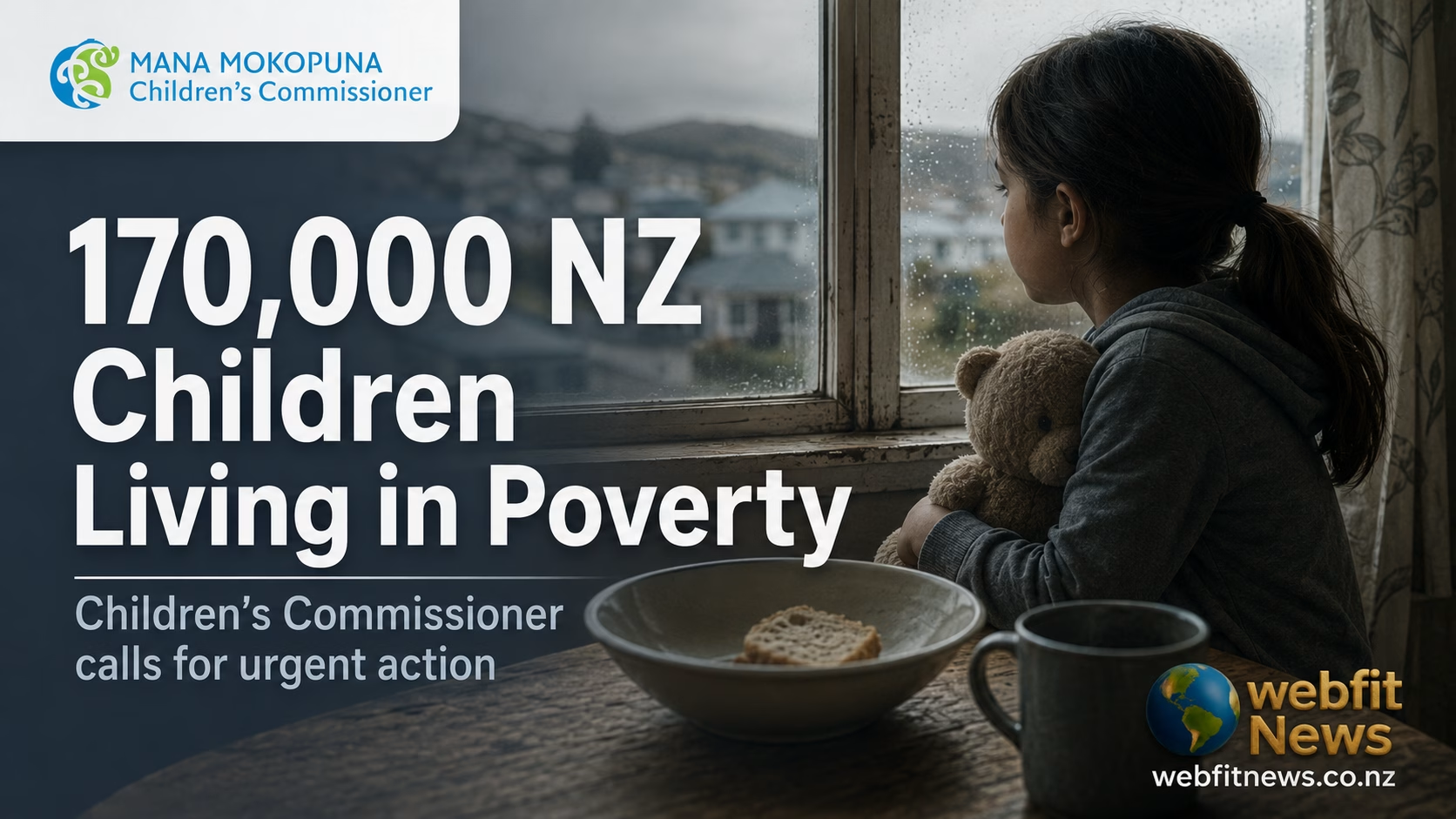
New Zealand is moving backwards in its efforts to reduce child poverty, with around 170,000 children now living in poverty and increasing numbers going without basic essentials, the Children’s Commissioner has warned.
Dr Claire Achmad says the latest national child poverty report presents a confronting picture of hardship across Aotearoa and should serve as a wake-up call for political leaders ahead of this year’s election.
The report, Child Poverty in New Zealand, was compiled by researcher Bryan Perry for the Ministry of Social Development. It examines income poverty, material hardship and the everyday living conditions experienced by children and families.
According to the Children’s Commissioner, the findings show that material hardship has increased since 2022, meaning more children are living in households that cannot afford essential items and services.
NZSO to Mark Wellington Town Hall Return with Mahler’s Monumental Resurrection – WebfitNews
What material hardship means for children
Material hardship is not simply about having less money than another household. It refers to families being unable to afford what is considered a minimum acceptable standard of living.
For children, this can mean:
- Not having enough nutritious food
- Living in a cold or damp home
- Missing school trips, sport and extracurricular activities
- Going without suitable clothing or shoes
- Delaying healthcare because of cost
- Being excluded from social and educational opportunities
Dr Achmad said these conditions directly affect children’s ability to learn, develop and participate in their communities.
“Poverty feels like hunger,” she said.
“It means living in a cold home, missing out on school trips and sport, or ending up in hospital with preventable illnesses linked to poor living conditions.”
She said poverty can dominate a child’s daily life, forcing them to focus on getting through each day instead of enjoying the opportunities and experiences that should be part of childhood.
Disabled households facing heavier pressure
One of the most concerning findings is the high proportion of children in hardship who live in households affected by disability.
Almost 60 percent of children experiencing material hardship live in a household where at least one person is disabled.
Among children experiencing more severe hardship, around two-thirds live in households that include a disabled person.
The Commissioner said these figures reflected the additional financial pressures and structural barriers faced by disabled people and their families.
These households may face higher costs for transport, medical appointments, equipment, heating, specialised food and reduced employment opportunities.
Dr Achmad said any credible plan to reduce child poverty must directly respond to the realities experienced by disabled children and families.
Ignoring that connection would leave one of the most affected groups behind.
Long-term consequences for New Zealand
The impact of child poverty does not end when a child becomes an adult.
Research has consistently linked poverty during childhood with poorer physical health, lower educational achievement, reduced employment opportunities and ongoing mental health challenges.
Children growing up in cold, overcrowded or unhealthy homes are also more likely to experience respiratory illness and other preventable medical conditions.
Poor school attendance, limited access to technology and exclusion from extracurricular activities can further widen the gap between children from low-income households and their peers.
The Children’s Commissioner said the cost of poverty was ultimately carried by the whole country through increased pressure on the health system, education services, social support agencies and the justice system.
New Zealand could not claim to be building a prosperous future while tens of thousands of children were being denied the foundations they needed to succeed, she said.
Call for a cross-party Child Poverty Accord
The Commissioner is urging all political parties to commit to a long-term, cross-party plan to reduce child poverty.
Earlier this week, she sent an open letter to party leaders calling for a renewed national commitment to children and the establishment of a Child Poverty Accord.
The proposed accord would seek agreement across Parliament on sustained measures to reduce poverty, regardless of which party forms the government.
Dr Achmad said child poverty policy should not be repeatedly weakened, abandoned or redesigned following changes in government.
“Children cannot wait for the economy to improve,” she said.
“Poverty is harming childhoods right now.”
She warned that every year of delayed action meant another year in which tens of thousands of children missed opportunities that other children took for granted.
The Commissioner also encouraged New Zealanders to ask their local MPs and election candidates what specific policies they supported to reduce child poverty.
Political leaders, she said, should be able to clearly explain how they intend to ensure every child has an adequate standard of living.
Beyond statistics
The figure of 170,000 children is large enough to become abstract, but behind it are individual families making difficult decisions every week.
Some parents are choosing between heating and groceries. Others are delaying medical care, borrowing money for school costs or keeping children home because they cannot afford transport, uniforms or activity fees.
Many families experiencing hardship are already carefully managing limited budgets. The problem is not necessarily poor financial decision-making. In many cases, household income is simply not keeping pace with housing, food, energy, transport and healthcare costs.
That distinction matters because child poverty cannot be solved through short-term charity alone.
Food parcels, school breakfast programmes and winter clothing drives provide important immediate support, but they do not address the underlying causes of low household income, high housing costs and insecure employment.
A national test for political leadership
The latest report places child poverty firmly back on the national political agenda.
The central question is no longer whether poverty harms children. The evidence is already clear.
The question is whether political leaders are prepared to make long-term decisions that improve family incomes, reduce essential living costs and provide stronger support for households facing disability, illness or unstable employment.
Dr Achmad said New Zealand would not move forward while so many children were being left behind.
With 170,000 children affected, child poverty is not a marginal issue or a problem limited to a small section of society.
It is a national test of priorities, public policy and political leadership.
References
Ministry of Social Development, Child Poverty in New Zealand, research and analysis by Bryan Perry.
Mana Mokopuna, Children’s Commissioner, media release dated 23 July 2026.
Mana Mokopuna, open letter to New Zealand political party leaders on child poverty reduction.